Ministry of Good Ideas
mastodon 4.7.3Good Ideas about just about anything, interesting concepts, cool technology, machine learning, science, social dynamics and sometimes a meme.
community chat on xmpp:
xmpp:ministry-of-good-ideas@conference.conversations.im?join
coming from telegram https://t.me/ministryofgoodideas
Good Idea: Clay as a PCB substrate
https://feministhackerspaces.cargo.site/Clay-PCB-Tutorial
A circuit board is just a substrate that holds conductive traces and components. It does not have to be fiberglass reinforced with brominated flame retardants, sourced through a supply chain running through conflict zones and toxic processing facilities. The Feminist Hardware project at mz* Baltazar's Laboratory in Vienna is experimenting with natural clay and terracotta as alternatives:
Locally sourced, fired, and traced with conductive paste.
The repository includes actual reproducible tutorials, not just theory. Electrical performance will not replace industrial PCBs, but the goal is to demonstrate that basic electronics do not require a global extraction economy, and to build a practical reference for what genuinely local, low-impact hardware production could look like.
Repo: https://github.com/FeministHardware/Making-PCBs-from-natural-clay
Thanks to our friends @klimadeswandels
#Open #Hardware #Sustainability #Hacking #Manufacturing #Degrowth #solarpunk
Good Idea: Measuring prosperity beyond GDP
https://www.politico.eu/article/obsession-with-growth-is-destroying-nature-150-countries-warn/
More than 150 countries including China, India and EU members have signed off on a report by IPBES, the leading intergovernmental body for biodiversity assessment, concluding that GDP-focused growth is a primary driver of biodiversity loss. The numbers behind it: one eighth of all estimated 8 million plant and animal species are threatened with extinction, and 75 percent of the Earth's land surface has already been significantly altered by human activity.
The core argument is not anti-economy but pro-accuracy. Markets currently do not price what ecosystems actually provide -- pollination, climate regulation, water filtration -- so those services get consumed without appearing in any balance sheet until they collapse. The report calls out perverse business incentives, weak enforcement, and models built around ever-increasing material consumption as the structural causes.
The US was not among the signatories and has announced its withdrawal from IPBES. The EU, despite signing, is simultaneously running a deregulatory agenda aimed at relaxing environmental standards to boost competitiveness.
The full assessment is the result of three years of work and is the most broadly endorsed scientific statement on the link between economic models and nature loss to date.
#Biodiversity #Degrowth #Economics #PolicyChange #NatureCrisis #Sustainability #SystemsChange
Good Idea: Make GrapheneOS Mainstream
https://motorolanews.com/motorola-three-new-b2b-solutions-at-mwc-2026/
Most people never get to choose a truly private phone, not because they don't care, but because the secure options always felt too technical or too niche. That's changing.
Motorola just announced a partnership with the GrapheneOS Foundation! Bringing one of the most respected privacy-focused operating systems into the hands of everyday users.
No more choosing between security and a phone that just works.
Good Idea: Dont make fun of people for not knowing things.
If someone admits not knowing something, celebrate that they learned something new.
Regardless of what it is, better late than never. This is also true for people that learn that they are racist, sexist, homophobic etc.
Its always great if someone comes to an insight about their own ignorance.#
Good idea: reactor that turns plastic into hydrogen
They have made a device that uses sunlight to break down plastic waste and turn it into hydrogen. And it’s not just a lab curiosity. The team made it using simple methods and materials, and have tested it outside in the sunlight. “Converting waste streams into valuable products using clean energy sources is…an attractive strategy to address both energy and environmental concerns,”
Good Idea: Think about whats next
https://storytelling.greenpeace.org/story/2189/five-lessons-for-imagining-the-future/
Critique and dismantling are necessary but not sufficient. At some point movements need to switch from identifying what is wrong to actually picturing what comes next -- and that turns out to be a skill most people have not practiced. Five practical principles from workshops run with 50+ activists and community leaders:
1. Imagine without self-imposed limits. Change that seemed impossible has happened within years, sometimes weeks. Do not pre-censor ideas by how realistic they feel.
2. Imagine with others. Collective visioning produces more resilient ideas than individual ones, and builds the relationships that make action possible.
3. Create psychologically safe spaces for new ideas. Incomplete and imperfect ideas need room to exist before they can be refined. Ridicule kills them early.
4. Practice regularly. Imagination is a muscle. Draw, write, say things out loud. The goal is consistency, not a perfect manifesto on the first try.
5. Act with intention. The future is not fixed. Speaking up about a different possibility is itself an act that gives others permission to do the same.
Thanks to our friends @activacy
#CollectiveAction #SystemsChange #Activism #Community #Imagination #Building #Futures #solarpunk
Good Idea: Change to a climate friendly Bank this weekend
https://www.not-ship.com/banks-are-funding-climate-chaos-you-dont-have-to-2/
Your bank might be doing more damage to the climate than flying. In 2024, banks poured $869 billion into the fossil fuel industry, a huge jump from the year before, funding the companies building pipelines and drilling for oil around the world. A major banking alliance that had committed members to move away from financing high-emission sectors fell apart last year when nearly every top fossil-fuel-funding bank pulled out.
According to a report by Project Drawdown, banking with a carbon-intensive U.S. bank means you could be indirectly lending 20 to 30 percent of your money to the industries most responsible for the climate crisis. The carbon footprint of where you keep your cash can actually outweigh the impact of flying. The good news is that switching matters. Moving just $8,000 from a high-carbon bank to a low-carbon one can cut your personal emissions by twice as much as going vegetarian.
#climateaction #sustainability #greenfinance #divestment #climatechange
Good idea: Switch to SimpleX messenger
Quantum computers are getting closer to breaking today's encryption, and the timeline keeps shrinking. Google just set a 2029 deadline to migrate its own systems to quantum resistant cryptography, and recent research papers have drastically reduced the estimated computing power needed to crack the encryption that protects most of our digital communications.
( https://blog.google/innovation-and-ai/technology/safety-security/cryptography-migration-timeline/ )
The real concern is something called "harvest now, decrypt later." Intelligence agencies and other actors are already collecting encrypted messages today, banking on the fact that future quantum computers will let them read everything retroactively. That means the private conversation you're having right now could become an open book in a few years.
This is where SimpleX stands out. It's a free, open source messenger that doesn't require a phone number, email, or any kind of user ID to sign up. Not even a random one. Your messages are protected with quantum resistant end-to-end encryption built on top of a double ratchet protocol, and all your data stays on your device. The network is decentralized, so no single company controls it, and messages are only held temporarily on relay servers until delivered. It's been independently audited by Trail of Bits and is already used by hundreds of thousands of people. If you care about your conversations staying private not just today but ten years from now, it's worth making the switch.
Here is our ministry group in case you want to join:
https://smp14.simplex.im/g#nydAFEIKtpP0xQJ3yCY_ZPyUMlxuUYf0P86eTYX5Xj0
#decentralization #privacy #Quantum #Computing #OpenSource #DigitalSecurity #simplex #messenger
Good idea: fog nets
Chile’s Atacama Desert is one of the driest places in the world. Some areas only see rainfall a few times in a century, while others have never recorded rainfall at all.
Local groups have found ways to harvest enough fog to supplement drinking water and bolster agricultural projects. But many challenges with the strategy still remain. Researchers want to harvest the fog more efficiently and at scale, one day convincing local officials to buy into it and expand.
Good idea: Plastic that dissolves in saltwater
https://www.eurekalert.org/news-releases/1110174
Researchers at Japan's RIKEN Center for Emergent Matter Science have developed a plant-based plastic that could be a real game-changer for ocean pollution. The material is made primarily from carboxymethyl cellulose, a commercially available wood-pulp derivative that's already FDA-approved and biodegradable.
What makes it special is that it dissolves completely in saltwater within just a few hours, leaving zero microplastics behind, something most so-called "biodegradable" plastics can't actually do.
The team solved an early brittleness problem by adding choline chloride, another FDA-approved food additive, which lets them fine-tune the flexibility, from hard and glass-like all the way to stretchy enough to extend 130% of its original length.
It can even be made into a strong, thin film just 0.07 mm thick. To keep it from falling apart when you don't want it to, a thin surface coating can protect it from unintentional decomposition.
The best part is that all the ingredients are common, inexpensive, and safe, which means this plastic could realistically move from the lab to everyday use.
Given that nature produces about a trillion tons of cellulose annually, the raw material certainly isn't in short supply...
Good Idea: Eat more Kimchi
https://www.dongascience.com/en/news/76761
Kimchi probiotic promotes the excretion of nanoplastics from the gut:
Kimchi's lactic acid bacteria (Leuconostoc mesenteroides CBA3656) have been found to bind with nanoplastics in the gut.
An animal study showed that nanoplastic content in feces more than doubled in mice given these specific bacteria, suggesting enhanced excretion.
The findings, published in 'Bioresource Technology', highlight the potential of fermented food microbes in tackling plastic pollution's health impact.
The one thing to watch: kimchi is salty, and a review of sixty studies linked high consumption of pickled, salt-fermented foods to increased stomach cancer risk, especially in combination with H. pylori infection. Keep it as a flavorful side dish rather than a main course, watch your overall sodium, and eat plenty of fresh vegetables and fruit alongside it. Research found that fresh produce is associated with an 85% reduction in stomach cancer odds. The balance is the whole point. https://nutritionfacts.org/video/the-role-of-kimchi-and-h-pylori-in-stomach-cancer/
#Kimchi #Microplastics #GutHealth #Probiotics #Poop #LacticAcid #Bacteria
Good idea: call your local council if you have a question about anything related. They'll try their best to help you!
Good Idea: Help your friends.
🫶 to our minister for sending us these submissions!
If you have some as well, feel free to drop them in the SimpleX, XMPP or Telegram group:
https://smp14.simplex.im/g#nydAFEIKtpP0xQJ3yCY_ZPyUMlxuUYf0P86eTYX5Xj0
xmpp:ministry-of-good-ideas@conference.conversations.im?join
Good Idea: Get active against Chat control
IMPORTANT IF YOU LIVE IN THE EU 🇪🇺
A NEW CHATCONTROL VOTE HAS BEEN FORCED FOR TOMORROW, meaning that if this law passes, we are going to see ACTUAL MASS AI SURVEILLANCE FOR MESSAGING eu-wide
yes, this means that NOT ONLY the government could get access to EVERYTHING you say in private, BUT THAT E2E ENCRYPTION MIGHT BE PARTIALLY OR COMPLETELY OUTLAWED IN THE PROCESS, MEANING THE COMPLETE DEATH OF PRIVACY
THANKFULLY, we have a weapon: breaking their balls and making them understand this will fuck up everything and THEY will FOREVER be responsible for it
How do you do that? Easy
Go here: https://fightchatcontrol.eu
Find a politician in your country that is approving this surveillance law
And either send them an e-mail at the address reported there
OR !!!
WAY BETTER, AND THIS IS WHAT I AM DOING MYSELF WITH GREAT SUCCESS
https://www.europarl.europa.eu/
SEARCH THEIR PHONE NUMBER HERE AND CALL THEIR SECRETARY
THESE NUMBERS ARE THE MOST UP TO DATE, THEY WORKED 85% OF THE TIME FOR ME
you can make your own point to be passed to your rep, but the basic thing you have to say goes along the lines of:
"Hello, I’m calling about the Chat Control vote.”
“Please vote in favor of amendments 30 and 35.”
"It does not work effectively, as criminals can easily evade detection while false positives mean 2 in 10 innocent people will be accused of crimes they did not commit"
"State actors can exploit the backdoor you are opening to monitor private communications and spy on our industry secrets"
“And vote against any mass scanning of private messages as that is mass surveillance.”
🙏 to our oddly motivational friends
#privacy #chatcontrol #citizens #espionage #backdoor #masssurveillance #surveillance #thisisinsane
Good Idea: Let Railways Build the Cities They Serve
https://worksinprogress.co/issue/why-japan-has-such-good-railways/
Japan’s rail success comes from a simple but powerful idea: let railway companies do more than run trains by allowing them to build and profit from the neighborhoods around their lines. Instead of relying only on ticket fares, firms like Tokyu Corporation and JR East develop housing, shops, offices, and entertainment near stations, which both boosts ridership and captures the economic value trains create. This creates a virtuous cycle where better places lead to more passengers, which funds better rail service, which in turn makes those places even more attractive. Combined with flexible zoning and fair competition with cars, this model explains why Japan’s railways are so widely used, efficient, and profitable, and shows that great transit systems are not just about transport but about shaping entire communities.
#Infrastructure #Cities #Urbanism #SmartCities #Housing #LandUse #Mobility #Trains #Sustainability

Good idea: floating power stations
Wind power could soon come from the sky as China has successfully tested a megawatt-class airborne turbine that generates electricity while hovering 2000 metres up.
China has completed a test flight of what it says is the world’s first megawatt-class high-altitude wind power system designed for urban deployment.
Good Idea: Data centers that heat homes
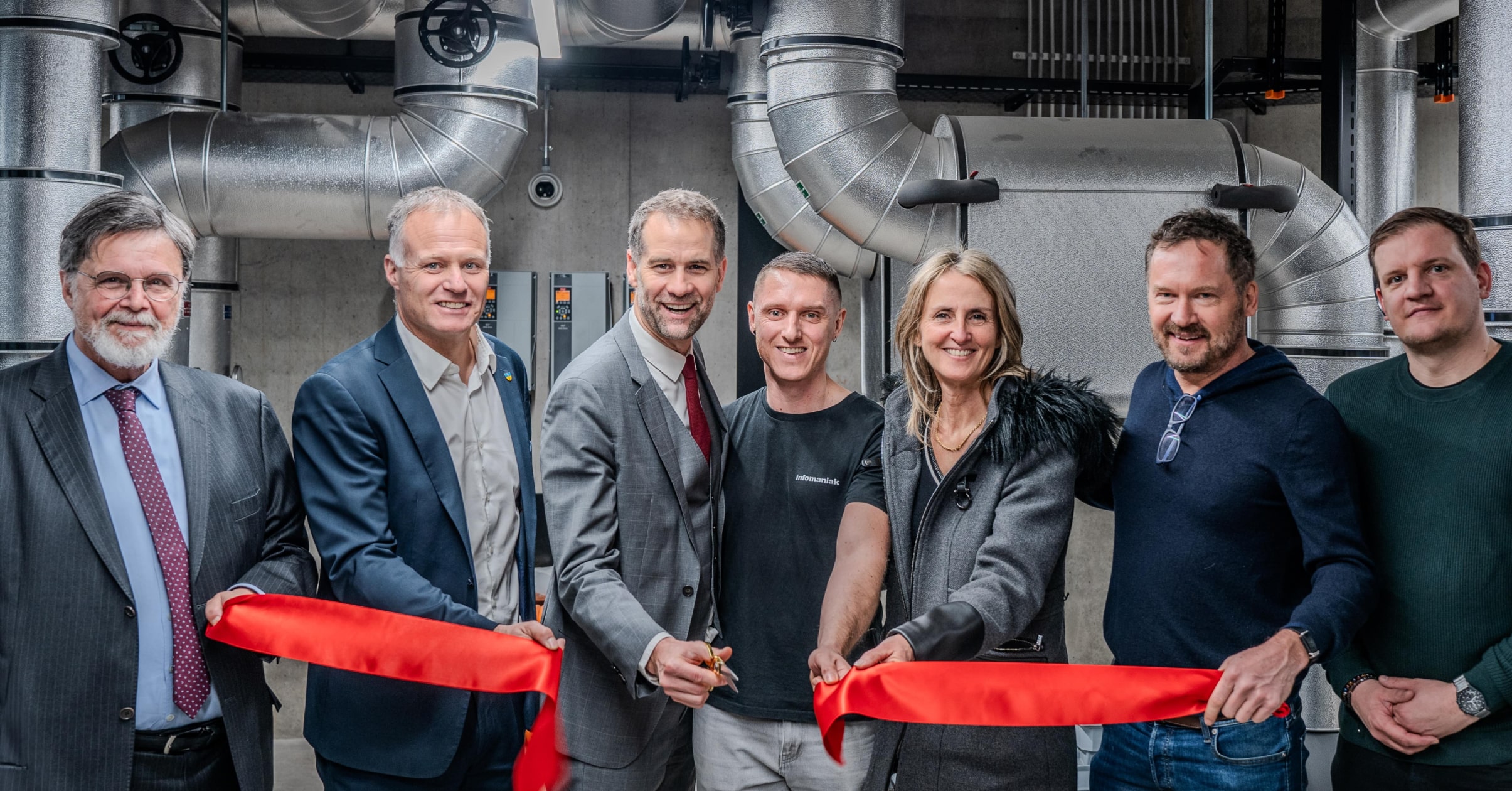
Data centers convert electricity into heat as a byproduct. Almost every facility in the world then gets rid of that heat by releasing it into the atmosphere. Infomaniak, a Swiss cloud provider, built a data center in Geneva that instead pipes 100% of that waste heat into the city's district heating network, warming around 6,000 homes per year and avoiding 3,600 tonnes of CO2 equivalent annually that would otherwise come from burning gas.
The technical setup: servers heat air to 40-45 degrees Celsius, an air/water exchanger transfers that to a water circuit, heat pumps raise the temperature enough to feed the district network, and the cooled water loops back to regulate server temperature -- no air conditioning needed. The whole system is built underground beneath a residential cooperative with no visible footprint above ground.
The full documentation, including real-time performance monitoring and a replication guide for other operators, is published openly at d4project.org. Infomaniak is actively looking for more heating networks to connect future data centers to.
The model already works at 25% capacity. At full capacity by 2028 it will run 10,000 servers across 1,800 square meters.
#AI #Sustainability #datacenter #openHardware #futurism #EnergyTransition #CloudComputing #DistrictHeating #OpenSource #DigitalEcology
Good idea: music to relieve anxiety
https://medicalxpress.com/news/2026-03-music-minutes-ease-anxiety.html
A short music session may help ease anxiety and researchers say there's a "sweet spot" for how long to listen.
A clinical trial found that listening to specially designed music for 24 minutes can significantly reduce anxiety symptoms. The music was paired with auditory beat stimulation (ABS), a type of sound pattern meant to influence brain activity.
https://journals.plos.org/mentalhealth/article?id=10.1371/journal.pmen.0000355
Good idea: vertical gardens to cool down cities
Since French botanist Patrick Blanc pioneered the concept in the 1980s, Europe has produced some striking examples. Milan’s Bosco Verticale, a pair of residential skyscrapers whose terraces hold more than 21,000 trees and shrubs, converts nearly 20,000 kilograms of carbon annually and now shelters 20 species of birds.
As Europe’s capitals brace for yet another summer of blistering heatwaves, building on this legacy could be one of the most practical tools for protecting citizens.
Good Idea: Start your own blog
Having your own blog means you own your content. No algorithm deciding who sees your stuff, no platform changing the rules on you. It's your space to think out loud, sharpen your writing, and connect with people on your own terms. Whether you want to build a professional presence or just have a creative outlet that isn't locked inside someone else's app, a personal blog is one of the best investments you can make in yourself.
Friends of the ministry put together a simple follow along guide that gets you there in under an hour, no coding experience needed.
Good idea: reading for freedom
https://risingnepaldaily.com/news/77985
Brazil, which has one of the highest per-capita incarceration rates in Latin America, stands out for having one of the most formalized and nationwide systems for sentence remission via reading in the world. The rapidly growing program, which was first formally regulated in 2012 and then standardized across Brazil in 2021, received renewed attention earlier this year after the Supreme Court authorized Bolsonaro — who is serving a 27-year sentence for attempting a coup — to take part.
Good idea: molecular anchors for solar panels
https://techxplore.com/news/2026-03-molecular-anchors-key-weather-resistant.html
Perovskite solar cells are among the most promising technologies for making solar power cheaper and more efficient. Working with partners from the Karlsruhe Institute of Technology (KIT), DESY (Deutsches Elektronen-Synchroton), and the KTH Royal Institute of Technology in Stockholm, the team uncovered the microscopic mechanisms behind the deterioration of the material through temperature swings and developed a strategy to prevent it. Their approach focuses on stabilizing the fragile crystal structure with specially designed molecular "anchors."
!! European Parliament just decided that Chat Control 1.0. Will have to end !!
This means on April 6, 2026, all Big Tech companies have to stop scanning your private messages (in the EU) #PrivacyWins #EU
Good Idea: Starting a neighborhood café
https://supernuclear.substack.com/p/stoop-coffee-how-a-simple-idea-transformed
Patty and her husband enjoy the kind of neighborhood so many of us would like - connected, helpful, fun - but it wasn’t that way two years ago. A simple tradition changed their neighborhood and is a good reminder of how small, consistent actions can have outsize results. It also shows you don’t have to share a kitchen or a roof to live in community.
Good idea: universal antivenom against snake bites
Snake envenomation has been identified as a neglected tropical disease responsible for a high morbidity and mortality rate, especially in Southeast Asia, including Malaysia.
In this proposal, a new approach towards developing a highly effective antivenom is described with specific antigenic venom proteins precipitation as they bind with available specific monovalent or polyvalent antivenom.
Good idea: Bicycle bells that cut through noise cancelling
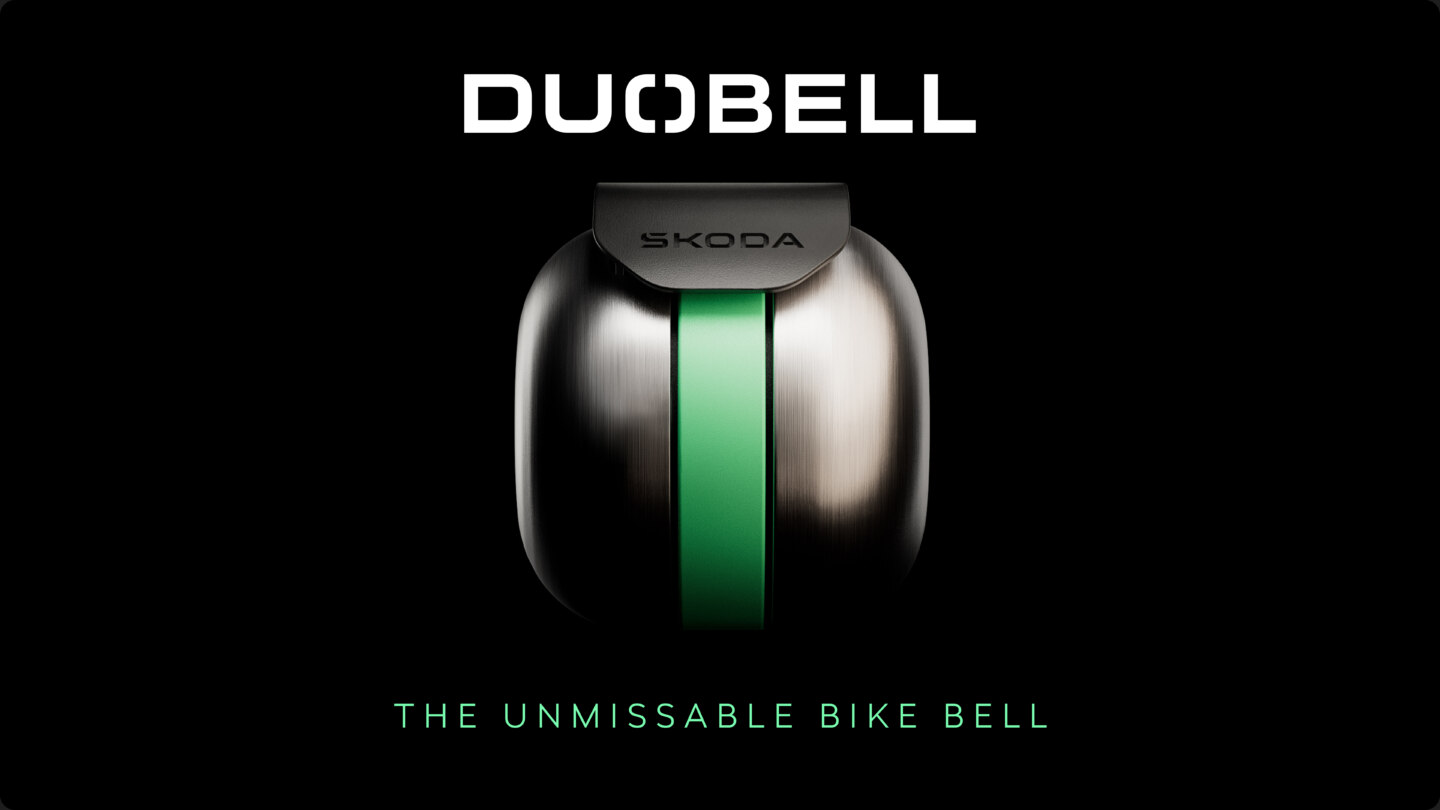
More and more pedestrians are walking around with noise cancelling headphones, and regular bike bells just can't get through to them. Collisions between cyclists and distracted pedestrians are on the rise, up 24% in London alone last year. Now researchers at the University of Salford have found a frequency sweet spot between 750 and 780 Hz that slips past ANC algorithms. A new bell called the DuoBell uses that gap, adding a second resonator and irregular strike patterns that the headphone software simply can't suppress fast enough. In testing, pedestrians wearing ANC headphones got up to 22 metres of extra reaction distance. It's a fully mechanical, analogue trick that outsmarts digital noise cancellation. Sometimes the simplest solutions are the smartest.
Good idea: AI that protects elephants
In Coimbatore, a city in the Indian state of Tamil Nadu, 11 elephants are known to have been killed by trains since 2008. Coimbatore facilitates 148 unique train routes per week: a lot of opportunities for trains and elephants to collide. But the Tamil Nadu Forest Department has developed a solution: an AI-powered surveillance system that spots elephants as they cross train tracks and gives drivers an advanced warning to stop.
Good Idea: watch this Video on full screen (on someone elses device) then walk away
https://www.youtube.com/watch?v=6YNqngqH9og
Happy hunting
#aprilfool #prank #innocent
10 HOURS! BEST 4K UHD Cracked Broken Screen Effect Prank
Good idea: solar boats for the amazon
In the Achuar territory, in the Ecuadorian Amazon, scientists and indigenous communities are driving a key change. The replacement of combustion engines with solar boats is beginning to transform the soundscape.
Good idea: green coding
https://en.reset.org/how-green-coding-works/
Green coding or hosting can form part of a sensible Corporate Digital Responsibility strategy. It can also serve as a future safeguard should you wish to move away from US big tech companies.
All programmes, services and websites have one thing in common: they consist of code. Whether written by a human or by generative AI is, for now, irrelevant – just as with its origins, modern information technology is based on simple programming code. Enter: green coding.
Good idea: climate shelters for hot summers
Spain has developed one of the most advanced networks of climate shelters in the world, as extreme heat becomes the deadliest environmental hazard of our time.
The nationwide network builds upon schemes already established by regional governments, including in Catalonia, the Basque Country and Murcia. In Barcelona, there are already 400 climate shelters available in public buildings such as libraries, museums, sports centres and shopping malls.
Good idea: mandatory shrinkflation labels
Austria will introduce mandatory labeling for shrinkflation from April, requiring major supermarkets and drugstores to warn customers when product quantities decrease without a corresponding price reduction.
Good idea: trees instead of barriers
https://www.bbc.com/news/articles/cqxdxg7j3qgo
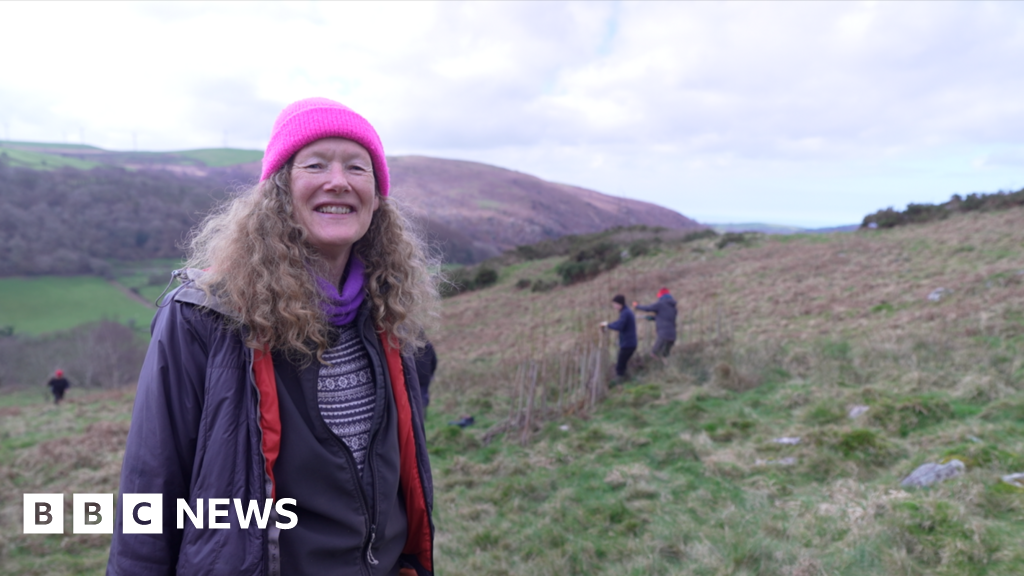
After that devastating day, a group of villagers came together with an idea - they would plant trees, thousands of them, to try to reduce the risk of flooding in the future.
Trees and woods play a "vital" role in reducing flooding by slowing down the flow of rainwater, absorbing rainwater and reducing erosion, according to the Woodland Trust.
Good idea: smart threads
https://medicalxpress.com/news/2026-03-surgical-anti-inflammatory-drugs-wound.html
Deep cuts from accidents or surgeries require stitches, typically followed by oral anti-inflammatory medications like ibuprofen. While these medications help with pain, they don't act specifically on the wounds. Consequently, the site of the stitches can get inflamed, which could slow healing and lead to scarring.
Now, researchers at Ouachita Baptist University are creating stitches loaded with anti-inflammatory drugs to deliver the medication directly to the injury. Mieya Kirby, an undergraduate researcher working with chemist Sharon K. Hamilton, presented her results at the spring meeting of the American Chemical Society.
Good Idea: 10min exercise before class
https://news.northeastern.edu/2025/12/19/exercise-benefits-executive-function/
A Northeastern study had students do a short bout of moderate exercise right before class. Better focus, sharper problem solving, stronger executive function. Compared to days they skipped it.
Doesn't need to be intense either. A brisk walk counts.
Good idea: cradle 2 cradle fashion
https://phys.org/news/2026-05-recyclable-protein-textiles-microplastic-pollution.html
Engineers from Washington University in St. Louis may have a solution to waste from the textile industry: protein-based materials, which are produced in bioreactors (think giant brewing tanks) using genetically engineered microbes. These materials can be readily recycled after use and remade into the same fibers over multiple cycles. In addition, any microparticles, if released from these fibers during washing, would be biodegradable.
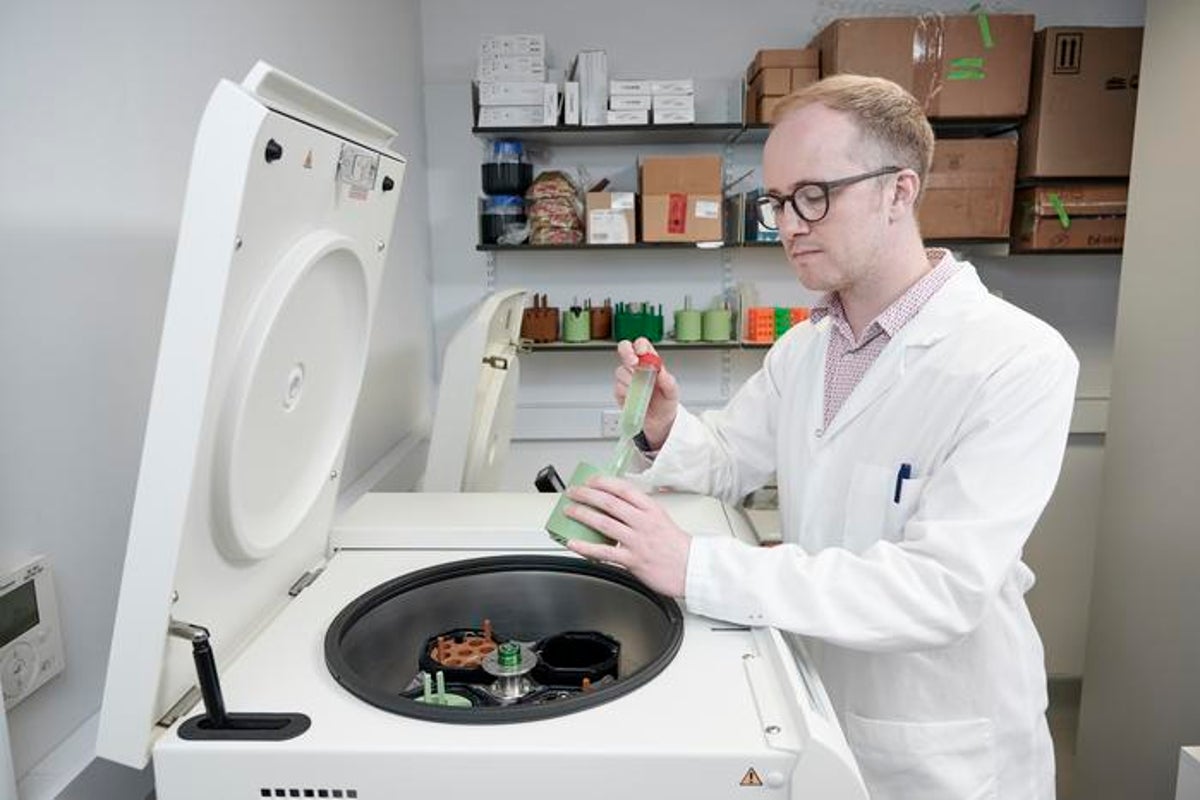
"We engineered recyclable protein fibers that dissolve in a formic acid solution within seconds, yet remain stable in water and strong after drying," said Zhang.
Study:
https://advanced.onlinelibrary.wiley.com/doi/10.1002/adma.73200
Good idea: open source navigation apps
https://en.reset.org/off-the-grid-on-the-trail-eco-friendly-navigation-apps/
Typically, the most-used apps are sat-nav-based, free to start with, but eventually require a paid upgrade as the free version is very limited. Or, they’re free, but share sensitive location and movement data with unknown third parties. Neither option is ideal.
But there are alternatives. Actually, there are many, and these navigation apps also have another important advantage. Even if the apps’ energy consumption cannot be tracked in detail, we can assume that open-source apps have a smaller carbon footprint as data, and therefore energy-intensive advertising and tracking, are eliminated.
Good idea: climate action to increase crop yields
https://airqualitynews.com/headlines/cleaner-air-from-climate-action-could-ease-hunger-risks/
Previous research has suggested that some climate mitigation measures – such as carbon pricing, expanding crops used for bioenergy and planting forests in new areas – might raise food prices and reduce the number of calories available worldwide. That could leave millions more people at risk of hunger.
However, those studies missed an important side effect: policies that cut greenhouse gases also reduce air pollutants that create ground-level ozone, including methane and nitrogen oxides.
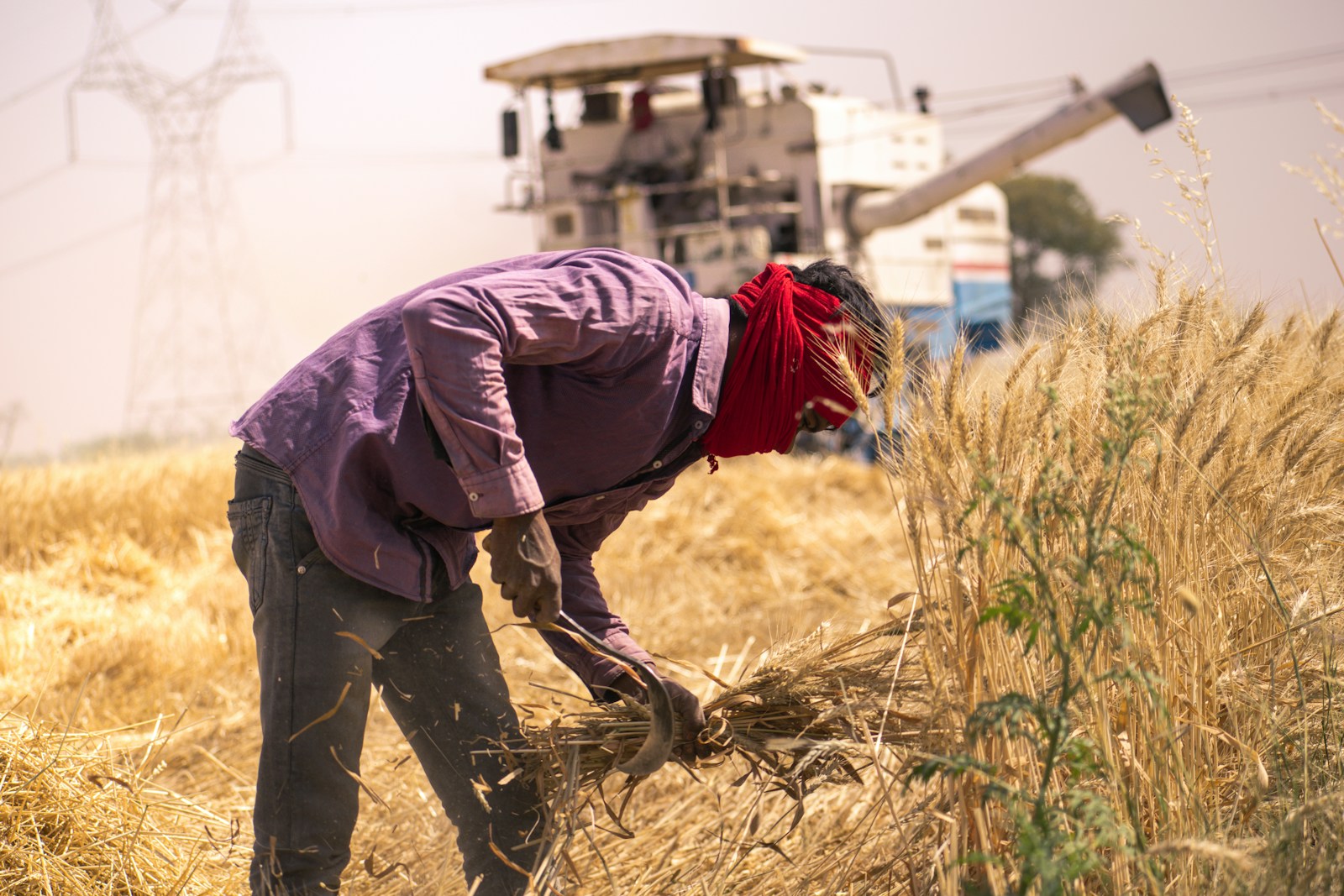
Ground-level ozone is harmful to crops. It damages plants and reduces yields of key staple foods such as wheat, rice and maize. By lowering ozone pollution, climate policies can improve crop productivity and partly offset the economic pressures those policies place on food systems.
Full study: https://www.nature.com/articles/s43016-026-01322-3
#worldhunger #ozone #climateprotection #food #climate #pollution
Good idea: convert plastic into parkinsons meds
https://www.independent.co.uk/news/health/plastic-bottles-transformed-parkinsons-drug-b2939376.html
Plastic bottles have been transformed into a drug to treat Parkinson’s disease using bacteria, a study has shown.
It is the first time a natural, biological process has been used to turn plastic waste, which would otherwise end up in landfill, into a drug for a neurological disease to help improve people’s lives.
Full study: https://www.nature.com/articles/s41893-026-01785-z
Good idea: soundwaves that change material stiffness
https://techxplore.com/news/2026-03-remotely-reprogram-material-stiffness-implants.html
A team of researchers co-led by the University of California San Diego, University of Michigan, and the French National Center for Scientific Research (CNRS) at Laboratory of Acoustics of Le Mans University has demonstrated a new way to remotely control how a material behaves—using sound. The findings could lead to the development of protective gear, robotic muscles or medical implants that adjust their stiffness on demand.