The Climate Historian
Walking, reading, writing.Trying hard to remain human in this age of rage.
Posts auto-delete because the Internet's too cluttered and most posts are not worth keeping anyway.
Interesting reading.
China’s Great Green Wall is one of the largest efforts to stop deserts from advancing, it's a vast band of new forests across northern China that acts as a barrier against desertification.
It has succeeded where many similar projects have stalled or failed, giving other countries both a model to follow and lessons on what to avoid when planning their own greening programmes.
The internet did not kill reading. It changed the way we read, rewarding fragments over depth, outrage over understanding and speed over thought. Meanwhile, misinformation is free and the truth increasingly sits behind a paywall.
What happens to a society that can no longer finish a long article or follow a complicated argument?
Last week, I wrote about the deepening drought in the United States and suggested it could evolve into something reminiscent of the Dust Bowl years. A few readers asked what those years were.
So, here’s the story of how an ordinary stretch of farmland became the centre of one of the harshest environmental disasters in American history.
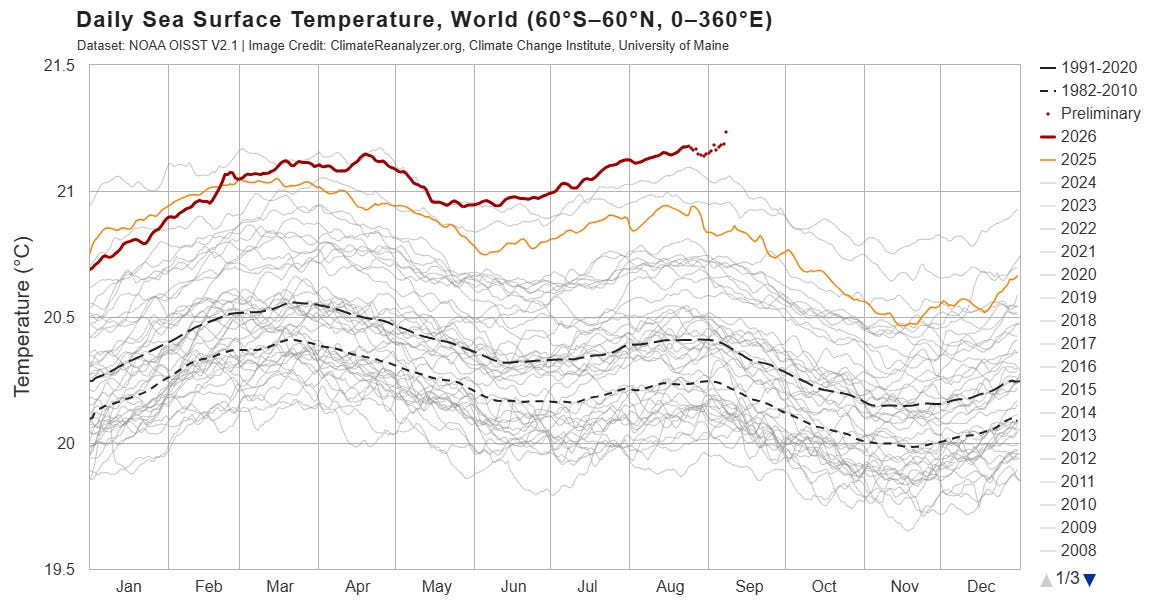
If there is one lesson to take from this latest heatwave, it is that Europe’s record-breaking heat is part of a broader climatic transformation that is gradually reshaping the continent.
We're already testing the limits of what our infrastructure, hospitals, and institutions can absorb, and the only way to prevent those limits from being pushed further is the one we have known about for decades: a fast phase‑out of fossil fuels.
The word “uncharted” has become a journalistic cliché, especially in climate‑related reporting.
Most people don’t consciously care about the word itself but journalists use it because it is safe, dramatic, and it presents uncertainty.
They overuse it because they're struggling to describe a world where the baseline keeps shifting. When everything is unprecedented, language gets repetitive.
https://www.ft.com/content/857d4917-b04b-4349-b90a-7f3cf7aabd3f?syn-25a6b1a6=1
The COP process has long been hostage to the veto of petrostate interests. What happened this week in Colombia may be the beginning of something different.
60 countries agreed to form a coalition committed to accelerating clean energy deployment and phasing out coal, oil, and gas.
https://www.theguardian.com/environment/2026/apr/30/colombia-climate-talks-end-fossil-fuel-phaseout
Smoke from more than 100 active wildfires in northern Ontario have made Toronto’s air quality the current worst in the world and caused yellow, smoky air in cities across the north-east US.
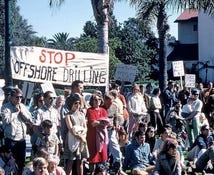
Before climate change became political, there was Santa Barbara.
Today, I'm writing about how a 1969 offshore oil blowout in California shocked the American public and helped create the EPA and modern environmental law.
Nixon, Vietnam, and a catastrophe that forced the United States to look in the mirror.
https://theclimatehistorian.substack.com/p/the-black-tide-that-made-america
Orbán concedes election to Tisza’s Magyar
That’s it. Margin too big for him to attempt to rig the vote.
A defeat for Putin, a defeat for Trump, a victory for Europe, and above all, a victory for the Hungarian people.
It’s astonishing how far greed can drive people. Already rich, they still grab for every last scrap, and they do it by denying millions the services they depend on to live.
Some firms, like BlueCrest, 👇 were rebranding employees as “self‑employed partners” instead of staff, allowing both sides to dodge the higher taxes and National Insurance contributions that real employees must pay.
Obviously, once the loophole closes, they hate it.
https://www.ft.com/content/6b8cd156-c5bb-4cce-8c54-818fd19fab96?syn-25a6b1a6=1
Across Europe, heat waves and droughts have increased the at‑risk‑of‑poverty rate by 1.1 percentage points, pushing an additional 5.6 million people into poverty between 2004 and 2022, a reminder that climate change is creating real hardship for people who never chose to face it.
Today I'm writing about the drought in the United States.
More than half (56%) of the country is now in drought. That number is easy to read and easier still to overlook.
But on the ground, it translates into water shortages, rising wildfire risk, and a growing pressure on landscapes and communities that are not built to withstand this kind of strain.
The question isn’t whether the AMOC will keep weakening, but how quickly it will weaken and how extreme the change will be.
The mid‑century tipping point that Prof Stefan Rahmstorf highlights isn’t far-off theory. It falls within the lifetime of many people alive today.
What we decide now - about emissions, energy systems, and policy - will shape whether we cross that threshold at all.
Sometimes a single historical detail explains an entire era.
When Alan Greenspan was sworn in, Ayn Rand was there in the Oval Office watching. That image says rather a lot about what happened next.
The Prime Minister of Canada and the President of Finland have co-authored an op-ed in The Economist on the new world order.
The era of wishful geopolitical thinking is over, they write.
As they put, we should stop daydreaming about the world we wish existed and start grappling with the one that’s actually in front of us.
“I want us to be happy about the weather. I don't know whether something's happened to meteorologists to make you all a little bit fatalistic and harbingers of doom.”
"Because I think there will be hundreds, if not thousands, of excess deaths. It will be brutal.”
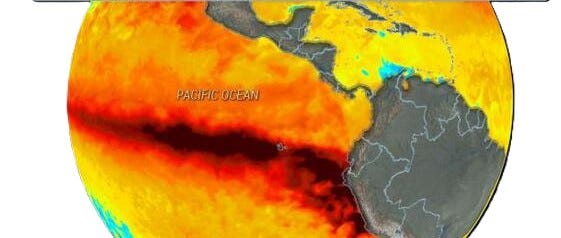
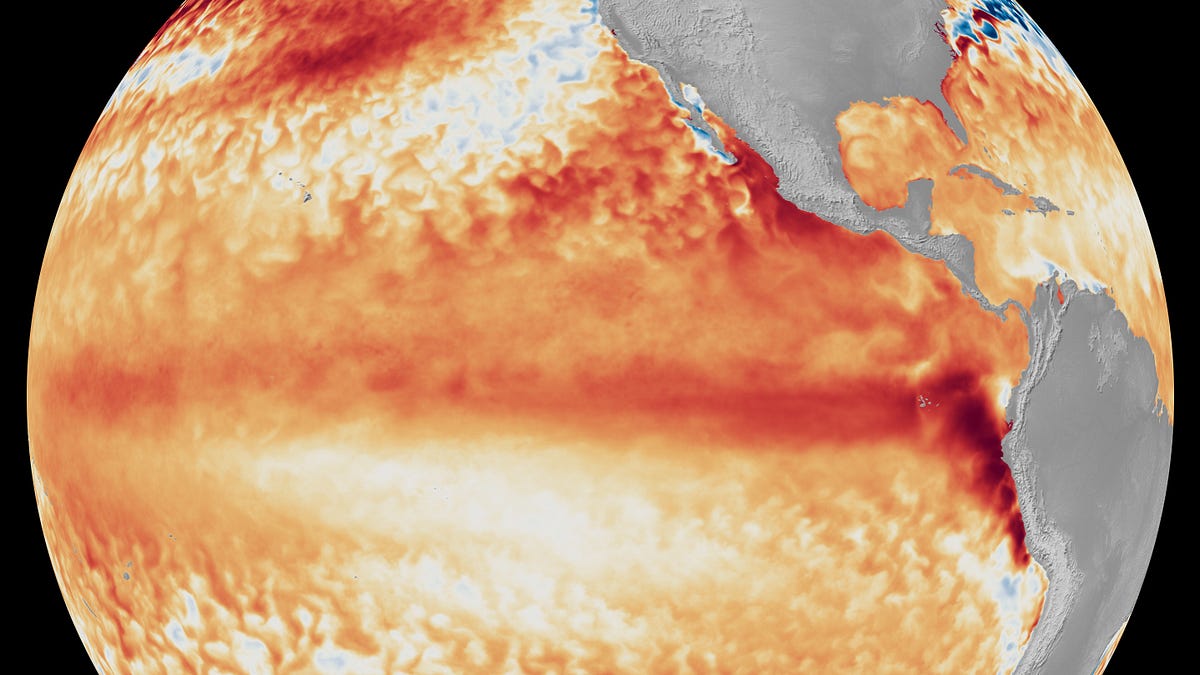
This El Niño is projected to be the largest in at least 150 years
El Niño has always returned. What has changed is the world it now returns to.
https://theclimatehistorian.substack.com/p/this-el-nino-is-projected-to-be-the
This week, The New Yorker dropped a bombshell profile on Sam Altman and #OpenAI, packed with leaked internal docs.
The man is portrayed as a master manipulator, cunning yet clueless, unethical, and a pathological liar who barely grasps the tech he’s selling. Even his allies call him dangerous.
https://www.newyorker.com/magazine/2026/04/13/sam-altman-may-control-our-future-can-he-be-trusted
New post on The Climate Historian
Rethinking whales, intelligence, society, and survival in a fractured age.
Greek shipping companies made almost $4bn carrying Russian oil in past three years.
In the meantime, Russia hammers Kyiv with missiles and drones, killing tens of innocent civilians and children.
https://www.ft.com/content/d8518934-3618-43dc-af91-63a948c9bae3?syn-25a6b1a6=1
Book of the Week: On the Calculation of Volume (books1-3) by Solvej Balle.
What if you alone remembered every day, while the world quietly erased its own past? What would still matter?
A novel where time loops, consequences fade, and one unsettling question emerges: what happens when consumption leaves no visible trace, except for the one person who sees and remembers it all?
Are We Entering a New Nuclear Era?
Nuclear power, long shaped by fear and failure, is finding its way back into the centre of the climate conversation. As energy demand surges and the pressure to decarbonise intensifies, governments and corporations are giving it another look.
Can a technology defined by its past move fast enough to shape our future?
Today, I'm writing about nuclear power’s return in an age of crisis and energy demand .