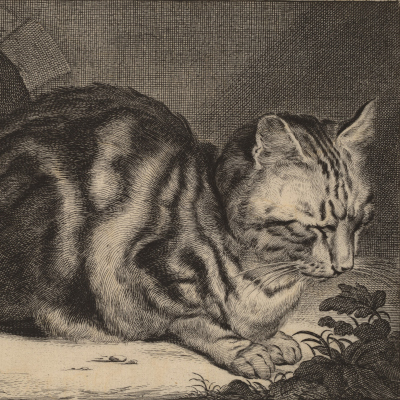
The older Internet felt more like a collection of places because communities had addresses, customs, memory, and edges.
The Internet Used to Have Places
The Internet used to have places. That sounds a little strange, because the Internet still has addresses, domains, servers, and sites. Technically, the places are still there. But the ordinary experience of being online has changed. A lot of what people now call the Internet happens inside a few large systems where everything is flattened into feeds, profiles, timelines, recommendations, and search results.
Older online spaces had more edges. A BBS had a name, a phone number, a sysop, message boards, file areas, door games, regulars, rules, and usually some local flavor. A forum had sections, moderators, old threads, in-jokes, arguments, and regulars who knew the room. A personal website had its own layout, odd links, favorite subjects, broken corners, and evidence that a particular person had arranged it by hand. These spaces could be ugly, clumsy, badly moderated, or hard to find. They were still recognizably themselves.
That sense of place came partly from limitation. You had to go somewhere specific. You dialed a board. You visited a site. You joined a forum. You subscribed to a feed. You learned the customs of that space, for better or worse. The software shaped the interaction, but it did not erase the room. A mailing list felt different from a web forum. A Unix channel on IRC felt different from a local BBS message area. A hand-built homepage felt different from a corporate support portal.
The modern feed weakens that distinction. A post from a friend, a corporate announcement, an argument between strangers, a news story, an ad, a joke, a tragedy, and a promotional video may all arrive in the same vertical stream. The platform decides what order they appear in and how much room each deserves. The reader moves through the stream instead of moving between places. The result can be efficient, but it also makes everything feel strangely interchangeable.
This was not an accident. Platforms benefit when the user stays inside the same environment. If every subject, community, and relationship can be reduced to activity in one feed, the platform gets the attention, the data, and the advertising space. Links out become leaks. Independent sites become raw material. The old habit of wandering from place to place gets replaced by waiting for the system to bring things to you.
Some of what we lost was worth losing. Old online places could be hostile, exclusionary, poorly documented, and run according to the moods of whoever controlled them. Discovery was uneven. Search was worse. Small communities could become petty and closed. A lot of people were left out or pushed out. It is too easy to remember the charm and forget the gatekeeping, broken software, and endless local politics.
Still, there was value in locality. A place with memory gives conversation weight. Old posts can be found. Regulars become known by what they contribute over time. A community develops expectations that are not only imposed by a distant policy team. The archive matters. The URL matters. The owner or maintainer matters. You can point to the place and say: this is where that conversation happened.
Feeds are poor at memory. They are good at now. They are good at reaction. They are good at telling you that something is happening somewhere. But they are bad at helping a conversation become a lasting public object. A forum thread can be messy, but it can also become a reference. A blog post can be linked years later. A mailing list archive can explain why a project made a decision. A feed post usually sinks, even when it mattered.
The loss of place also changes identity. On a personal site, the site itself tells you something. The design, the links, the archive, the categories, and the old posts all add context. On a platform, identity is compressed into a profile, a handle, and the most recent things the system decides to show. That is convenient, but it is thin. It makes people easier to sort and harder to know.
This is one reason the independent web still matters. A personal website is a place. A small forum is a place. A blog with comments, an RSS feed, archives, and outbound links is a place. It has an address. It has memory. It has limits. It can be quiet for a week without being treated as a failure. It does not need to behave like every other site on the Internet.
The same is true of older protocols that refuse to become everything. IRC channels, Gemini capsules, Gopher holes, mailing lists, and small community servers all preserve some sense of destination. They ask the user to choose where to go. That is slower than a feed, and sometimes less convenient. It is also more human in an old-fashioned way. People gather somewhere, with customs and history, rather than being poured into one endless stream.
Platforms are not useless. They help people find each other. They make publishing easy. They can carry a link farther than a small site can on its own. The problem starts when they become the whole mental model of the Internet. If every public conversation has to pass through a feed controlled by a company, then online life becomes less like a city of neighborhoods and more like a mall where every corridor belongs to the same landlord.
The answer is not to rebuild the old Internet exactly. We cannot, and we should not want to. The better answer is to keep making places. Make sites with archives. Keep feeds visible. Link to other people’s work. Run small forums when they make sense. Let communities have memory. Let websites look different from each other. Let some parts of the Internet be specific enough that they do not scale cleanly.
The Internet used to have places because people built them that way. It can have them again, at least in the corners we control. That may be enough. A web made only of feeds is easier to consume, but a web with places is easier to care about.
<p>I realized we didn't put together any release notes for v4.15.0, so here they are :smile:</p>
<p><em>For reference, v4.15.0 was released 12 August 2026.</em></p>
<p>[...]</p>
NodeBB v4.15.0 — QoL and security updates, plus a few new features
I realized we didn't put together any release notes for v4.15.0, so here they are
For reference, v4.15.0 was released 12 August 2026.
[...]
Security Fixes
We receive many reports for vulnerabilities via our bug bounty program, and we encourage people to poke around and find vulnerabilities to report.
Note that as of today (1 September 2026), any reports compiled with the help of large language models are exempt from the bounty payment.
From v4.14.0 to v4.15.0 there were at least five security fixes shipped — we encourage all admins to update to the latest stable version at all times.
Instant voting
Voting on posts used to wait for the round-trip to complete. On high-volume instances this caused a bit of a delay between a vote and its response, so the front-end now just reflects the new vote without waiting for a confirmation from the backend.
Upload UI redesigned
@baris says "feat: update uploads to look nicer" so purportedly, it looks nicer. Check it out
ActivityPub updates
Chat privileges are now exposed for fediverse users. Existing sites should automatically grant this privilege to the fediverse user. If you want to restrict chat messages from remote users, disable this setting.
A couple of server-side improvements to the ActivityPub note/reply handlers so fewer database calls are made.
Queued topics now automatically pull for replies when accepted, without waiting for someone to enter the topic itself.
Added a configurable age cutoff for auto-categorization filters.
Activity Intents are now properly gated behind the global "activitypub enabled" switch.
Hmm… rpgpub.com has been mostly down over the past couple of days (verified with downforeveryoneorjustme.com). This morning it seems to be up, but after a new screen appeared for me to click and thus prove my membership of humankind, it announced that I had been blocked. Not my account, my access to the site as a whole.
I’m assuming that whatever bot filter they have put in place is affronted by my use of an adblocker, but there we are. Unless it gets tweaked and sorted in the next few days I guess that’s that.
Still, although I regret potentially losing another forum, it’s not as if I get much out of it these days. RPG discussions are increasingly narrow and threadbare, leaving me with little energy to engage and little will to contribute.
#RPGpub#RPG#Forums
Now that reddit requires everyone to login, can we go back to open forums now? Yes, your shit will be used to train an LLM, but I am at the point to where I want open access internet things more than I want people trying to prevent LLM training with pay walls and login gates. #Reddit#Enshittification#Forum#Forums




 For reference, v4.15.0 was released 12 August 2026.
[...]
For reference, v4.15.0 was released 12 August 2026.
[...]
 Security Fixes
We receive many reports for vulnerabilities via our bug bounty program, and we encourage people to poke around and find vulnerabilities to report.
Note that as of today (1 September 2026), any reports compiled with the help of large language models are exempt from the bounty payment.
From v4.14.0 to v4.15.0 there were at least five security fixes shipped — we encourage all admins to update to the latest stable version at all times.
Instant voting
Voting on posts used to wait for the round-trip to complete. On high-volume instances this caused a bit of a delay between a vote and its response, so the front-end now just reflects the new vote without waiting for a confirmation from the backend.
Upload UI redesigned
Security Fixes
We receive many reports for vulnerabilities via our bug bounty program, and we encourage people to poke around and find vulnerabilities to report.
Note that as of today (1 September 2026), any reports compiled with the help of large language models are exempt from the bounty payment.
From v4.14.0 to v4.15.0 there were at least five security fixes shipped — we encourage all admins to update to the latest stable version at all times.
Instant voting
Voting on posts used to wait for the round-trip to complete. On high-volume instances this caused a bit of a delay between a vote and its response, so the front-end now just reflects the new vote without waiting for a confirmation from the backend.
Upload UI redesigned
 " so purportedly, it looks nicer. Check it out
  ActivityPub updates
Chat privileges are now exposed for fediverse users. Existing sites should automatically grant this privilege to the fediverse user. If you want to restrict chat messages from remote users, disable this setting.
A couple of server-side improvements to the ActivityPub note/reply handlers so fewer database calls are made.
Queued topics now automatically pull for replies when accepted, without waiting for someone to enter the topic itself.
Added a configurable age cutoff for auto-categorization filters.
Activity Intents are now properly gated behind the global "activitypub enabled" switch.
ActivityPub updates
Chat privileges are now exposed for fediverse users. Existing sites should automatically grant this privilege to the fediverse user. If you want to restrict chat messages from remote users, disable this setting.
A couple of server-side improvements to the ActivityPub note/reply handlers so fewer database calls are made.
Queued topics now automatically pull for replies when accepted, without waiting for someone to enter the topic itself.
Added a configurable age cutoff for auto-categorization filters.
Activity Intents are now properly gated behind the global "activitypub enabled" switch.