#clamfacts

11 posts · Last used 2d

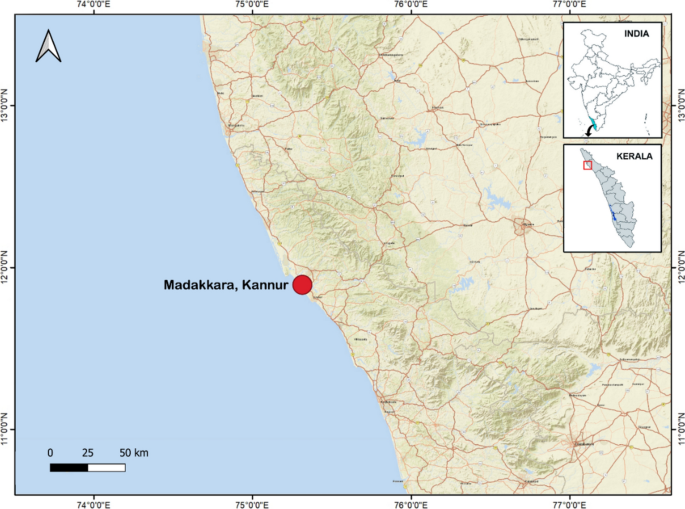
New solar-powered clam just dropped, part of a small club that partner with algae in their bodies for food! Geloina expansa lives in mangroves in South Asia and farms algae called zooxanthellae in its gills, the same type that corals partner with in a process called photosymbiosis. This is a major topic of research interest for me, so I always drop everything when a new paper about bivalve photosymbiosis comes out. Almost all photosymbiotic bivalves, including giant clams, are in the cockle family, but G. expansa is now among the <5 extant species from other bivalve families. #clamFacts https://link.springer.com/10.1007/s44289-026-00168-8
24
0
17
0
Replying to
@MHowell@kolektiva.social @FlockOfCats@famichiki.jp clams do clammunicate, through pheromone signals and sometimes even by living close together to feel each others' body language. If one clam closes the others know a threat is nearby! #clamFacts
9
0
3
0
Giant clams love light. As a general rule, the more light they can get for their symbiotic algae, the better. Some species will even continue to photosynthesize in air for hours exposed by the tide, since their photosynthesis provides them some oxygen. Which makes the "devil clam" (Tridacna mbalavuana) from Tonga and Fiji so weird. It lives up to 100 ft down! The super clear waters where it's found allow it to live as a kind of counterpart to mesophotic corals, which are able to photosynthesize even far from the sunlit surface. Since they are so rare, the devil clams are not well studied, but researchers determined it is able to compensate for its very deep lifestyle through some of the greatest photosynthetic efficiency known from giant clams! #clamFacts https://www.inaturalist.org/taxa/479982-Tridacna-mbalavuana
154
1
104
0
Clams can integrate all sorts of toxins from the phytoplankton they eat. Some prominent marine ones include paralytic shellfish poisoning, amnesic shellfish poisoning, and diarrhetic shellfish poisoning. There are dozens of known toxins around the world. In freshwater they can accumulate microcystin, which damages the liver. Before collecting clams for eating, always check for warnings from the local water quality or public health agency! #clamFacts
43
1
25
1
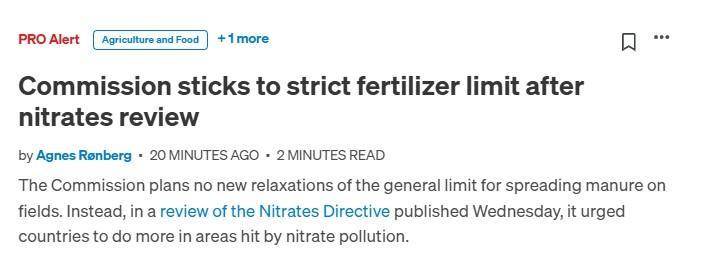
RE: https://eupolicy.social/@GreenpeaceEU/116923909086714251 Psst...clams already provide us with tens of billions of free nitrogen removal services a year, and that's just a fraction of their power. If we helped them more through active aquaculture, we could cut nitrogen pollution from farming by about half! #clamFacts
Quoting
Nitrogen pollution - mostly from animal farming - is out of control in Europe. It kills soils, chokes rivers, makes people sick & costs billions So it’s good that the EU is keeping its limits to how much fertiliser farmers can put on their fields, and hints at more measures in the worst-hit regions
Open quoted post
47
5
35
0
Once zebra or quagga mussels get into a water body, it is very difficult to remove them. Many common molluscicides like copper or chlorine are also very harmful to other life forms. Pseudomonas fluorescens strain CL145A is a bacterium that produces a toxin highly specific to zebra and quagga mussels. It can be released as dead cells near the mussels, which ingest it, with the toxin destroying their digestive system. In this way it is similar to Bacillus thuringiensis israelensis (Bti), which is valued for its very specific toxicity to certain insect pests. CL145A is specific enough that it has been used to kill zebra mussels smothering native freshwater mussels, leaving the native mussel unharmed! It is sold as a product called Zequanox, which hasn't been a huge hit due to its comparative expense compared to other solutions. It also can reduce dissolved oxygen in the water when applied indiscriminately. Scientists are trying to find similar targeted solutions that will kill invasive golden mussels, currently spreading through aqueducts and reservoirs in California. #clamFacts https://www.bizjournals.com/sacramento/news/2025/05/01/marrone-golden-mussels.html?rel=plus
35
1
21
1
Bivalve hinges have to be very resilient, considering the animal's very existence depends on keeping the valves attached and articulated. One team of researchers mechanically opened and closed a freshwater mussel shell 1.5 million times, finding no signs of cracking or deformation from the strain! They found that the mussel uses a fan-shaped structure between the valves to deflect stresses. In the crystal of the shell, a complex fabric of mineral fibers are wrapped in organic materials that act kind of like the reinforcing rebar of concrete, to allow the structure to deform rather than fracture. Engineers could use this as inspiration for more resilient hinge designs! #clamFacts https://en.ustc.edu.cn/info/1150/5111.htm
79
4
57
2
Larval oysters have an eye which can detect wavelength and intensity of light. They use the ratio of red and blue light to determine the correct depth at which to settle and attach to the bottom, working from the principle that red light doesn't penetrate as far into the water as blue light! They are phototaxic, attracted to depths where red light is present, and swim up and away from places where only blue light is present #clamFacts
174
17
130
1
Giant clams can survive for hours out of water. They actually produce enough oxygen through the action of their photosynthetic algal symbionts to power their respiration for short periods, even with no water to breathe from. But even they have limits, and last year the famous clam garden of Orpheus Island, where 100s of 40-year old specimens were thriving, was wiped out by weeks of low salinity after a storm event. These 4 ft long clams were the legacy of an aquaculture research program from the 80s. Even after the Orpheus Island center was defunded, the clams remained. Hopefully further research can determine whether their loss was simply a result of poor placement (there are mentions of occasional low salinity events in the past), or whether they would have survived if not for increasingly volatile and heavy storms caused by climate change. While the loss of the clam garden was devastating, their presence and spawning helped support several generations of new recruits in the surrounding area! #clamFacts https://www.jcu.edu.au/news/releases/2025/march/giant-clam-garden-a-victim-of-severe-weather
37
4
33
0
You've seen all posts