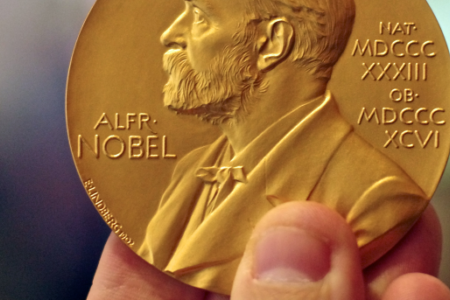
Does science need heroes or does it need to reform? I elaborate on this in a blog post, based on a talk I gave at the recent Rijksmuseum Boerhaave symposium on Prize Cultures. Idolizing heroes can worsen #bias, #inequality, and #competition in science. Yet, it does require good #leadership to ignite structural change. https://www.leidenmadtrics.nl/articles/does-science-need-heroes
Sarah de Rijcke
Professor in STS at Leiden University | Director at the Centre for Science and Technology Studies (CWTS) | ERC-project FluidKnowledge | AcademiaNet | UNESCO-NL Committee
A wonderful opportunity @cwts@social.cwts.nl for a prospective PhD candidate who is interested in studying research assessment reform https://careers.universiteitleiden.nl/job/Leiden-PhD-candidate-Reconfiguring-Research-Quality/1028952701/?utm_campaign=AcademicTransfer&utm_source=AcademicTransfer#apply
Are social scientists truly social beings? Looking at our @cwts@social.cwts.nl end-of-year party, the answer is a resounding YES! 🎉
Pictures by the lovely Biegzat Murat
As part of my first week as dean of the Faculty of Social Sciences here in Leiden, I gave a short speech at the New Year’s reception last week, a tradition at our faculty. I wanted to create a bit of depth, which is quite a challenge in five minutes! I also wanted to give people a good ‘hook’ to approach me afterward. So I ended up playing with a colourful metaphor. If you would like to read the speech as well, the full text is available here: http://tinyurl.com/35b8zxxm
I love turning to Mark Carrigan for his sharp and reflexive writing on scholarly communication and all that is good, bad, and very ugly about social media platforms for academic communities. https://markcarrigan.net/2023/10/18/%f0%9f%93%8dcould-bluesky-be-the-replacement-for-academic-twitter/
With Anne Beaulieu in the lead, we (@kathleengregory@mastodon.social, Matthew Mayernik, Christine Borgman) received funding to organize a NIAS-Lorentz workshop in April ‘24 on “How to evaluate emerging knowledge infrastructures.” We will use the case of knowledge infrastructures that support innovative forms of knowledge creation to explore the possibilities of evaluation beyond comparison. Very exciting! https://nias-lorentz.nl/workshops/
Alan Dix cited in great keynote @lizziegadd@mastodon.online #STI2023: “Metrics are bad, but humans are (far) worse.”
The Open Book Futures (OBF) project announces support & funding for 3 experimental book publishing pilots. These pilot projects will be developed with OBF’s Experimental Publishing Group supported by Coventry University and overseen by the Open Book Collective #OpenAccess https://copim.pubpub.org/pub/expub-pilot-call/release/4
Gripping call for concerted action and strong international support from #UnitedNations Secretary General António Guterres on #Gaza #Israel and the ongoing disaster. https://www.nytimes.com/2023/10/13/opinion/israel-gaza-united-nations.html?unlocked_article_code=rPBhOnZJmA5aRDSaVGf1R-Kc8cAKkT6IT8GQUjKpjTiJabGLk1U4V0_vc-uxnaLLDdAVlDUmefYobJJhzh7gYfVE7IWb37pSJsrH3zSkijGtfHFnM0DDheJ0u9MdBjkOnP4J6bmjMGCLkfLB9RGNcuSGknPYkYsMcvZ1lpY9QL_9UQhGx-eLqVHAZZeafVArPU6TZeL_hJcbK8eXM50tPRHF10FV0nxcvjgFmXdy7oTY94y8x4vwNj8hpxT915SfLTGa_QnLr4peSleqq2n1sYEbk6hxmUVEeKbD6Vc7C51KP6yahxyvjGvY7pb6Hsf5eWqDwxaiIpqFrg0pl6ZOiARVcfuB&smid=url-share
‘Crusaders against an outside foe’… In trying to coming to grips with our depressing election results, @jameswilsdon@mstdn.social suggested I read Kenan Malik’s “Not so Black and White.” In the meantime, I started with Malik’s Guardian columns, f.i. on performative migration politics 🔥 https://www.theguardian.com/commentisfree/2023/nov/12/across-the-globe-compassion-for-migrants-has-given-way-to-cruel-performative-politics
@edwiebe@mstdn.ca Thank you for your thoughtful comment. I agree that science is a collective endeavor, and it's important to recognize the contributions of the community. Your perspective raises an interesting question: How might we shift the narrative from individual "hero" accolades to celebrating collaborative achievements in science? Curious to hear thoughts on initiatives or systems that could support this more communal approach to recognition.