Elektrine
Log in Register
Paige Chat Timeline Gallery Friends Email Drive DNS Private DNS Domains VPN Kairo Nerve
Remote

The Gods and Their Croziers

@godsandcroziers@pagan.plus
hometown 4.6.8+hometown-1.3.0
  • Open on pagan.plus

A project to apply comparative mythology to Celtic-Christian Hagiography to undo the layers of "Interpretatio Christiana" that rendered the Celtic gods into Saints. Focusing mostly on the Irish saints and Gods, but with wider relevance to how we understand Celtic, Norse, Mediterranian, Ossetian, Iranian, and Indian traditions.

65 Followers
79 Following
50 Posts
Joined April 08, 2026
Newsletter:
https://buttondown.com/godsandcroziers/archive/
General Alt:
https://masto.hackers.town/@seachaint
Nazis and Folkists:
Not Welcome
Open post
The Gods and Their Croziers @godsandcroziers@pagan.plus
· 5mo ago
Replying to
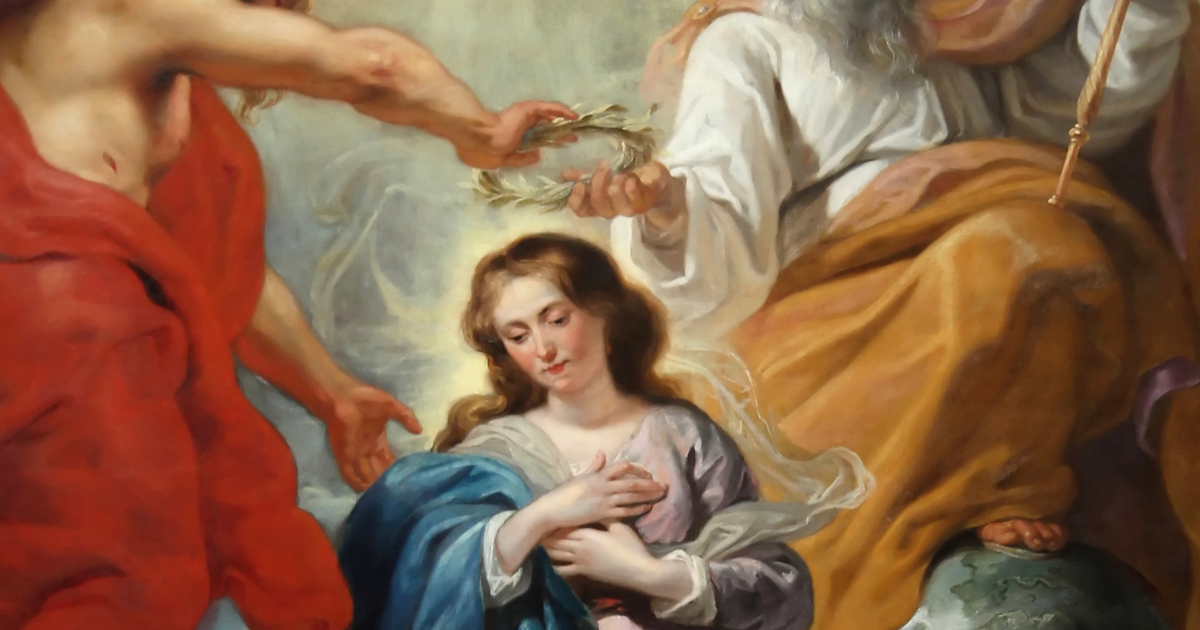
As promised: today's issue of The Gods and Their Croziers is my second issue on the #Morrigan. Like my first Mórrígan issue it's a mess of cross-identifications, cosmic thoughts, and speculations about the wider role of the Mórrígan outside "war". It's built around an observation, that several fairs in areas associated with the #Mórrígan, and feast days of several local saint versions of her, are held at or near #Bealtaine / #Beltane But, it leads to interesting observations that suggest further identifications for her throughout myth and folklore: from Clídna to Aífe to Crédhe of the Yellow Hair. As ever: this is not ”all" the Mórrígan, and it's not counter to what we already knew. May 6th: The Mórrígan, Queen of Summer, as Sts. Inghean Bhuidhe & Cróbh Dearg https://buttondown.com/godsandcroziers/archive/may-6th-morrigan-queen-summer-inghean-bhuidhe-crobh-dearg/
May 6th: The Mórrígan, Queen of Summer, as Sts. Inghean Bhuidhe & Cróbh Dearg
buttondown.com

May 6th: The Mórrígan, Queen of Summer, as Sts. Inghean Bhuidhe & Cróbh Dearg

Exploring The Mórrígan's possible role as Queen of Summer, and Archetypical Lover, and exploring her subtler alter-egos

7
3
9
0
Open post
The Gods and Their Croziers @godsandcroziers@pagan.plus
· 5mo ago

I'm changing the schedule for upcoming issues, again (pray I do not change it further).

I was planning a special issue for #Bealtaine (aka #Beltane) to follow up on my special issue for Imbolc. Then I realised that I didn't actually write an issue for Imbolc, I instead divided talking about it over two issues for the Fire gods who share the festival.. And actually, that sounds like a good idea for Bealtaine, too.

The next issue of TGaTC is going to be about "Saints" Cellach & Muiredach of Killala. These are the first example of the "Divine Twin" gods that I'll get to talk about, so I'm excited. I have no idea why they're being celebrated at Bealtaine, though - I see no connection yet.

Nevertheless, I'll have some detail on the festival in the "Patterns" section of that issue, scheduled for 30th April.

8
0
2
0
Open post
The Gods and Their Croziers @godsandcroziers@pagan.plus
· 4mo ago
Replying to
By fortunate happenstance, @juniperdivination@pagan.plus shared an essay from 2022 on folklore of the Moon in Ireland, which readers of this issue on Bréanainn/Midir might find interesting, also: https://juniperdivination.com/new-moon-in-irish-folklore
The New Moon in Irish Folklore
Juniper Divination

The New Moon in Irish Folklore

The new moon in Irish folk practices is associated with many customs for gaining luck, setting intentions, and starting growth for the lunar cycle.

6
0
1
0
Open post
The Gods and Their Croziers @godsandcroziers@pagan.plus
· 5mo ago
Replying to
I should add; specific points in the calendar are rarely associated only with one God or God-narrative. So when I say that Bealtaine is the Mórrígan Festival, I'm referring to the Festival Traditions and Seasonal Associations.. but there are other things that mythically happen on Bealtaine Eve/Day that have little to do with her. Nevertheless - these Saints of Bealtaine look very like Mórrígans, and we know at least some ancient festivals were held on sites associated with her, too. #Walpurgisnacht too has many traditions in common with Celtic #Beltane / #Bealtaine / #MayDay traditions, and I see the hallmarks of the Mórrígan's parallel mythic roles there too. I'll try to do those justice in the upcoming May 5th issue..
6
0
1
0
Open post
The Gods and Their Croziers @godsandcroziers@pagan.plus
· 5mo ago
Replying to
One of the theories I explore addresses the question: why are these two Munster-Mórrígna found in seasonal *triples* celebrating #imbolc, #Bealtaine, and #Lughnasa, but not #Samhain? And the answer, I think, is that in these guises they represented stages of the Corn: Planting, Ripening, and Harvest. That leaves one season and one goddess, but we already have a good idea: the last sheaf of the corn was woven and kept respectfully for next year, and called the #Cailleach - the same name as the goddess of Winter. That seems to put the Mórrígan in the position of being the representation of the "Maturing/Ripening" stage of the Corn. Planting should be done by Bealtaine! Planting is Brighid's business! :)
4
2
1
0
Open post
The Gods and Their Croziers @godsandcroziers@pagan.plus
· 5mo ago

One of today's interesting finds for #Celtic mythology and toponymology: "Berwyn" is a linguistic parallel of "Barfhinn" or "Fionnbhar" -> Finbar, the name of a famous Irish Saint.

The Berwyn mountain range is associated mythically with Gwyn ap Nudd, the Welsh cognate of Fionn mac Cumhaill, and the most obvious Saint of Fionn mac Cumhaill is Fionn-Barra - Finbar.

I've already found clusters of Irish saints with Ber* or Bar* names - it seems to be a name-part that's associated with the Fionn types, but I'm interested to see that the name-part might also be associated with Welsh gods of the same group.

4
0
4
0
Open post
The Gods and Their Croziers @godsandcroziers@pagan.plus
· 5mo ago
Replying to
It's not my first issue on the Mórrígan - the clearest Saint Mórrígan of all is Íta of Killeady: https://buttondown.com/godsandcroziers/archive/jan-15th-saint-ita-the-morrigan/ And, Conall won't be my first Saint of Fionn either, that goes to Berach: https://buttondown.com/godsandcroziers/archive/feb-15th-berach-our-first-saint-fionn/ But, I am excited to share the Divine Twins and the Moon/Immortality God this month. I just think they're neat.
Jan 15th - Saint Íta, The Mórrígan
buttondown.com

Jan 15th - Saint Íta, The Mórrígan

Saint Íta of Killeady, and her parallels with the Mórrígan, the great Tripartite Queen of Irish mythology.

4
1
2
0
Open post
The Gods and Their Croziers @godsandcroziers@pagan.plus
· 4mo ago

Today's issue of The Gods and their Croziers is out: Conall, the (possibly) Summertime Fionn.

This one is very delayed, and perhaps not as well written as it could be: my laptop died. However, I've included an array of Kings, Saints, and a Knight, with names and feast days and mythic details that mark them as being related.

https://buttondown.com/godsandcroziers/archive/may-22-conall-cernach-corc-the-summertime-fionn/
#Celtic #Celt #Myth #Mythology #Pagan #Irish #Welsh

buttondown.com
3
0
5
0
Open post
The Gods and Their Croziers @godsandcroziers@pagan.plus
· 2mo ago
Replying to
@tfb@functional.cafe Speaking as a Folklorist-in-training I'd be saddened if there were people concealing living traditions like this - it's a thing that grieves many of us, that Keening died out so widely and was never adequately recorded.
1
1
0
0
Open post
The Gods and Their Croziers @godsandcroziers@pagan.plus
· 4mo ago
Replying to
Evidence to support Bréanainn = Midir is very strong. His father clearly matches An Dagda, even his name "Erc" appears to be an old, old name of the Dagda. His mother, I've previously covered: Saint Íta, who matches the Mórrígan - the presumed mother of Midir. His proxied foster-son, Moling, has a birth-and-fosterage myth nearly perfectly matching Midir's foster-son, Aengus.
3
3
1
0
Open post
The Gods and Their Croziers @godsandcroziers@pagan.plus
· 4mo ago
Replying to
And with that in mind, so many pieces of Bréanainn's legendarium fall into place: his birth and baptism (~= Birth?) feature horned animals: Cattle and Goats (also sacred to Dionysus). At his death, he returns to his sister Bríg (-> Brighid), a Sun God, at a house named for Áed, another Sun-God - just as the Moon "dies" in the company of the Sun. Once again, I propose that "Saint" Brigit's own birth myth, where she revives an unnamed brother of hers born the night before, is secretly also that of Bréanainn/Midir - so the Moon is also "reborn" by the vivifying power of the Sun. As to his journey: it's very clear that the destination is the "Happy Afterlife", cognate with (for example) the Elesian Fields. Again, like Dionysus, who travels to the afterlife, and even shares close identity with Hades - as Soma is identified to Dharma/Yama. It's been noted that the story is similar to the voyages of Mael Dúin and Bran - this shouldn't be surprising, because "Bran" is probably another name for the god of Death himself, and Mael Dúin ("Warrior of Donn"?) appears to be a "Divine Twin" god, who (like Odysseus) frequently have voyages that visit the underworld and return.
3
1
0
0
Open post
The Gods and Their Croziers @godsandcroziers@pagan.plus
· 5mo ago
After drafting 1,500 words for the next issue on Midir/St Bréanainn (Brendan the voyager) I'm gonna have to dump it - there's too much to explain, and I'd end up not putting in the detail I want on the parallels in the Ulster Cycle I'll be leaning on some third-party explanations for gods like Dionysus, Soma, and the Holy Grail. I'm afraid pepple who want the full *meaning* of Midir/Bréanainn as Moon-God might need to do some extra reading or video-watching!
3
0
0
0
Open post
The Gods and Their Croziers @godsandcroziers@pagan.plus
· 5mo ago

Very rare to find a Saint who's given as officially descending directly from a God:

"St. Bladma is listed in the Martyrology of Oengus (died 11 March 824) as a saint: "Bladma, i.e. from Blad son of Conmac Cas Clothach, grandson of Tachall son of Cermait, son of the Dagda"

https://en.wikipedia.org/wiki/Lickbla?wprov=sfla1

Of course, the God Tuan mac Cairell is literally also a Saint, and one of the Saints Eithne is also canonically of the Tuatha Dé. Fun to see it here in the Martyrology of Oengus though, a fairly early and exclusively Christian project AFAIK: no pagan bards allowed, I would have thought.

en.wikipedia.org
3
0
3
0
Open post
The Gods and Their Croziers @godsandcroziers@pagan.plus
· 5mo ago
Replying to
Now, these gods are also modular A.F. and lots of re-shuffling can happen. They overlap with some other very significant archetypes, chiefly the Moon-Immortality god (Midir, Dionysus, Soma), the Thunderer, and the Divine Bard/Herald/Messenger. They'll usually have an ambivalent role with the King/Father and Queen/Mother archetypes - fully supportive at first, and a rival later on, say. This is probably reflecting their representation of "Everybody's Son". They also swap mythemes with one another, especially when one twin is mythically overshadowing the other. So, Krishna has the myth where he defeats a demon and gains a new name - whereas Balarama looks more like the Warrior archetype. Hermes, too, slays a divine guardian, Argos, and takes a name from it: Argeïphontes.
3
0
0
0
Open post
The Gods and Their Croziers @godsandcroziers@pagan.plus
· 4mo ago

The next issue of TGaTC is about the "Colum" group of saints, the best known of whom is Colm Cille
..and whoa boy is this hard to research, there are literally hundreds of versions of this God-Saint around the Gaelic world. And, there are few clear, unmixed, surviving parallels in other religions.
‪
I believe the closest clear parallel is the Hindu god Brahma - generally felt to be a later evolution of Vedic "Prajapati". But in the Irish material, it seems as if the more perennial, primordial roles of Prajapati are somewhat distinguished (as Cíar) from the more-worldly Irish "Brahma" (Colum).

One of the big "Unknowns" for me is whether the name "Colum" is indeed a Latin borrow, as is often claimed, or whether it derives from the apparently valid Celtic stem "Colum" meaning "Column" - a very thematically plausible name for this Brahma-like god-type. This is V. hard to prove either way.

2
0
2
0
Open post
The Gods and Their Croziers @godsandcroziers@pagan.plus
· 3mo ago
Replying to
This issue also has a bonus (belated, except in Cork) #Pride #LGBTQ section on how two of Eithne's parallels, Io and Renuka, are both patronesses of trans people - we don't have a parallel myth for Eithne/Boann that I know of, but it's clearly in her milieu! Enjoy, folks.
1
2
1
0
Open post
The Gods and Their Croziers @godsandcroziers@pagan.plus
· 4mo ago

Next issue (on "Conall" as a byname for the Fionn-type god) will probably be delayed by a sudden and unexpected catastrophic laptop failure.

2
0
0
0
Open post
The Gods and Their Croziers @godsandcroziers@pagan.plus
· 4mo ago
Replying to
As Taliesin's Map has already demonstrated by comparative mythological study of "The Wooing of Étaín", Midir's main surviving story (under that name), Midir aligns with Dionysus and Soma - so transitively we can say that so does Bréanainn. https://www.youtube.com/watch?v=XNe7rD8Z4V8
2
2
1
0
Open post
The Gods and Their Croziers @godsandcroziers@pagan.plus
· 5mo ago
Replying to
I will of course be following this issue up with more, because this god is huge: easily a match in lore-content to Brighid, Fionn, Lugh, the Mórrígan.. The Divine Twins are absolutely core to every PIE mythology. In Rome, I align them with Mercury and Mars. In Norse Paganism, with Freyr and 50% of Loki. In Britain, Owen and Pryderi. In the Arthurian matter, Gawain and Peredur. And in the Hindu faith: most of Vishnu. Many Gods can also be rendered in antagonistic or demonic forms, and the Divine Twin gives some of the most iconic: latter-day Loki, Aillil Aulom, Typhon, Narasimha or Cúchulainn when they lose control and get "lost in the monster".
2
2
0
0
Open post
The Gods and Their Croziers @godsandcroziers@pagan.plus
· 5mo ago

Inspired by Taliesin's Map's latest video talking about Trefuilngid Tre-eochair:
https://bardmythologies.com/the-manor-of-tara/
https://www.youtube.com/watch?v=Za_DGkaYJcM

..I was curious about the word "Veda", as in "Rig Veda". The word is also used to describe the triple-science or ultimate knowledge of Brahman. It looks a bit like the stem of "Uidicus"?

Turns out, yes: The stem-word for the wisdom of the Rig Veda indeed appears cognate with "Druid" and the gods of fierce wisdom/visionary-insight, Gwyn and Fionn.
https://www.etymonline.com/word/*weid-

2
0
2
0
Open post
The Gods and Their Croziers @godsandcroziers@pagan.plus
· 5mo ago

One of the sacrifices of this month's calendar of Saints was "Saint Tuan", April 1st. I have other commitments so had to let his day slide. I don't yet have anything great to add, anyway, because Saint Tuan is literally Tuan mac Cairill, the legendary euhemerised god of Partholon's generation.

It is greatly amusing to see later hagiography connoisseurs getting bothered that this obviously native-religion character was added as a saint.

https://sacred-texts.com/neu/celt/ift/ift01.htm

sacred-texts.com
2
0
3
0
Open post
The Gods and Their Croziers @godsandcroziers@pagan.plus
· 4mo ago
Replying to
@Catvalente@wandering.shop In Irish/Gaelic myth and folklore, the God of the Dead is "Donn" (pronounced "Down"). His main abode is an island off the South-West coast, but he has various other sites throughout the Island. He was _probably_ our ancestor-figure and cognate with Hindu ancestor-and-death-god Yama: the first god to become mortal and to give rise to a line of mortal people. He's remembered now in a Christianised legend where he comes ashore with the "Milesians" but is rejected by the goddesses of the land. When they return to their ships and later try to return, he dies a possibly tripled-death, and is the first to die in Ireland (the world). He is probably the same as the King "Conaire", an amazing King but one whose failures catch up to him in an epic called "The Destruction of Da Derga's Hostel", where his broken geasa ('taboos') lead to a spectacular and surreal death scene of ultraviolence. He may also be the same as the Diarmuids. One Diarmuid is a legendary king who also dies a prophesied triple death after falling from grace. Another is the Diarmuid of the Fianna who has a myth of following his beloved to the "afterlife", and saves her but at the cost of their love: very similar to Orpheus and Eurydice. Donn was remembered in Folklore widely in Ireland but particularly in the Atlantic Coast and the province of Munster. He was remembered as a horse-mounted figure, a supremely generous and noble character but one who was capricious and wrathful when his generosity was rejected. The recently dead were often thought to reside with him, and some older people were recorded by folklorists to anticipate guesting at his house after their deaths - presumably before going to the Christian afterlife thereafter. His horse-back capering, testing, gifting, and lethal tendencies strongly remind of Woden/Óðinn's Wild Hunt.
1
0
2
0
Open post
The Gods and Their Croziers @godsandcroziers@pagan.plus
· 4mo ago

I don't like it, but I'm after making a Bluesky account to experiment with whether I can reach more interested people over there. I don't intend to make it my main channel for discussing the Newsletter - that's staying on the Fediverse.

It may also be useful for reaching out to other Celtic myth people, few of whom are on the Fediverse (yet).

https://bsky.app/profile/godsandcroziers.bsky.social

bsky.app
1
0
0
0
Open post
The Gods and Their Croziers @godsandcroziers@pagan.plus
· 4mo ago
Replying to
@juniperdivination@pagan.plus This is cool, thanks for sharing it! Very fortunate timing for me to read this
1
0
0
0
Open post
The Gods and Their Croziers @godsandcroziers@pagan.plus
· 5mo ago
Replying to
@juergen_hubert@mementomori.social That categorisation is already really good! Maybe a name-index? Animals or plants?
1
1
0
0
Open post
The Gods and Their Croziers @godsandcroziers@pagan.plus
· 5mo ago
Replying to
Another proposal is to identify the Mórrígan with a number of other recurring characters in Irish myth and folklore, most notably Aífe (/Aoife) - whose most famous role is as the evil stepmother in The Children of Lir. But, Aífe and Aoibh, her sister, have nearly the same name, so it's possible her "nicer" sister is also one of the Mórrígna. In this role, as Aífe/Aoibh or as Clídna, her role is as tragic lover (as well as sometimes her rival!). And this is also a role played by Credhe (Cróbh Dearg), by Deirdre of the Sorrows, and even by Saint Íta (by proxy!). This tragic lover side is one never previously associated with the Mórrígan. It's a whole new emotional side to this much beloved goddess.
1
0
1
0
Open post
The Gods and Their Croziers @godsandcroziers@pagan.plus
· 5mo ago
Replying to
Of course, the Mórrígan was better known for Cows and Bulls, but they get a look in here too. Bealtaine was the time of moving to upland pastures, so her patronage at this risky time was key. For Cróbh Dearg (=Credhe) in particular, this involved bringing all the cattle into her rath on Bealtaine Eve and having a big party there. Also possibly minor blood sacrifice, but we only have second hand attestations to that. From the next day on, was Boolying season - the kids and women went uphill with the cattle and the men sought summer employment. Perhaps Cróbh's patronage was for the women, then.
1
1
1
0
Open post
The Gods and Their Croziers @godsandcroziers@pagan.plus
· 5mo ago
Replying to
The two main Divine Twin archetypes are "Peaceable¹ Trickster" and "Honourable Warrior". In my model, we see the former with Aengus, Krishna, Hermes, and Loki, and the latter with Cúchulainn, Mars, and Balarama. The two have diverging arcs for achieving a role among the older or higher gods. Taliesin's Map has given good overview on the Peaceable Twin, who he regards as the fullness of this god-type - in this god's case, he must trick his way in as either a full peer or a sacral priest of the divine feast or sacrifice. The Warrior, meanwhile, must earn his place martially, as a guardian of the sacred place of the gods. Often, this involves killing a prior guardian, and taking a new name to go with the new role. In Doumezilian terms, they both start out as 3rd Function (or no-function children), but one elevates to the First Function (King/Priest), the other to Second Function (Warrior). ¹ This does not mean Pacifist - this god can usually readily do battle if forced, and has no issue with violence or killing but prefers to avoid it himself!
1
1
0
0
Open post
The Gods and Their Croziers @godsandcroziers@pagan.plus
· 5mo ago
Replying to
@juniperdivination@pagan.plus Hey @bgLy0@mastodon.scot - you asked about the May Dew tradition the other day, this article goes into that. Looks like it was indeed a more widespread European tradition! :) Interested in the absence of _evidence_ for a deeper May Queen tradition, I'll be citing that as a cautionary for the Mórrígan issue on 5th May because I do see _hints_..
1
0
0
0
Open post
The Gods and Their Croziers @godsandcroziers@pagan.plus
· 2mo ago
Replying to

I had to cut a great deal from this Issue. It also derailed so quickly when I started to think seriously about The Dagda's mythic role as Sky Father, and how that worked with Nuada and Lugh.

I base much of my modelling on the work of Taliesin's Map, and started to see some serious points of departure emerging.

In particular, these departures were:

  • Having the Sky be the earliest "literal" divider of the Precosmic Continuum into the Scene of Cosmogenesis, rather than the Fionn-type Destroyer gods.
  • Trialling a "Three Sky" model that positions the manifestation of this primordial Sky-God (Dáire?), in-world, as the Liminal Dawn/Dusk skies: The Dagda.
0
3
0
0
Open post
The Gods and Their Croziers @godsandcroziers@pagan.plus
· 3mo ago
Replying to
Or, alternately, perhaps it's a pattern of conflict arising at the primordial scene, where the Cosmic Ocean / Cow might object to the act of creation, which differentiates her precosmic state into Before and After, Is and Is Not. And maybe this conflict, too, underlies why Boann doesn't like Nechtan's well and provokes it to self destruct: it constrains literally *her*: the River Segais, which becomes the Boann as it enters our world. Eithne, or Boann, is the great liberator. Like Chaos, she is the source and end of all cosmic things. The River's got to flow.. Back to the Ocean.
0
3
0
0
Open post
The Gods and Their Croziers @godsandcroziers@pagan.plus
· 2mo ago
Replying to
To the second point, this lead to a crisis with TM's model: because if Dáire/Dagda/Eochaid was a Sky-King that alternates with the "Varuna" Night-King that Nuada represents, doesn't that make The Dagda a "Mitra" type in Taliesin's Map's extended Dumézilian Mitra-Varuna progression? That is, that An Dagda would be the victorious daytime-sky god? But, An Dagda and Lugh are _not_ the same! Exploring Jean's "Three Sky" model yielded a tumble of fruitful results. This pitched An Dagda as the Liminal Sky that "Divides" Day and Night - perhaps insofar as it still "Divides" the Cosmic Oceans behind the Sky-Domes of Day and Night. And this makes a _lot_ of sense, when you plug in the characters of Mórrígan, Eithne, Nuada/Nechtan/Elcmhar, and Lugh. This did still raise a new and difficult question, which is why this doesn't match the progression of Kings in the space between the two Battles of Maigh Tuired. I surmise that this is because this myth is about a _Usurper_ Sky-God, Breas, whose whole "sin" is that he's interrupting this cycle. This might seem like excuse-making for a broken model, but to back me up I can point to mythemes in the _Saintly_ forms of Lugh and the Dagda, and observe that they seem to follow the more expected patterns, where the Dagda mediates smooth transition from the Night-King to the Day-King, and perhaps Vice-Versa.
0
1
0
0
Open post
The Gods and Their Croziers @godsandcroziers@pagan.plus
· 2w ago
Replying to
I suppose one of the things I'm proud of for this issue, is that I think it fairly cleanly explains why Loki is Like That. I had previously assumed Loki was a hybrid of two archetypes: a Fire God, and a Trickster-Peaceable Divine Twin. As I learned more I realised Loki is a fully-realised Archetype also found in other mythologies; just told with far more panache and personality. And yes: that means Loki _would_ have been a worshipped, loved deity. The Lokeans have it. 🏆
0
0
0
0
Open post
The Gods and Their Croziers @godsandcroziers@pagan.plus
· 3mo ago
Replying to
Another thing about today's issue that I had hoped to fit, but didn't, was some coverage on Eithne/Boann's clearer Welsh parallels - Rhiannon, and Cerridwen. First, Rhiannon. Rhiannon is interesting because she mostly resembles Macha.. except insofar as she is mother to someone who's more like Aengus than Cúchulann. But there are curious hints, like the way that Rhiannon is _accused_ of infanticide and cannibalism, and Eithne "Uathach" of the Déise is described to do something similar; eating the little-fingers of children (yikes). So, something there, to be sure. Today's issue _does_ touch on this, when I examine the links between Boann and the Earth Goddesses. https://buttondown.com/godsandcroziers/archive/jul-6-eithne-goddess-of-wisdom-freshwater/
Jul 6: Eithne, Goddess of Wisdom, Freshwater, Maternity, and Eternity
buttondown.com

Jul 6: Eithne, Goddess of Wisdom, Freshwater, Maternity, and Eternity

Eithne, or Boann, or Fidelm, is goddess of Rivers, Wisdom, Prophesy, Motherhood, and perhaps Genderqueerness! With hints of a cosmogonic role, and several...

0
1
0
0
Open post
The Gods and Their Croziers @godsandcroziers@pagan.plus
· 2mo ago
Replying to
Anyway, I'll leave it with ye, dear readers. But as a bonus, I'll include a link to one "Bonus Dagda" from the Saintly material that I couldn't fit into the issue! And that is "Constantine", a character from another Déise-linked Saint, Mochuda: https://celt.ucc.ie/published/T201000G/text014.html Mochuda, for his part, appears to be a Peaceable Divine Twin, but with a very different flavour; he's the Twin-as-Exile, as Settler-of-New-Lands. Given my assertion that Vishnu carries many of the Divine Twin mythos in the Hindu religion, Mochuda has a myth that closely aligns him with Vamana, one of Vishnu's key incarnations. Anyway, Mochuda has a "follower" named Constantine, and his whole vibe is _highly_ Dagda/Fergus. He has a massive apetite, he's sort of a giant, and he has several specific mythemes that belong to The Dagda in the BMTII story. For example, being sent to negotiate for time from the enemy, and being forced to eat a large amount of rotting food. If we consider Oghma to be another face of the Dagda, as I do, then we can add that Constantine is forced to go and cut prodigious amounts of wood, as Oghma is by Breas. So much conserved parallel detail, for such a seemingly random and ultimately throw-away character! Dagda daoibh is GRMA, a cháirde
celt.ucc.ie

Part 14 of Bethada Náem nÉrenn

0
0
0
0
Open post
The Gods and Their Croziers @godsandcroziers@pagan.plus
· 2mo ago
Replying to

The St.Déaglán / #Dagda issue of The Gods and their Croziers is (finally) out!

https://buttondown.com/godsandcroziers/archive/july-24-the-dagda-as-sts-deaglan-earc-dubhthach/

In this issue:

  • Exploration of several alternate Dagda names in hagiography, including Earc, Dubhthach, and Fergus.
  • Some of The Dagda's key godly domains, including as Sky Father and Thunderer
  • Some Cosmogonic and Narrative roles of the Sky Father and Thunderer gods
  • Deeper thought about exactly what Sky he represents, and a model where he's more specifically the God of the Liminal sky of Dawn and Dusk

#IrishMythology #CelticMythology #Mythology #Paganism #Pagan

July 24: The Dagda, as Sts. Deaglán, Earc, Dubhthach
buttondown.com

July 24: The Dagda, as Sts. Deaglán, Earc, Dubhthach

Saint Declan, and Earc and Dubhthach, are The Dagda. A greatly loved Gaelic God, he's a patron of magic, paternity, fertility, life & death, seasons, airs &...

0
4
0
0
Open post
The Gods and Their Croziers @godsandcroziers@pagan.plus
· 3mo ago
Replying to
Something I had to return to here is: is Eithne/Boann a Mórrígan? And as before, I had to end with "In some ways yes but in others no". There's no satisfying way to answer the question, and it gets worse: Eithne is also ambiguously the same as, and distinct from, the Earth goddesses such as Éiriú and Tailtiú. It's likely to me that Eithne and the Mórrígan are united at the highest and cosmogonic level, but differentiate mythically later on, becoming sisters or mother/daughter (alternating roles) or rival wives or lovers.
0
5
0
0
Open post
The Gods and Their Croziers @godsandcroziers@pagan.plus
· 2mo ago
Replying to
To the first point: Taliesin's Map uses a model where the cosmogonic divisions are essentially all attributed to the Wise Destroyer archetype of Óðinn, Fionn, Rudra, Cronus. This god is hostile and destructive, and his antagonism to the Creator-Gods helps by creating necessary contrast and division. TM views his characteristic myth as being the "Division of Earth and Sky". However, looking at the cosmic role of the Sky itself, I found that this character/thing has its own critical Divisive Act: The Sky itself is the divider of the Precosmic State, often viewed as a Cosmic Ocean (e.g. Chaos, Tiamat). By dividing this state, the Sky God creates the Oceans Above (e.g., what the Sky upholds), and the World Below - which may initially be also undifferentiated water, or which may already contain land, depending on the mythos. This results in Land and Sky in contact, and it seems to me that _this_ is the point where the Wise Destroyer comes along, to separate these further and make space: as Cronus does to Ouranos and Gaia, for example. To me, the Irish myth matching this second "Cronus" act is Nuada's division of Eochaid mac Eirc (Dagda names!) and the Land-Goddess Tailtiú at the Battle of Maigh Tuired I.
0
2
0
0
Open post
The Gods and Their Croziers @godsandcroziers@pagan.plus
· 2mo ago
Thonking aloud on comparative mythology I've been working on lately
I realised late last night, that the "Earth Diver" myth pattern (where a god or theriomorphic hero creature dives into/across waters to retrieve flooded land) is compatible with my proposed Sky/Thunderer pattern. That is, where the Sky Father divides the cosmic sea to make space for the cosmos, and the related "horizontal" pattern where the Thunderer/Wind god drives water off the flooded land. An immediate thought for me was that Vishnu is the Earth Diver in one myth and the "Ark" in another. Vishnu is strongly associated with the myths that I propose attend to the Sky Father's famous sons, the Divine Twins. It's easy to imagine him carrying variants of the Twins' _father's_ myths, too. So, while Hinduism has Dyeus and the Asvins, it also seemingly has Vishnu playing out Sky/Thunderer water myths, and a host of extended Divine Twin myths. The vertical organisation of this familial set under "Vishnu" may be a Hindu innovation, but I am wondering whether the three-group division of the Trimurti, loosely, may also have an analogue in the Celtic Patterns, perhaps under the Three-Sky model. To the male deities, I'm wondering at something like: Night -> Fintan; Partholón; Nuada; Fionn; Midir; Óisín (Night-Aengus?); Laisrén (Night-fire?) Day -> Lugaid; Cíarán; Cormac; Colmán; Cairbre; Lugh; Conall (Day-Fionn); Baodán (Day-Midir?); Cúchulainn (Day-Aengus?); Áed (Sun- Day-Fire?) Dawn-Dusk -> Dáire; Nemed; An Dagda; Aengus; Manannán (Liminal/Trickster Fire) I'm unsure yet how to place the Goddesses here- I think they may not follow the Sky-model as rigidly, similarly to how others have noted they don't rigidly follow Dumézil's trifunctional model. I've speculated about Eithne/Mórrígan along a Day/Night axis, spanning the two Twilight skies. Or perhaps the three classic aspects of Mórrígan can be modelled across the skies: Horsey, Solar Macha as Day (which aligns her closely with Eithne/Boann, which does make sense), Dagda-favouring Morrigu-Danann as Dusk, Badb/Nemain as Night? Brighid, in her Dawn-Goddess role, probably spans Dawn/Day/Dusk - perhaps bleeding into Étaín at night?
0
0
0
0
Open post
The Gods and Their Croziers @godsandcroziers@pagan.plus
· 3mo ago
Replying to
As to Cerridwen, she has a clear parallel role to Boann as a sponsor to a probable Fionn-group god, the poet Taliesin. The scene where Taliesin tastes the potion intended for someone else, and gains all the wisdom in a way that cannot be shared, has a clear parallel in Fionn with the Salmon of Knowledge. But, while Fionn only _implicitly_ gains his wisdom from Boann, the embodied goddess who released the salmon from Nechtan's well, and who carries them in her stream, Taliesin explicitly gains it from the cauldron of Cerridwen. What's curious about Cerridwen is that, unlike most instances of this goddess I've looked at, she spans the male and female roles of the drama. Her husband, Tegid Foel (probable parallel to Nechtan/Nuada), is there but he's very backgrounded. He does have his own myth of a well exploding and making a lake, but that myth is fairly widespread in Celtic lands so it might be chance.
0
0
0
0
Open post
The Gods and Their Croziers @godsandcroziers@pagan.plus
· 2mo ago
The orthodoxy on European paganism is: "Paganism only exists as a revivalist or reconstructionist religion, continuous worship ended with Christianisation" I'm just realising that this particular statement is now provably false, given how many "Saints" around Europe (not just the Celtic Ones) are understood to be rebranded gods. Many vernacular religious practices of, for example, Saints Inghean Bhuidh or Gobnait in West Cork could very well date directly back to pre-Christian practice - continuous worship of the same deity, same name, same way, same place. The biggest difference is in branding, and we have attestations of how even in the 19thC the local worship was often well beyond mere "veneration", with locals praying directly to, often exclusively to, the local "Saints". The saddest difference is the loss of the original vocal components: the songs and prayers or incantations, replaced with Christian forms. But these forms of worship are authentic indigenous paganism, uninterrupted since preChristian times. We need to better understand the Gods and Saints to figure them out again, but they've been right there to examine all along.
0
1
0
0
Open post
The Gods and Their Croziers @godsandcroziers@pagan.plus
· 3mo ago
Replying to
Another thing I didn't return to, as planned, is the question of why Eithnes keep getting killed by Lugaids, Tighearnachs, and Patricks: the Irish "Purushas" if you like. It's a clear pattern but the meaning is obscure. Yet it's seemingly an internationally conserved pattern of Lugh-alikes and Eithne's parallels: Jesus redeems Sophia, (Mother) Mary is zorped directly to heaven by God, Zeus incinerates Semele. In this issue I do explore the opposite side: how Eithne's parallels seem to be found alongside the proto-Lugh/Jupiter cosmogonic fiery giants at the scene of creation. So perhaps they are being "reunited", in some way?
0
4
0
0
Open post
The Gods and Their Croziers @godsandcroziers@pagan.plus
· 2mo ago
Replying to
The issue for "Saint" Déaglán (Declan) is now delayed more by the rapidly evolving manner of my understanding of the Dagda, rather than a want of time :upsidedown_tears: The Dagda is a Sky-God, yes, but what does that _mean_? It turns out that when I sit down to write this out, a lot of things just _fall into place_ in ways that are not conducive to expediency. It is also making me re-evaluate Nuada and Lugh a bit, which is good and proper and also maddenning.
0
1
0
0
Back
313k7r1n3
Elektrine

Tor hidden service

elekhj7afj4qnrr4yd3bkzslsyo5jgfxw3orgjkhlcxifueodybyiiad.onion

I2P eepsite

j6b6cyk6gjmepjih7jjadxgxvvf3lzzujljuu2v4biemzpg3naya.b32.i2p

Platform

  • Email
  • Chat
  • Timeline
  • VPN
  • DNS

Company

  • About
  • Contact
  • FAQ
  • Lite (no JS)

Legal

  • Terms of Service
  • Privacy Policy
  • Transparency Report
  • Report Abuse
  • Warrant Canary
  • VPN Policy

Support

  • support@elektrine.com
  • Report Security Issue
Mail client setup IMAP mail.elektrine.com:993 POP3 mail.elektrine.com:995 SMTP mail.elektrine.com:465
© 2026 Elektrine. All rights reserved. Server: 09:27:22 UTC