“We are now as a society smart enough to know the future, but not prudent enough to act upon the knowledge.”
Remote
felix stalder
@festal@tldr.nettime.org
 mastodon 4.6.8+glitch
Researcher, teacher, and activist at the confluence of culture, technology, and politics. Binary, so you don't have to be. Born at 324 PPM.
If you are on this instance, I won't follow you because I'll read all your posts in the local timeline.
Why? Because I want to get a sense of place as I'm currently one of the moderators of this instance, and I wish to recover some of the collective dimensions of social media (rather than simply individual social graphs intersecting).
3362 Followers
1323 Following
50 Posts
Joined November 23, 2022

"Instead of OpenAI being prosecuted for creating malware that hacked another company, press releases, news outlets, media personalities, and lawmakers refer to “rogue models” as if they acted on their own."
alignment problem = bad engineering
https://www.technologyreview.com/2026/09/22/1144867/dont-be-fooled-summer-ai-hype/

1/2 Ich durfte gestern beim Protest gegen das Google Center in Linz kurz sprechen (zb. @gordo@tldr.nettime.org den Text gelesen, weil ich im Zug stecken blieb).. Mir war es dabei wichtig, das Zukunftmonopol, das sich Bif Tech gerne zuschreibt, in Frage zu stellen.
Google stellt sich gerne als smarte Zukunft dar. Doch ein Hyperscale-Datencenter ist nicht die Zukunft, die wir brauchen, und es ist alles andere als smart. Das Datencenter in Kronsdorf steht für die Vergangenheit der industriellen Megastrukturen; für die Vergangenheit der Ideologie des ewigen Wachstums; für die Vergangenheit des Empires, das seine Peripherie wie eine Kolonie behandelt; für die Vergangenheit, in der Kosten lokal bleiben, aber die Profite abgezogen werden; für die Vergangenheit, in der die Regeln „top-down“ uns aufgezwungen werden; und für die Vergangenheit, in der kurzfristige Gewinne, oft nur auf dem Papier, über langfristiges Wohlergehen gestellt werden. Sie sind die Vergangenheit, in der Rechenleistung unbegrenzt verstanden wurde. Hyperscale-Datencenter sind Kathedralen alten Denkens.
Und deshalb sind sie auch nicht intelligent. Die helfen uns mit keinem der dringenden Probleme, von denen wir wissen, dass wir sie lösen müssen. Sie sind dumm, denn sie behindern die Energiewende. Im Endausbau soll das Datencenter in Kronsdorf viermal mehr Energie benötigen, als alle Windkraft, die in den letzten 20 Jahren installiert wurde, liefert. Viermal mehr. Da sind ein paar Solarpaneele auf dem Dach nur greenwashing. Hyperscale-Datencenter helfen uns nicht, schonender mit Wasser umzugehen, das aufgrund des Zusammenbruchs des Klimas auch bei uns immer knapper wird. Was wir dieses Jahr erlebt haben, ist keine Ausnahme, sondern das neue Normal.
Next entry in my lose series on AI terms.
existential risk = potential for negative outcomes that affect even the most privileged groups of people.
RE: @GossiTheDog@cyberplace.social
We once had an agent applying by describing itself as "anti-genAI Luddite".🤦
TECHNOPOLITICS lädt ein / invites:
Montag, 21. September, 2026. 19:00h
Yvonne Volkart
Was ist Pflanzenintelligenz?
Ort: Studio Eckermann/Nestler, Neulinggasse 9, 1030 Wien
Der Hype um KI verlangt sowohl nach einer allgemeingültigen, speziesübergreifenden Definitionen von Intelligenz wie auch nach einer Spezifizierung, Revisionierung und Anerkennung intelligiblier Eigenschaften von Akteuren, die traditionell aus dem Intelligenzraster herausgefallen sind. Insbesondere Pflanzen – Lebewesen, die lange Zeit als unbeweglich, reaktiv und “niedrig” wahrgenommen wurden – erfahren derzeit auch in den westlichen Wissenschaften und (Agrar-)Kulturen neue Aufmerksamkeit – bei gleichzeitiger Intensivierung von deren Ausbeutung durch neue Technologien. Tatsächlich verfügen Pflanzen über ein reichhaltiges Sensorium und Aktionsfeld: Sie kommunizieren, treffen Entscheidungen, finden Lösungen, passen sich an die Umwelt an und transformieren sie. All dies entspricht gängigen Definitionen von Intelligenz. Was bedeutet dieser Wandel hin zur Anerkennung vegetabiler Fähigkeiten? Worin unterscheidet sich Pflanzenintelligenz von KI? Was bringt der Hype um (andere) Intelligenz? Welche Möglichkeiten können Kunst und ästhetische Praktiken eröffnen?
Mit Bezugnahme auf das von ihr initiierte SNF-Forschungsprojekt „Plants Intelligence. Learning Like a Plant“ (2022-25) erläutert Yvonne Volkart die Eigenschaften von Pflanzenintelligenz. Dabei soll gemeinsam diskutiert werden, ob die Strategie der Ausdehnung von Intelligenz in bisher vernachlässigte Sphären politisch relevant ist oder im Gegenteil zu deren Überbewertung beiträgt.
Eine andere KI ist möglich
http://versorgerin.stwst.at/artikel/09-2026/eine-andere-ki-ist-moglich
RE: https://tldr.nettime.org/@metaviews/116889858230538356
There's the questions if not all corporate-supplied are double agents, pretending to work for you while, in the last instance working for the corp.
We live in a moment of highly subsidized #AI. Even expensive subscriptions generate significant losses for the providers.
Many people think this will lead to a collapse of the industry once the inflow of speculative capital stops.
I think something else will happen. The costs for powerful models will rise significantly, to the point where they are available primarily to corporate users.
Most others will be left with cheap models, which are more of a distraction than an actual tool.
This will contribute to even greater social inequality, far from any claims of "democratizing" whatever.
The use of GenAI makes people more confident even as accuracy goes down.
1.5 billion to authors and publishers sounds like a lot, but it isn't. It's 3000 per plaintiff to be made redundant (potentially) and it firmly establishes that training on copyrighted materials is fair use. Just don't download torrents with 1000s of books for this purpose.
https://techcrunch.com/2026/07/20/anthropics-landmark-1-5b-copyright-settlement-is-approved/


»Der Faschismus triumphierte, weil er in der Lage war, eine (reaktionäre) Antwort auf Fragen zu geben, die an sich nicht reaktionär waren«.
Antonio Gramsci, via Carlo Ginsburg.
https://jacobin.de/artikel/carlo-ginzburg-mikrogeschichte-antifaschismus
I'm looking for official policies/position paper vis-a-vis AI adopted by art schools. Like my art school has "critical curiosity" as a motto.
I'm also interested in student positions, such as this:
https://oberlinreview.org/35718/opinions/luddite-club-implores-oberlin-to-opt-out-of-ai/
Any good pointers?
Oh, Sci-Hub has now an AI interface that queries and references its huge repository of scientific articles and provides access to the full source papers. I think this is the logical next step in access to large archives.
"Hear the good news: recent advances in artificial intelligence enabled Sci-Hub to launch a robot that gives scientifically-grounded responses to questions. The robot starts with searching for relevant literature in Sci-Hub database, then turns to selecting and reading most recent studies, and composes the answer based on this information. The answer includes all the references, and each referenced article can be read on Sci-Hub with one click.
Unlike question-answering robots that were based upon the early generation of neural networks, Sci-Hub bot does not hallucinate and is not making up scientific facts and does not cite sources that do not exist. To support its statements, Sci-Bot uses articles from Sci-Hub database. Questions can be asked in any language, and answers can be saved on server and shared."
🖥️ GOOGLE Kronstorf. Wir fordern eine transparente Gesamtprüfung aller Risiken! 🖥️
In Oberösterreich entsteht eines der größten Google-Rechenzentren Europas. Die Auswirkungen auf Grundwasser, die Enns und die regionale Stromversorgung sind jedoch noch nicht ausreichend geklärt. Es braucht Transparenz, unabhängige Prüfungen und demokratische Kontrolle bei einem Projekt dieser Größenordnung.
✍️ Unterschreibe dafür jetzt: https://mein.aufstehn.at/petitions/stopp-der-einzelgenehmigungen-wir-fordern-eine-transparente-gesamtprufung-aller-risiken?source=web_share_api&utm_source=web_share_api&share=2a3d087f-afa2-4004-beea-4fd5a4524572
Come to think if it, it's something of a social miracle that open BitTorrent trackers and the file-sharing community still exist.
Not only have they been subject to long-term, well-resourced and targeted repression, but they also require a large number of people continuously contributing time and resources without a direct return.
While I can see how trackers try to make money, seeders are a different story.
Fascinating paper introducing the term “cognitive surrender”: "the decisionmaker no longer constructs an answer, but adopts one generated by an external system.”
The authors arrive at this term by introducing a novel theory of cognition in the age of AI, Their Tri-System Theory, is "extending dual-process accounts of reasoning [e.g Kahnemann's fast and slow thinking] by positing System 3: artificial cognition that operates outside the brain. System 3 can supplement or supplant internal processes, introducing novel cognitive pathways. A key prediction of the theory is “cognitive surrender”—adopting AI outputs with minimal scrutiny, overriding intuition (System 1) and deliberation (System 2)."
Tx to @remixtures@tldr.nettime.org for the pointer
"The instrumentalisation of everything: how nothing seems to be of value in itself any more but is only seen as useful in the service of some utilitarian function."
One of the best, and the most humane, electronic arts/culture festivals in Europe!
"Doch am Überwachungskapitalismus ist nicht die Überwachung das Problem, sondern der Kapitalismus!"
Ein Satz genügt und ich will das Buch lesen.
Letzte Woche gab ich ein Interview bei Deutschlandradio Kultur zum Urteil des EuGH (Pelham II), das nun endlich Sampling erlaubt.
Ich hatte das alles schon nicht mehr ganz präsent, weil ich mich nicht mehr viel mit UHR Themen beschäftige, aber das Urteil setzt genau das um, was wir 2006/07 mit der Initiative Kunstfreiheit.ch gefordert haben.
https://felix.openflows.com/events/2026.04_intverview_breitband_uhr.html
Und schon damals dachten wir, dass das eigentlich überfällig sei.
Nun ist es umgesetzt, aber auch nicht mehr so relevant, weil sich das Problem bereits deutlich verschoben hat.
Egal. Wir haben dennoch gewonnen!
RE: @stefanie_wuschitz@mastodon.art
If you are in Vienna, this is tonight!
Replying to
@mspro@fnordon.de Die selbe Erfahrung brachte Karl Kraus dazu, 1933, als alles eintraf, das er so lange und wütend angeprangert hatte, zu konstatieren: „Mir fällt zu Hitler nichts ein.“
Für mich ist das auch Ausdruck der Schwäche der Kritik als politisches Projekt. Klar wichtig, aber machen ist ebenso zentral, nicht nur als alternative politische Alternative, sondern auch als ein konkreter, persönlicher Vergesellschaftungsprozess.
RE: @cdarwin@c.im
Capitalism really cannot live without "accumulation by dispossession". This is true self-cannibalization.
"Versucht man, die „Kultur der Digitalität“ als historische Epoche über die letzten 50 Jahre als ganzes zu betrachten, lässt sich ... eine deutliche Verschiebung von gemeinschaftlichen, zu referenziellen und aktuell zu algorithmischen Aspekten beobachten.
Zu Beginn – in unabhängigen Medienprojekten der 1970er- und 1980er-Jahre, wie in der frühen Netzkultur – standen gemeinschaftliche Aspekte im Vordergrund und die medialen Projekte wurden entsprechend ausgerichtet. Dies inspirierte große Hoffnungen, dass die „neuen Medien“ einen Schub der Demokratisierung mit sich bringen würden.
In der mittleren Phase, die mit dem dominant Werden der Kultur der Digitalität um und nach der Jahrtausendwende zusammenfiel, standen referenzielle Aspekte im Zentrum. Die einzelne Nutzerin wurde ins Zentrum gestellt und mit mächtigen Werkzeugen für „sharing“ und „content creation“ ausgestattet. Ideen der Demokratisierung wurden abgelöst durch das Versprechen des persönlichen „Empowerment“. Vernetzung und Gemeinschaftlichkeit war nun eine Folge persönlichen Kuratieren des „sozialen Graphen“ unter den Bedingungen der kommerziellen Plattformen, die dazu immer mehr algorithmische Kapazitäten einbauten (Seemann 2021).
Aktuell, mit der rasanten Verbreitung von Anwendungen „künstlicher Intelligenz“, findet eine immer stärkere Betonung des Algorithmischen statt. Die damit verbundenen Chancen – Erweiterung der individuellen und institutionellen Handlungsfähigkeit – und Gefahren – Intransparenz, Machtkonzentration, Bias und Abhängigkeiten – rücken damit ins Zentrum der Diskussion. Waren algorithmische Prozesse zunächst vor allem in der Filterung und Organisation von Kommunikation eingesetzt, übernehmen sie zunehmend Prozesse der Kreation und untergraben damit den fundamentalen Zusammenhang von Kultur und Bedeutung."
https://link.springer.com/rwe/10.1007/978-3-662-70086-0_26-1
Replying to
@maxheadroom@hub.uckermark.social @leitmedium@tldr.nettime.org @mspro@fnordon.de Ich hab's mal versucht. So weit das halt geht im Rahmen einer Buchbesprechung.
https://www.zeit.de/digital/2021-07/die-macht-der-plattformen-michael-seeman-buch-rezension-felix-stalder/komplettansicht
Interesting story about the use of AI writing on Chinese webnovel platforms.
It's a quite familiar picture, people resent AI written stuff, not only for the quality, but also for the lack of effort and care that goes in.
Culture is, in one way of another, about human connection. Hard to draw the line, though.
Replying to
@mspro@fnordon.de Kritik braucht vor allem einen Adressaten, der sich im selben semantischen Feld wie die Kritik bewegt. Das ist bei Trump & co nicht der Fall, das macht die Kritik so irrelevant und entsprechend fällt einen nichts mehr ein. Weil schon alles wirkungslos verpufft ist.
Wow, only now I came across the brilliant term "scenius" (the collective form of the singular genius) by Brian Eno.
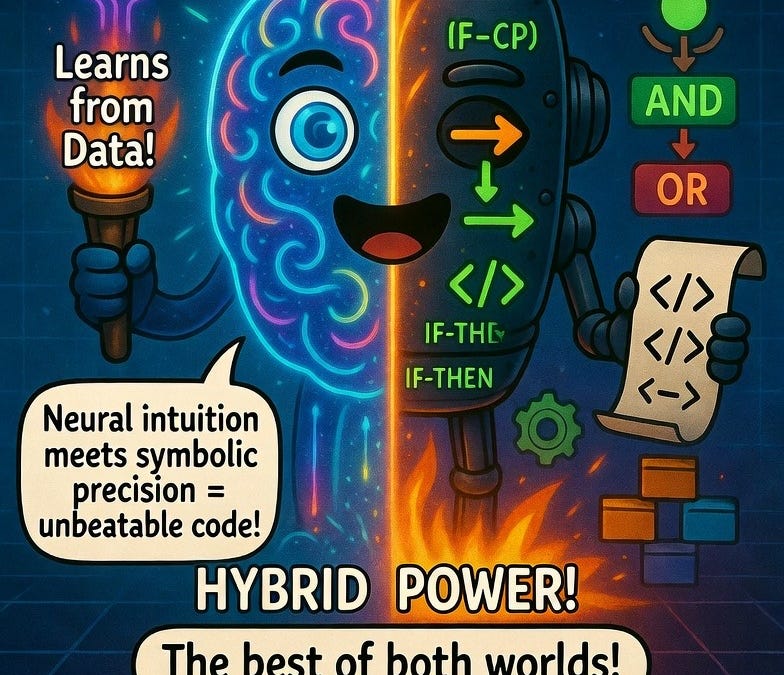
"Scaling is no longer the essence of innovation," writes Gary Marcus on the fusing of LLM and symbolic AI that is happening in recent Claude coding models.
https://garymarcus.substack.com/p/the-biggest-advance-in-ai-since-the
It seems an acknowledgement that the central flaws inherent on LLM (being probabilistic and therefore unreliable) are, well, inherent and can only be dealt with through a different paradigm.
If scaling is not the essence of improvement, then this makes the infrastructure investment boom even more unsustainable than it already is.
Thus, the crash of the AI bubble might not slow down AI development, but rather accelerate of the adoption of of new, mixed models.
Add to this the reduction in inference cost that not only DeepSeek seems to achieve,
https://castbox.fm/episode/The-Reality-of-AI-Economics-With-Paul-Kedrosky-id6019928-id929815749?country=us (starting at 00:27:21 Speculation, Supply Agreements, and AI Efficiency)
Replying to
@leitmedium@tldr.nettime.org einen ganzen Artikel über Graphen zu schreiben, ohne @mspro@fnordon.de zu erwähnen, ist auch frech.Aber vielleicht war der Artikel ja schon, wie du vermutest, 2010 geschrieben, dann wäre es verständlich.
Replying to
@malteengeler
I think the lack of hallucination refers to the sources. It doesn't make up references, rather it gives you full access to the original sources.
The quality summaries across papers is likely to vary, but this is like complaining about abstracts not giving you full details. Of course not, if you want that, read the paper.
This interface provides a new access to them, the same way an abstract provides you with some idea whether it's worth reading the full paper.
Replying to
@malteengeler
It's probably still the same underlying LLM logic, but working on a very constrained corpus (compared to Google summaries) and providing links back to the full sources. In this sense, it's more like a catalogue search, that gives you a sense of the content of a groups of documents, rather than just list of individual documents organized by "author, title, date, keyword".
If you care, you still have to read the paper, but you can access it differently and perhaps find relevant papers more quickly across a larger search space, and we are all dealing with way larger search spaces than before, even, and particularly, in academia.
"A recent report found that although only 40% of companies had purchased official LLM subscriptions, employees from more than 90% of those companies reported regular personal AI use for work tasks. In many organizations, employees use LLMs multiple times daily while their company’s official AI initiatives remain stuck in “pilot purgatory.”"
https://hbr.org/2026/04/the-hidden-demand-for-ai-inside-your-company
Replying to
@leitmedium@tldr.nettime.org Ich vermute mal, dass das recht schnell geht, weil der Vertrauensvorschuss kleiner ist als bei Suchmachinen, die lange sehr gut funktioniert haben.
Replying to
@frumble tx. Interesting. A bit like DeepSeek showing that you can do much the same for less. Self-hosting, however, has always been a hard proposition, and I'm not sure it will change here. But it will could make the service landscape much more competitive.
Replying to
I load an lpcl file into calibre, where it is converted into an epub, but still encrypted.
Replying to
@Nazani@universeodon.com @falcennial@mastodon.social this is happening. I hate slop as much as the next guy. But AI as a field is so much broader.
https://news.climate.columbia.edu/2025/06/18/how-ai-is-revolutionizing-the-recycling-industry/
Replying to
@malteengeler fair enough. It depends what you compare it to. I can see cases where I prefer this to sci-hub's traditional search interface. I know, that's a low bar, it seems the relevant one.
Replying to
@Rainer_Rehak @malteengeler Sorry, I didn't mean that it produces abstract of a single document, but what it provides is like an abstract (but a across a group of documents) in a sense of providing you with an approximation that allows you to decide if you want to read the whole thing.
@m@lgbtqia.space It will improve your heart rate by 0.003% :)
Replying to
@jean@tldr.nettime.org Etwas zu große, aber insgesamt durchaus sehenswerte Austellung, wenn man sich fürs Thema interessiert.
https://animals.emst.gr/en/
Replying to
@ralfmaximus@mastodon.social @zzt@mas.to @tante@tldr.nettime.org It's simple. Because more is better. And given how cheap this is (in relation to the infinite amount of money they have), that's all they are thinking.