Elektrine
Log in Register
Paige Chat Timeline Gallery Friends Email Drive DNS Private DNS Domains VPN Kairo Nerve
Remote

cmrosens

@cmrosens@cmrosens.com
wordpress 7.1
  • Open on cmrosens.com

C. M. Rosens is a genre-bending hybrid author of Gothic Horror, New Weird, and dark SFF, based in the UK. Find her travelling by rail, wandering among lonely ruins and ancient megaliths, and lost in worlds of fiction, music and folklore.

35 Followers
0 Following
28 Posts
Joined August 13, 2018
Blog:

cmrosens.com

Profile:

cmrosens.com

Homepage:

cmrosens.wordpress.com

Open post
cmrosens @cmrosens@cmrosens.com
· 2w ago
#100HorrorMoviesIn92Days 2026 – Films 61-70 Films 61-70
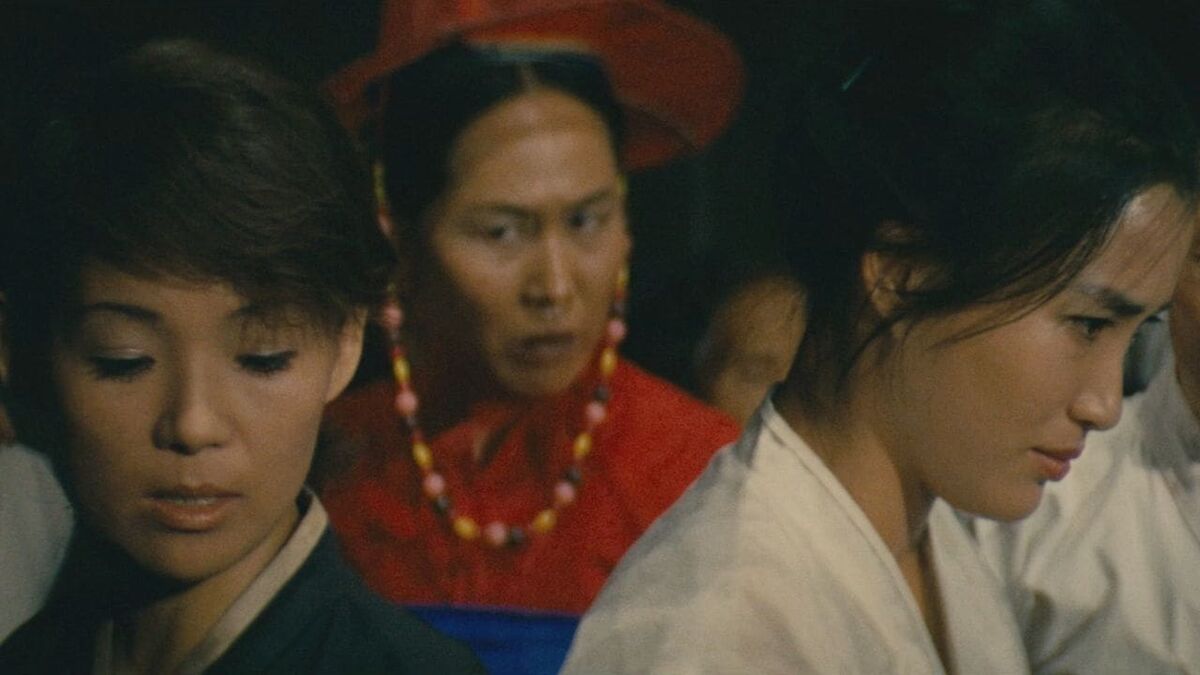
  • 이어도/ Ioeh Island (1977) dir. Kim Ki-young, written by Ha Yu-Sang, based on the novel by Yi Cheong-jun. This is an eco-folk horror from Korea, which swings around themes of infertility, addiction, loss, and climate change. It’s about so many things, and I wonder how well it has adapted the novel? Some laud this as a masterpiece, so I think there is a lot to get out of this film and its narrative structure, which doesn’t come from a single viewing. I wasn’t in the right frame of mind to watch this, and I should really have watched something else and saved this for another time. I think it’s one I will have to return to properly, but for now – not a highlight. A company hopes to open a spa hotel named after Ieodo, a mythical island inhabited by the souls of drowned sailors. During a study trip to the proposed location of the hotel, a journalist disappears under mysterious circumstances. One of the contractors goes to Ieodo’s neighboring island, populated by widows of the dead sailors, to unravel the mystery.
    {South Korea}
  • Sundel Bolong (1981) dir. Sisworo Gautama Putra, written by Darto Joned. I’m not really into rape-revenge, but this has some humorous scenes and some great moments – including good old ’80s action sequences. I loved the bit where she killed a guy with her tombstone. A newly-married woman and former prostitute whose husband, a ship’s captain, has gone to sea, is pressured into returning to her old profession. When she refuses, she is violently gang-raped and left pregnant and despondent. She kills herself while attempting to abort the fetus but returns as a vengeful Sundel Bolong, a ghost with a putrid, rotting hole in her back. When the rapists and conspirers start turning up dead, her husband and the police try to put a stop to the violence, once and for all.
    {Indonesia}
  • Primbon (2023) dir. Rudi Soedjarwo, written by Lele Laila . I enjoyed this – a lot of dark family drama, loss, people grieving in incompatible ways, rituals, and a bit of tragedy. It starts with Rana and his best friend Janu who are climbing a mountain in bad weather. In the middle of a dense forest, they got separated and lost. Janu is lucky to be back home at last. But not with Rana. An extensive search was carried out. Rana not found. A week has passed. Rana’s extended family decided to hold a tahlilan. Rana is considered unlikely to have survived and will surely die there. Dini can’t accept that. As a mother, Dini doesn’t want to just give up and still believes that her daughter Rana is still alive. Sure enough. After the tahlilan, Rana came home in the pouring rain.
    {Indonesia}
  • Mikael: Pemburu Dua Alam/Mikael: Hunter of Two Realms (2026) dir. Zahir Omar, written by June Tan . So, I liked this for the action sequences mixed with horror-comedy, which is the first local Malay film to have these elements in combination. It has fun characters and a decent plot, which could have been a little more fleshed out in places. The few seconds of very brief animation flashback looked similar to the AI animations I’ve seen. Some reviewers say this is an AI sequence – it does look like that, and it’s a shame.
    {Malaysia}
  • Shutter (2025) dir. Herwin Novianto. God, poor Lilies. Men ain’t shit, babe. Kill them all. This is the second remake of the Thai 2004 original, after the Japanese 2005 remake. I haven’t seen these, so I started with the most recent one. I was curious to see what they’ve done with this 20 years later! Indonesia has also remade the Turkish Siccin films so I’m on the lookout for these too. After a senior analog photographer discovers the spectral image of a former college student haunting his photos and coming to life, his girlfriend investigates the phantom, uncovering a horrific past crime that is now claiming his friends’ lives one by one.
    {Indonesia}
  • El celo/Presence of Mind (1999) dir. Antonio Aloy, written by Barbara Gogny, Mitch Brian, and Antonio Aloy. Original writer: Henry James. A Turn of the Screw adaptation that leans into the very weird, inappropriate sensuousness of it, and is one of the better versions. Nice to see Sadie Frost in a role that isn’t Lucy (I recognised her from Coppola’s Dracula). A governess, caring for two children at a remote estate, becomes convinced that the grounds are haunted and the children are under an evil influence.
    {Spain}
  • Asylum (1972) dir. Roy Ward Baker, written by Robert Bloch. An anthology of fairly predictable horror shorts with an interesting frame narrative, very 1970s British, and very Blochian at the same time. Decent. A young psychiatrist applies for a job at a mental asylum and must pass a test by interviewing four patients. He must figure out which of the patients, is in fact, the doctor that he would be replacing if hired.
    {UK}
  • Pou/Peacock (2023) dir. Jaco Minnaar, written by Jaco Minnaar and David Cornwell. Queer Afrikaans Gothic, in conversation with apartheid, racism, and the spectre of colonialism. Not an easy watch if you struggle with depictions of dementia, either. POU is a South African gothic horror following the journey of a young woman into the dark recesses of the Afrikaner psyche and its compromised past.
    {South Africa}
  • The Love Witch (2018) dir. Anna Biller, written by Anna Biller. I can see why the modern setting but 1960s mash-up aesthetic doesn’t work for people, and I found it slightly jarring, but I got into it. I also didn’t especially like the BPD comment. I did, however, really enjoy the way it was shot, and I got into the whole thing. I really didn’t think I’d like it, but it did something for me, and it’s a highlighted watch. A modern-day witch uses spells and magic to get men to fall in love with her, with deadly consequences.
    {USA}
  • Schreie in der Nacht/The Unnaturals (1969) dir. Antonio Margheriti, written by Antonio Margheriti. [Poor and problematic lesbian rep]. German-Italian collaboration, but I’m putting it under Italian for the director. Gothic melodrama, where it’s all about cheating lovers, murder, and documents proving corruption or something. Evil lesbians ahoy. It’s part of the predatory lesbian trope, and definitely written by a man. Hence the title. During a thunderstorm, a group of members of London’s high society seek refuge in a remote mansion in the countryside. They are received by Uriat and his mother, who appears to be able to communicate with the dead. The guests engage in a séance, but it will reveal each and everyone’s darkest secrets.
    {Italy}

#100HorrorMoviesin92Days
Ieoh Island (1977)
letterboxd.com

Ieoh Island (1977)

A company hopes to open a spa hotel named after Ieodo, a mythical island inhabited by the souls of drowned sailors. During a study trip to the proposed location of the hotel, a journalist disappears under mysterious circumstances. One of the contractors goes to Ieodo's neighboring island, populated by widows of the dead sailors, to unravel the mystery.

2
0
2
2
Open post
cmrosens @cmrosens@cmrosens.com
· 3w ago
Werewolf Women at the Movies 1910-2026 (Part 1) Introduction

I did my series on Werewolf Films by Decade, and got intrigued by how many werewolves were she-wolves, and how many werewolf films have been directed by women, or written by women.

For this, I thought I’d go back in time to the films featured in my posts and find out when she-wolves started to appear, and how they were represented when they did. I don’t know much about this at all, so this is just going to be a list rather than an essay.

Reading List

If you’d like to read more on this cultural phenomenon, try the volume of collected essays She-Wolf: A Cultural History of Female Werewolves ed. Hannah Priest.

You can also read:

  • Beware the Full Moon: Female Werewolves and ‘that time of the month’ by Jazmina Cininas
  • “Hairy Thuggish Women”: Female Werewolves, Gender, and the Hoped-for Monster by E. Clark (link is to a PDF download of the article)
  • What Do You Think She’s Gonna Do With a Set of Real Claws?: Gender, Race, and Sexuality in Onscreen Portrayals of Women Werewolves, Ashleigh K. Williams, MA thesis from CUNY
  • Chapter 8 of Monsters of Film, Fiction, and Fable: The Cultural Links Between Human and Inhuman (2018) – “CHAPTER EIGHT: THAT TIME OF THE MONTH: THE FEMALE WEREWOLF IN CINEMA” by C. O’Leary-Davidson
  • Text that requires subscription access: Cininas, Jazmina. “One Wolf Girl Battles against All Mankind: The New Breed of Female Werewolf as Eco-Warrior in Contemporary Film and Fiction.” 2010. Philosophy Activism Nature, no. 7, PAN Partners, 2010, pp. 10–22, https://search.informit.org/doi/10.3316/informit.648465647341897.

This is not a comprehensive reading list either – it’s just a few ideas to get you started down your rabbit hole of choice.

Here we go with the films I found! I’ll reproduce some of my previous posts here, and we’ll see where we get to.


Werewolf Women 1910-1949

From what I can find (and I may have missed some!) there were about 20 werewolf films made from 1913-1949, including ones that used lycanthropy as a psychological condition rather than a physical one.

Here are the stats:

All Werewolf Films 1910-1949Woman is a Werewolf/Believes she’s a a werewolf?Directed/co-directed by WomenWritten/co-written by Women20302

Written/co-written by women:

  • The Werewolf (1913) dir. Henry MacRae, adapted for screen by Ruth Ann Baldwin.
  • The Undying Monster (1942) dir. John Brahm, co-written by Lillie Hayward and Michael Jacoby

The very first motion picture to feature werewolves was The Werewolf (1913), and it had female werewolves. It was also adapted for the screen by a female scriptwriter. A strong start straight out of the gate! Unfortunately, the film itself is … problematic.

The Werewolf was also the world’s first werewolf film, directed by innovative Canadian silent cinema pioneer, Henry MacRae. It was scripted by Ruth Ann Baldwin, another pioneering screenwriter and director of the 1910s, and based on the short story The Werewolves (1898) by Henry Beaugrand. It is now a ‘lost’ film, thought to have been destroyed in a fire at Universal Studios in 1924.

A still of the film's title card which reads The werewolf part one. The word BISON is above, with the number 101 over the top. The Universal Studios logo is below. Some stills of this two-reel film still exist but the film itself was lost in a fire in 1924.

The plot positions Native Americans as werewolves, something picked up in modern American werewolf fiction too, where blood quantum laws echo fictional preoccupations with purity of werewolf heritage. This is something addressed in one of the essays in Wolves, Werewolves and the Gothic (open access reviews here, here and here).

In this case, the plot relies on the Othering of the Native American characters and positioning them as adversaries of the White settlers driven by vengeance and dark magic.

The official synopsis of the film (which had a running time of 18 minutes) is as follows in case the link doesn’t work or isn’t accessible:

[expect dated/offensive language and dehumanising phrasing, and the plot features murderous white male entitlement and exoticisation/fetishisation of indiginous women.]

The play opens in pioneer days. Kee-On-Ee, an Indian maiden is married to Ezra Vance, a trail blazer. When her child is five years old, Kee-On-Ee is driven back to her tribe by Ezra’s brother, who scorns all squaws. Ezra is killed by an old enemy and Kee-On-Ee, thinking his failure to return to her to be indifference, brings up her child, Watuma, to hate all white men. When the child is grown, Clifford and a party of prospectors appear. Kee-On-Ee, now a hag, sees her way to be revenged. She sends her daughter to Clifford’s camp and he is driven nigh mad by her beauty. Clifford finds her in the arms of a young Indian. She taunts him. Enraged beyond control, Clifford shoots the [man] – [original is “buck”]. He flees to the mission. Watuma leads the enraged Indians against the Friars. When one of them raises a cross, Watuma slowly dissolves into a slinking wolf.

A hundred years later, Clifford, now reincarnated in the form of Jack Ford, a miner, receives a visit from his sweetheart, Margaret. Hunting with her he comes upon a wolf which he is unable to shoot. The wolf dissolves into the woman of old, and there appears before his puzzled eyes the scene where he slew the Brave. The “Wolf-woman” would caress him, but he throws her off. She returns again as the wolf and kills his sweetheart. Clifford’s punishment for the deed of past life is made complete at the death of the one he loved.

Official synopsis of The Werewolf (1913)

Kee-On-Ee and her daughter Watuma were both played by White actresses: Marie Walcamp (younger Kee-On-Ee) and Lule Warrington (older Kee-On-Ee) and Phyllis Gordon (Watuma). Ezra Vance was played by Clarence Burton.

With the advent of two World Wars and plenty of evidence of man’s savagery, not to mention the publication of some popular werewolf fiction, we had to wait until the 1940s for our next werewolf woman to make an appearance as far as I can tell.

The Cry of the Werewolf (1944) echoes The Werewolf (1913), but in this case the at-will transformation is enacted by a Romani princess who kills to protect the secret location of her ancestress’s tomb. Here, Native American ‘magic’ is swapped for Romani magic, as in The Wolf Man where Lawrence Talbot contracts lycanthropy from Bela, played by Bela Lugosi. So there is still an element of “it wouldn’t happen to a white woman”, but it does happen frequently to white men.

1946 saw the noir crime horror, She-Wolf of London, hit the screens, another offering from Universal Studios. Its UK title was the more Gothic and less sensational The Curse of the Allenbys. Phyllis Allenby believes she is a werewolf and has succumbed to ‘the curse of the Allenbys’, and is responsible for a series of frenzied attacks. However, it turns out that she is being manipulated into insanity by her conniving Aunt Martha for her own ends.

This film capitalises on the werewolf’s savagery – all victims of the ‘Wolf-Woman’ are found with their throats torn out – and positions the feminine as monstrous. However, it could also be interpreted as a cynical or realistic post-War recognition that women, as well as men, are capable of viciousness and animalistic savagery. This is reinforced by the reveal that the ‘werewolf’ is nothing but psychological trickery, and the murders were committed by a human being who knew what she was doing.


Here ends the Werewolf Women of the 1910s-1940s. Not many for a 40 year period, but we’re not hitting our stride yet. The werewolf really gets going in the popular imagination from the 1950s onwards. What I find really interesting about this series is that women never really get into werewolves on screen in terms of directing or writing the films… Obviously, there are many more as the number of films increase with each decade, but it seems to be a consistent trend that it’s not a topic you’ll find a lot of women writing about or making films about.

Women are, however, casting and producing werewolf films a lot, starting in these early decades and going forward. So they’re behind the scenes, but not usually behind the script or in the director’s chair. I’ll leave you to ponder why that is (I have no answers!), and take you through the films & the stats in the next few posts!

#werewolfFilms #WerewolfFilmsByDecade #womenWerewolves

Cry of the Werewolf 1944 FILM FULL MOVIE CLASSIC HORROR

2
0
2
2
Open post
cmrosens @cmrosens@cmrosens.com
· 2w ago
Werewolf Women at the Movies 1910-2026 (Part 2) Werewolf Women of the 1950s to 1970s

Welcome back to my sub-series, Werewolf Women at the Movies.

Read PART 1 here: 1910s-1940s.

After the War, we saw a shift in the roles of women and a concerted effort to get them out of the workforce and back in the home, for a variety of reasons. We also saw shifts and counter-shifts in gender ideologies, censorship, and lots of cultural changes. It was a wild time!

Women don’t appear as werewolves very often in these two decades in Western cinema, and when they do, they are either being manipulated into a false belief that they are a werewolf, or they are part of the parasitic and predatory rich upper classes, who prey upon those below them.

There was a significant increase in werewolf films in these 3 decades! Here are the stats:

All Werewolf Films 1950-1979Woman is the Werewolf/Believes she is a werewolf?Directed by WomenWritten by Women821311

Running totals:
Total werewolf films 1910-1979*: 102
Total werewolf films directed by a woman: 01
Total werewolf films written/co-written by women: 03
Total with a woman werewolf: 16

*Total that I’ve found… not necessarily comprehensive!

Films written/directed by women so far:

  • The Werewolf (1913) dir. Henry MacRae, adapted for screen by Ruth Ann Baldwin from the short story The Werewolves (1898) by Henry Beaugrand.
  • The Undying Monster (1942) dir. John Brahm, co-written by Lillie Hayward and Michael Jacoby
  • Libahunt/Werewolf (1969) dir. Leida Laius, co-written by Leida Laius and Lembit Remmelgas, based on the 1912 play of the same name by August Kitzberg.

Daughter of Dr Jekyll movie poster, blue with yellow text. It is illustrated, with a woman in a yellow dress posed with her hands like claws. The skirt of her dress flows out to become a werewolf face.

Our next werewolf lady appears in the late 1950s. The Daughter of Dr Jekyll (1957), a black and white horror film thematically related to Stephenson’s novella, made Dr Jekyll’s alter-ego a werewolf, and suggested that this was inheritable. However, very much like She-Wolf of London, Janet’s situation may not be what it seems, and she may not be the killer perpetrating such savage attacks.

While this one wasn’t written or directed by a woman, it was co-produced by a woman – Ilse Lahn – whose co-producer was the scriptwriter, Jack Pollexfen. There were a few women co-producing werewolf films, in fact!

So far, since 1913, we have x2 real werewolves, one Native American, one Romani, and x2 psychologically manipulated white women who only believe they are werewolves. In each case, it turns out the ‘werewolf’ is someone else. In the first case (She-Wolf of London/Curse of the Allenbys) there’s no such thing, and the killer is a human elderly lady. In the second case, The Daughter of Dr Jekyll, there is a real werewolf, but it’s a man.

It has been several decades now, and still a white woman could never. And when she thinks she might, she always contemplates suicide as a form of ennobling self-sacrifice to protect the world at large. We are two for two so far.

There follows the rise of Hammer Horror and Universal Monsters, and a whole boatload of werewolves, all male. Some are turned into werewolves by women who curse them, but these aren’t “werewolf women”, so I don’t think they count.

We have to wait for Mexican cinema to get with the woman werewolf programme before we see another one on screen: Clarissa Fernandez, played by Kitty de Hoyos in Mexican horror La Loba, The She-Wolf (1965).

Mexican movie poster for La Loba, The She-Wolf (1965).

Clarissa is a rich, attractive Mexican girl by day who is also a murderous werewolf by night, and falls for a doctor whom she sees for a cure. It turns out that the doctor, Dr Alejandro Bernstein, is also a werewolf, and they go on a love-filled killing spree together only to be killed by – wait for it – a specially trained, werewolf-killing dog. Beautiful.

movie poster for Libahunt/Werewolf 1969. Illustrated image of a girl in a white dress running through a green forest.

We then get Libahunt/Werewolf (1969), directed by Estonian director Leida Laius, who co-wrote the script with Lembit Remmelgas. This is an adaptation of the 1912 play by August Kitzberg.

The play and film are both set in rural Estonia in the early 1800s, where three children are growing up together on a farm. The farmers’ son, Margus, and two orphan girls, Mari, who was adopted first, and Tiina, adopted later, after her mother was executed for witchcraft.

Tiina is the hot-blooded one, and Mari is the ‘good’ child. Margus falls for Tiina, but Mari is in love with him and has the approval of his parents. Jealous of Margus’s love for Tiina, Mari accuses her sister of being a werewolf. Tiina escapes the farm into the forest, and there’s some shamanistic elements, but by the end it’s clear that Mari might be telling the truth… with tragic consequences.

The play is not about werewolves as monsters – it’s a love triangle and a tragedy, with isolation and loss at its core. Estonian Gothic, if you like. This is the first time we get a werewolf film that is both directed and co-written by a woman!


Women Werewolves of the 1970s

Women get attacked by male werewolves a lot in the interim, and it’s often used as a symbol of man’s rapacious greed and sexual aggression. It’s also a good excuse to have women on screen with their clothes ripped to shreds, tits out, make-up on, and screaming. However, in the era of exploitation and Women’s Lib, this is all about to change.

Can a woman be a monster? Of course she can. She can be whatever she wants! It’s the 1970s, bitches! (Are there horrific and tragic consequences? Obviously! You can’t let them get away with it, you know!)

An American Grindhouse exploitation flick that blended the outlaw biker gang genre with the traditional horror film is the brilliantly named Werewolves on Wheels (1971). If you want to get deep with it (why not), it played with tensions surrounding subcultures, the nature of “freedom” and the rejection of Christocentric norms. Or it was a violent Grindhouse flick with a low budget that wanted to turn a bunch of bikers into werewolves. Whatever.

Werewolves on Wheels movie poster. Tagline: if you're hairy, you belong on a motorbike!

It’s about an outlaw biker gang who fall foul of some satanic monks worshipping the devil in the Arizona desert (as you do). The cult transform the lead biker’s girlfriend Helen, who infects her boyfriend. Helen is introduced as the doomed Bad Girl, fascinated by death – including her own. In the first few minutes, after we establish the gang are volatile, violent and all-round good chaps, she asks a tarot reader to read her cards and tell her how she dies: she is told she will die “in the tower, struck by lightning”.

The alpha couple then kill off their own gang until they are stopped and the gang return to the church for revenge on the cult – but stop when they see themselves in the cult procession. Of course you want to see it. Here’s the full film on YouTube (at the time of posting).

Movie poster for The Rats Are Coming! The Werewolves Are Here! (1972). Black poster with a trail of surprised looking rats with red eyes at the top.

The Rats Are Coming! The Werewolves Are Here! (1972) dir. Andy Milligan features a whole family with a hairy secret, including the sister who tortures rats, so this one counts too.

One daughter, Diane, escaped the werewolf curse and went off to medical school, and has now returned with a husband in tow. Now she is back, she is needed to help their father work out why the curse skipped her. Mainly, however, it’s a fucked-up family drama set in England in the early 1900s, and features live animal torture.

Movie poster for werewolf woman dripping 1970s sleaze and exploitation vibes.

Finally, we end the 1970s offerings of women werewolves with the Italian sexploitation sleazefest of a film, featuring lycanthropy as a psychological condition, La Lupa mannara/Werewolf Woman (1976).

TW for CSA and rape (repeated), suicide, and psychiatric committal. As this plot is fairly extreme, I’ve put it in an inline spoiler, so you can read it at your own discretion.

Plot of La Lupa Mannara/Werewolf Woman (1976)

The protagonist, Daniella Neseri (played by Annik Borel), a survivor of childhood rape, has nightmares about a werewolf ancestor who appears to her in waking visions. Under the delusion that she is a werewolf, she seduces and murders men by tearing their throats out with her teeth, including her own sister’s boyfriend.

She is committed to an asylum where she attacks and kills a (female) nymphomaniac who tries to seduce her, and escapes. She meets a compassionate stuntman with whom she falls in love, and this temporarily ‘cures’ her. However, the couple are attacked by a group of men and he is killed while she is raped. Daniella resumes her murderous rampage in revenge. She is eventually captured in the woods where she is found, nearly feral and dancing behind a wall of flame, by the authorities. She is re-committed while her father kills himself.

These films are both absolutely wild in their own ways, but we’ve got one fucked up morality tale about Bad Girls on Bikes, and one sexploitation psychodrama about rape trauma. I don’t know if I’m off piste here, but it feels like women get to be the victims of werewolves even when they are one, in different ways to the ways in which men are victims of the werewolf curse.

Deathmoon (1978) has a werewolf woman on the poster, but not in the actual film (?), but I was drawn in by that poster art. It’s a white American guy, cursed by an indigenous Hawaiian woman. The woman herself is not a werewolf as far as I know? I haven’t seen this one, though. Let me know if there is a werewolf woman so I can count her in!

So far, we’re on 16 women, and not all of them turned out to be actual werewolves! Don’t despair, though. Things pick up in the 1980s onwards. Make sure to follow this blog/subscribe to updates so you don’t miss a post!

#werewolfFilms #WerewolfFilmsByDecade #womenWerewolves

Werewolves on Wheels 1971

1
0
2
2
Open post
cmrosens @cmrosens@cmrosens.com
· 4w ago
#100HorrorMoviesIn92Days – Films 41-50

The next 10 horror movies are mainly about British Gothic, or I guess I should say specifically English Gothic from the 1970s. The gritty misery of the 1970s was ripe for Gothic narratives, and I really like the ones I watched here.

I haven’t watched any UK-made films up to this point in the challenge, and I live here, so I wanted to rectify that and catch up on a few I haven’t seen.

Films 41-50 #100HorrorMoviesIn92Days 2026Films 41-50
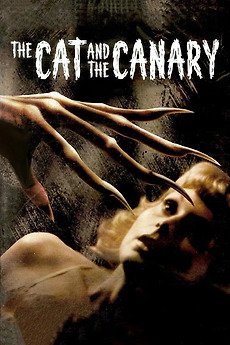
  • The Cat and the Canary (1978) dir. Radley Metzger, written by Radley Metzger and John Willard. The opening sequence culminates in a shot of a cat strung up from a tree, and then the plot happens. This is based on the play version by John Willard. I really love this one, it’s such a British banger. Cyrus West is played by Wilfrid Hyde-White, a fabulous character actor of film, stage, and TV, who does a fantastic job. I laughed out loud all the way through his speech. Really enjoyable. I much prefer this one to the Italian Gothic version! I choose to read certain characters as gay, but that’s implicit so I hesitate to give the rainbow symbol. A group of potential heirs gather in a forbidding old house to learn which of them will inherit a fortune. Later, they learn that a flesh-rending maniac is loose.
    {UK}
  • Tarry-Dan Tarry-Dan Scarey Old Spooky Man (1978) dir. John Reardon, written by Peter McDougall. I was really hesitant to watch this as I wasn’t sure which way it was going to go – I gave it a shot and I was really impressed. It’s a good bit of Cornish drama, with teen angst and the psychological unravelling of a boy convinced he’s some kind of mystical knight, obsessed with an old tramp whom the kids make fun of. He learns of a terrible burden his family line must bear, which he cannot outrun or avoid. This is a great one. It’s 47min, so it counts for the Challenge (films must have a minimum of 45min runtime). When he finds himself plagued with nightmares about a historic battle fought on the site of the village he lives in, delinquent Cornish teenager Jonah Grattan becomes obsessed with a potential link to a local homeless man.
    {UK}
  • The Descent (2005) dir. Neil Marshall, written by Neil Marshall. I had this logged as “Watched” and fancied it after The Cave (2005). It became apparent that I had not, in fact, watched this film at all. I think I saw the opening few scenes and for some reason stopped there and never finished it. Watching it AFTER The Cave was the right choice. This is much better, it’s Neil Marshall at his peak, and it’s got a load of really gnarly survival moments before we even get to the monsters. I think it’s much higher stakes than The Cave, because it’s not state of the art equipment and flashy gear. That’s usually what lets US-made films down; style over substance. This film is just a bunch of experienced cavers with standard gear and their psychological traumas deep underground, and that makes for a really compelling, tense narrative. Now I’ve actually seen it, I would def put this on the rewatch pile. After a personal tragedy, Sarah joins her friends on a caving expedition in the Appalachian Mountains. But when a rockfall traps them deep underground, their adventure turns into a nightmare. As they search for a way out, the group discovers they are not alone—lurking in the darkness are savage, cave-dwelling creatures. With rising tension and dwindling trust, the women must fight to survive against both the predators and each other.
    {UK}
  • Dabbe (2006) dir. Hasan Karacadağ, written by Hasan Karacadağ. It’s time to catch up on the full Dabbe franchise! I’ve seen 4+5 and they are really good, still my favourites so far. Hasan Karacadağ is a big loss to the film industry – he fell foul of the political environment due to social media comments made around the coup, which meant he had to leave Türkiye for Japan (apparently). This has some good use of found footage, but isn’t a found footage film. It’s a vehicle for some philosophy and theological pontificating, but ultimately it’s a pretty good horror. The horror also originates in the USA and is imported to Türkiye, where it causes the destruction of Turkish youth, and I think that’s an inherently geopolitical statement from Karacadağ about the dangers of US cultural-imperialism and its insidious nature. A cruel suicide wave spreads from the United States to a small Turkish town, where a man kills himself after spending time on the computer. His friends are still getting disturbing emails from him.
    {Türkiye}
  • The Convent/Heretiks (2018) dir. Paul Hyett, written by Conal Palmer and Paul Hyett from a story by Gregory Blair. Paul Hyett directed one of my favourite werewolf films, Howl (2015), so I was really excited to come across this one. First off, we don’t have nuns butting in during the Witch Trials under the famously Protestant James VI of Scotland and I of England, because of the Reformation (under Henry VIII). We’re not letting that stand in the way. Aside from the faulty historical premise, which I’m choosing to believe is due to this being an Alternate Universe (AU) where the Reformation never happened, it’s a serviceable piece of Gothic supernatural drama with religious horror trappings. During the 17th century, a young woman is saved from execution and led to a priory to repent her sins but discovers a greater evil lies within.
    {UK}
  • Gudubet (Ölmek İstemiyorum) / Hideous Creature (I Don’t Want To Die) (2025) dir. Mehmet Tan, written by Yilmaz Suvaci. This film is on Letterboxd & logged there, but with it has the bare minimum of info, so I’ve linked to IMDb. It was a dark and stormy night, and Gran was found dead in her chair. Family rivalry and drama right off the bat. This is a Turkish slasher with a creepy girl and her doll, a killer on the loose on a dark and stormy night, and a dysfunctional family. Unfortunately, they give the game away too soon, but the twist is pretty good and nearly saves it. There is no plot description on Letterboxd or IMDb.
    {Türkiye}
  • To Fire You Come at Last (2023) dir. Sean Hogan, written by Sean Hogan. This is 45min, so counts towards the Challenge. Watched as part of All The Haunts Be Ours Box Set Vol 2, (Severin Films). I really enjoyed the tight focus on the 4 men throughout, and the script made a good stab at sounding period-accurate. It was very much like watching a stage play in some respects. I could see this working really well as a theatre piece with minimalistic staging, or as an immersive piece of theatre. What I would have liked in the dialogue is more hints of the Squire’s sins, and I think the dialogue at times sacrificed clarity to style. I did like the chapters, and the way this was shot. In rural 17th-century England, a group of men gather to carry a coffin on the long walk to the local graveyard for burial. Much ancient folklore and superstition surround the pathway to the church, and several of the party are afraid to walk it after dark. Squire Marlow, the grieving father of the dead man, promises to double their wages if they agree to make the mysterious journey full of unexpected revelations.
    {UK}
  • SG̲aawaay Ḵ’uuna/Edge of the Knife (2018) dirs. Helen Haig-Brown  and Gwaai Edenshaw, written by Gwaai Edenshaw, Jaalen Edenshaw, Graham Richard, and Leonie Sandercock. This is my first time hearing Inupiaq spoken, so that’s really cool. I loved the community-centred narrative, and the slice-of-life feel of the village and its dynamics. The Haida language was nearly extinct, was hearing this whole film from native speakers is a real privilege. This was incredibly visceral in places, especially the descent into madness and grief of Adiits’ii. Island of Haida Gwaii, northern Canada, 19th century. During a fishing gathering, Adiits’ii commits an unfortunate act. Tormented, he runs away to the wilderness as his mind embraces madness.
    {Canada, First Nations}
  • Robin Redbreast (1970) dir. James MacTaggart, written by John Bowen. I loved Bowen’s scripts for Ghost Stories for Christmas, so I was very curious about this one. It’s a classic for a reason. It reminded me a bit of Darklands (premise similarities) and Hammer Films’ The Witches (1966). After the break-up of a long-term relationship, urban sophisticate Norah seeks refuge in a remote house in the country.
    {UK}
  • The Asphyx (1972) dir. Peter Newbrook, written by Brian Comport. An enjoyable take on Mary Shelley’s short story The Mortal Immortal meets Charles Maturin’s Melmoth the Wanderer, with a dash of the Russian folktale, The Soldier & Death. I don’t normally like doomed immortal stories but this was engaging and a really fun Gothic Horror, with a good family drama at the core… and an immortal guinea pig. Hugo is a brilliant turn-of-the-century scientist, loved and respected by his family and friends, admired by his colleagues. But he is a man quickly becoming obsessed with a curious and frightening question…What is the mysterious apparition found in the photographs of his dying subjects?
    {UK}

#100HorrorMoviesin92Days
The Cat and the Canary (1978)
letterboxd.com

The Cat and the Canary (1978)

A group of potential heirs gather in a forbidding old house to learn which of them will inherit a fortune. Later, they learn that a flesh-rending maniac is loose.

1
0
0
0
Open post
cmrosens @cmrosens@cmrosens.com
· 3mo ago
Author Spotlight: Contemporary Lovecraftian Thriller author A.M. Shilling
A.M. Shilling author photo. A woman smiles directly at the camera. She has black hair and brown skin. She is wearing black glasses and a blue-and-white striped top. Behind her is a bookcase full of books.

A. M. Shilling (she/her) is an avid storyteller and artist interested in morally questionable people, their terrible circumstances, and how they manage to love one another despite it all. When she’s not contemplating her favorite villains like a sommelier appreciating fine wine, she enjoys roleplaying games and watching cooking shows with her husband.


AUTHOR LINKS:

Website: amshilling.com

Bluesky: @gunsmile.bsky.social
Instagram: @amshillingwrites

Read a Sample of The Devouring: amshilling.com/books/the-devouring


Red cover with black inkblot. The Devouring by A.M. Shilling. Tagline: What doesn't kill them better run.Read a Sample of The Devouring: amshilling.com/books/the-devouring

Your novel The Devouring came out in April this year (2026), a blend of crime thriller and cosmic horror. What inspired you to merge these genres, and have an assassin and his wife, a coroner, at the heart of a cosmic horror mystery?

I’ve always loved the two genres separately and thought it would be fun to combine my favorite ideas and tropes from both of them into my first novel. I wanted to write a story that I’d love to read if I saw it on the shelf, so The Devouring is very much a reflection of my particular tastes in fiction.

I knew the main characters had to be a certain way, too—not only to support such a dark storyline and themes, but also to appropriately represent the two genres. The assassin was an easy choice, but it took some brainstorming before I settled on a doctor for the second main character.

What are your main influences in the thriller and horror genres, and, if you use comparisons to market, what comps do you use for The Devouring and why?

My biggest inspiration in the cosmic horror genre will always be the work of one of its original authors, H. P. Lovecraft. The combination of existential dread and horrific inevitability that now defines the genre, as well as his Cthulhu Mythos, captivated me as a teenager. They continue to influence my writing and worldbuilding today.

I wrote The Devouring partially as a homage to the genre. I also love a good action thriller, especially about criminals. They’re just plain fun. In particular, I love John Wick. Its fantastical lore about an international organization of assassins inspired the criminal underworld in my own story, though I did try to make mine more realistic compared to what we see in those movies.

I use John Wick as one of my comps when marketing, paired alongside Lovecraft’s short story, “The Colour Out of Space.” I picked it because the eldritch god in The Devouring has some similarities to the entity in “Colour.” Unfortunately, I can’t reveal any more beyond that.

Introduce us to your main characters, Jason and Ayana. How did they each develop, and how did you put yourself into their respective mindsets while writing?

Jason and Ayana (and a third character, Jason’s brother) were actually inspired by characters my friends and I wrote as part of a small roleplaying forum a few years ago. When I left the forum to pursue my own creative projects, I knew I would miss my character too much if I stopped writing him. He eventually became Jason.

As for Ayana, while she shares a couple of traits with her inspiration, she developed into a very different character. I brainstormed numerous iterations of potential character arcs for both Jason and Ayana until they became the protagonists the story needed. Putting myself into their respective mindsets was an interesting exercise, but also a lot of fun!

I did extensive research into antisocial personality disorder (ASPD), including reading anecdotes from individuals with ASPD and their partners, to get a better understanding of the typical mindset. When writing Jason’s POV chapters, I had to think like him and view the world the way he would, avoiding specific trains of thought and emotional reactions in the narration. It was easier with Ayana, who is more like the average person. She is the character who’s most like me, so I was able to draw from and amplify my own perspectives and personality traits. Of course, there are many points where our mindsets diverge; how she views Jason and their marriage is one such example.

One of the perhaps more surprising themes for a thriller/horror is love, and all the different ways it can be expressed. Can you talk us through how that central theme came about, and did you try writing Jason and Ayana’s marriage dynamics in different ways before you felt you got it right, or was this dynamic something that you envisioned right from the start?

It’s very common in horror fiction for married couples to have some deep, interpersonal issue, or for one of the spouses to be the villain in the relationship. Instead of writing that, I wanted to depict a married couple working together to overcome the external conflicts of the plot without suffering any interpersonal ones.

This required a very specific dynamic between Jason and Ayana, so I knew from the start that their relationship had to be a certain way. One thing to keep in mind, too, is that Jason’s nature prevents him from feeling empathy. He is incapable of viewing other humans as people. This is what ultimately raises the question of how one might define love in the first place. Can his behavior in the book be considered acts of love, regardless of his mindset and motivations? That’s what I want readers to ask themselves.

How did you go about creating the cult in the background of the story whose manipulations are the driving force of the plot, and what did you draw upon to design its power structure, motivations and goals?

I don’t want to give away too many details about this cult, because I think it’s more fun for readers to put the puzzle pieces together themselves. What I will say is that the power structure, motivations, and goals are commonly depicted in other horror fiction. Because The Devouring is meant to be a homage, I didn’t want to stray far from certain familiar and beloved tropes. However, I did include a plot twist that I don’t think fans of cosmic horror will expect.

Describe your target audience – who would love this? If you’ve had any reviews/feedback you’re especially pleased about, let us know here!

Fans of cosmic horror will definitely love The Devouring, but anyone who enjoys dark storylines, morally gray characters, fast-paced action, and high-stakes thrillers would have a good time reading it. Reviewers love Jason and Ayana for their nuance and complexity despite their questionable morals, and everyone who’s read the book has raved about how un-put-downable it is.

Add to Goodreads

Like This? Try These:
Lovecraftian – Wierd Fiction – ThrillersAuthor Spotlight: Contemporary Lovecraftian Thriller author A.M. Shilling
Author Spotlight: Contemporary Lovecraftian Thriller author A.M. Shilling

Meet A.M. Shilling (she/her) and her Lovecraftian thriller, THE DEVOURING. John Wick meets The Colour Out of Space, with assassins, cults, and fast-paced action.

by cmrosensJuly 1, 2026May 15, 2026
Author Spotlight: Weird Fiction Author Mark N. Drake

Meet Mark N. Drake and his Lovecraftian Weird Fiction series, Darkisle!

by cmrosensJuly 11, 2025January 7, 2026
Author Spotlight: SFFH Author Miranda Kate/MK Boers

Meet Miranda Kate/MK Boers, an indie author originally from Surrey, UK, and now based in the Netherlands. Miranda writes horror, dark fantasy, dystopian worlds, and psychological thrillers.

by cmrosensJune 6, 2025February 3, 2026
My Own Author Interview!

Reblogging from the lovely Chaos Gays and TeaTrays – if you’re liking the author spotlight series, you should definitely check out CGTT as well. My book THIRTEENTH is now out (again) and you can grab it from the bookstores and eBookstores of your choosing. The podcast remains up, so you can listen to the whole…

by cmrosensOctober 13, 2024
Author Spotlight: Queer SFFH Author Vivian M. Valentine

Vivian Moira Valentine (she/her) is a rad trans lady who loves monsters. She is the author of The Amelia Temple Series, and her short fiction has appeared in a number of publications.

by cmrosensSeptember 4, 2024February 3, 2026
~Book Chat & Book Reviews~

A #TuesdayBookBlog round up of my author interviews and book reviews so far! #ReviewMay

by cmrosensMay 5, 2020

#AuthorInterview #AuthorSpotlight #lovecraftian #thrillers #weirdFiction

The Sound of Darkness by C.M. Rosens

2
0
2
2
Open post
cmrosens @cmrosens@cmrosens.com
· 4mo ago
Limited Time Offer: £1.99 eBooks Available!

Grab 3 of my titles on sale this month in a limited time offer, and look out for bundles coming in June!

Books on sale:
THIRTEENTH (Canelo is running a £1.99 promotion on the eBook right now – this limited time offer is not controlled by me, so I don’t know how long you have to get it at this price!)
THE DAY WE ATE GRANDAD (I’m running a £1.99 sale from now to end of May)
BEST FRIENDS BURY BODIES (I’m running a £1.99 sale from now to end of June)
YELEN & YELENA (in an itch.io hosted Pride Book Bundle 01-30 June 2026, 38 eBooks for $40)


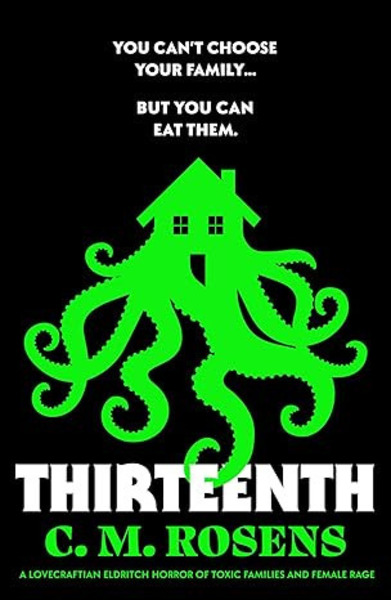
Black background green house with tentacles sprouting from it. The windows and door look like a face. Cover of Thirteenth by C.M. Rosens. Tagline: You can't choose your family, but you can eat them.THIRTEENTH eBook – £1.99GBP

UK readers: Canelo has this title on sale for you at £1.99 on Amazon, Kobo, Apple, Google Books, and more!

Reviews & CWs

N.B.: My publisher has switched from Simon & Schuster US distribution to Penguin Random House US distribution… and all the US links seem to be broken. I’ve reported this, as the only eBook option for US readers now appears to be Barnes & Noble, which is $6.99, but you might be able to get the sale via Google, Kobo or Apple.

Get it now

Banner. The Day We Ate Grandad cover. A bright yellow dolmen transmutating into vines that spread like roots over the title is the main image on a black background. The tagline is: Three possible futures. Two versions of the apocalypse. One chance to save the world. Cosmic horror family drama.THE DAY WE ATE GRANDAD – £1.99 GBP until 31 May 2026

I’m running a limited sale on THE DAY WE ATE GRANDAD, which is also £1.99 until the end of this month (May 2026). You’ll be able to grab all 3 of my Pagham-on-Sea novels for a lot less than the 3 at full price, it’s basically 3-for-2!

Reviews & CWs

This sale is on across all major international eBook platforms!

Get it now

Best Friends Bury Bodies Out Now - banner with a cropped image of a musician in elegant black clothes playing an acoustic guitar, posed against a plain grey background.BEST FRIENDS BURY BODIES – £1.99GBP or $2.99USD from now to 30 June 2026

I’m running a sale (wide distribution) on my contemporary romance mystery, BEST FRIENDS BURY BODIES, a midlife second chance why choose novel with murder and rural village chaos.

This sale is on across all major eBook platforms and should be internationally available. A free sample is available to read before you buy.

Find out more

Banner with black background and lesbian pride flag colours (peach, pink, yellow) for the diamond logo on one end, and the font. The text reads: Pride Book Fair 2026 Bundle 4 - A Good Day to Pride HardPride Book Fair Bundle – 01 June – 30 June 2026eBook cover detail as a banner, with dark, ethereal tone. It depicts a white woman tilting her head in the foreground as a glittering stream of faerie lights dance by her ear on the breeze. The title is YELEN AND YELENA. The author is C. M. Rosens.

YELEN & YELENA is available via the Pride Book Fair Bundle in June, along with 37 other titles. That’s a total of 38 eBooks for $40.

Get my unashamedly queer Gothic Dark Fantasy in this bundle and support queer authors!

Preview/Check Out This Sale

#ebookSale #itchBundle #limitedTimeOffer
£1.99 on Amazon and Kobo
buy.bookfunnel.com

£1.99 on Amazon and Kobo

Completely absurd, violent and absolutely wonderful. Perfectly blending eldritch horror with family drama that

1
0
1
0
Open post
cmrosens @cmrosens@cmrosens.com
· 6mo ago
Don’t Miss Out! Occult & Supernatural Horror Giveaway On Now! Banner with wolves sat in a row, pelt colours dark grey through to white. Text reads: Take the Darker Path... Hauntings & Horror, Terror & Torment. Giveaway! April to May.

A newsletter magnet event for you to get free shorts and sign up to hear updates from the participating authors. (If you don’t want the updates, you don’t need to verify your email! You should be able to get your download anyway!)

It runs up to 02 May 2026.

HOWEVER – if you DO want to get updates in a monthly newsletter format from me, where you get to know about sales and bundles and freebies in advance, you can grab The Sound of Darkness for free (an 8K word short story published in F is for Fear anthology by Red Cape Publishing) and verify your email to keep in touch.

Scan the QR code to go to the Giveaway
Click Here For the Giveaway Page

Sound of Darkness cover, with a lone figure under a lampost in a dark street.

If you just want to buy it instead of getting it free, you can here.

Listen to it read aloud by me, on Eldritch Girl.

Listen to it on Mick Dark’s YouTube Channel below:

https://www.youtube.com/watch?v=qFe3HljT4ik

Subscribe to my newsletter to stay updated! I send newsletters around once a month. You can also subscribe to my site so you don't miss a post, but I also do a post round-up in my monthly newsletters, along with what I've been working on, what I've been reading, and what I've been watching. I will often update newsletter subscribers first with news, so stay ahead of the game with my announcements and discount codes, etc!

First name
Last name
Email
#giveaway

The Sound of Darkness by C.M. Rosens

0
0
2
2
Open post
cmrosens @cmrosens@cmrosens.com
· 6mo ago
Author Spotlight: Paranormal Ecohorror author S.M. Mack
S.M. Mack author photo - a blonde white woman with glasses and shoulder length hair, wearing a blue dress. She is standing outside with a dry, sandy landscape behind her. She is holding a glass in her hands.

S.M. Mack (she/her) is a 2019 MFA recipient in popular fiction from USM Stonecoast, the 2017 first place winner of the Katherine Patterson Prize for Young Adult Writing, and a Clarion 2012 grad. Her short fiction has been published in Fireside Fiction, Vine Leaves Literary Journal’s “Best of 2015” anthology, and the Clarion class of 2012’s seven Rainbow Anthologies, among others. Her novella Death Valley Blooms is part of Neon Hemlock’s 2025 Novella Series.


AUTHOR LINKS:

Website: whatsmacksaid.com

Bluesky: @whatsmacksaid.bsky.social
Instagram: @what_smacksaid

Death Valley Blooms Links

Neon Hemlock Publishing
Amazon
Barnes & Noble
Kobo

READ A SAMPLE: Amazon Look Inside Feature

PITCH FOR READERS/BOOK CLUBS:

Every decade or so, vast quantities and varieties of wildflowers bloom all at once in Death Valley. But unbeknownst to the wider world, these super blooms are powered by a woman’s life. Mar’s mother was called a decade ago, pulled underground to be used like a battery, and she herself has begun to feel Death Valley’s presence. Mar has an ace up her sleeve, though: neither she nor her brother will ever have children. Is it enough for the desert to release its grip on her family?


death valley blooms cover. Death Valley Blooms is out with Neon Hemlock. Cover illustration by Rose Meyer. Cover design by dave ring.

What was the seed for your novella, Death Valley Blooms, and how did this sprout into the novella published by Neon Hemlock?

My Clarion class put out seven charity anthologies to help raise money for attendee scholarships.

Clarion lasts for six weeks from June to August, so we challenged ourselves to write a story from scratch each year, focusing on a different color of the rainbow.

My Yellow Volume story started at the (erroneous) assumption that all dirt in the southern Californian deserts is yellow, or at least yellow-ish.

From there, I did some daydreaming about how the ground might interact with people; I went from “skinning your hands and knees when you fall down” to “what if the blood spilled from a minor injury isn’t enough? What if blood isn’t enough? What if the ground eats you whole? Why would it do that?”

By the end of the first draft I knew I had something special, but I also knew I’d never be able to tease out the subtleties hiding in there under our short timeline. So I set it aside for a few years, and picked it back up during grad school.

Within the novella are themes of consent and autonomy, but also the futility of people’s actions against a landscape that will outlast them. Where did these themes come from, and why explore them here?

One of my childhood refrains was “I can do it myself!” even when that was not objectively true. It insists on boundary-setting for both consent and autonomy—anyone who overrides one will inevitably override the other.

Death Valley Blooms’ main character, Mar, is very much a product of that mentality. She is determined to break her family’s curse, even though generations of women have succumbed to Death Valley’s call. She fights for her autonomy and nurtures a lifelong grudge against the curse for stealing her ability to consent. Because, of course, that’s what curses do: render those trapped under its power unable to protect their emotional, mental, and physical selves.

I also spent a lot of time thinking about climate change versus an individual’s effect on their environment. The physical world does not care how frightened or overwhelmed you and I are by wildfires, flash floods, or water scarcity. But if one small part of the world—Death Valley, in this case—reached out and demanded payment or help from an individual, how could we possibly say no? Even culpability and guilt aside, how could a single family of individuals possibly resist nature’s force? They can’t.

What to you was psychologically interesting about a family dealing with constant absences and returns? 

I had a lot of undiagnosed anxiety when I began writing Death Valley Blooms, and one of the things I obsessed over was my parents’ ages. I have a good relationship with both, and for a year or more I just could not see past the knowledge that I’d outlive them, and that that was somehow the best outcome.

One of the more tragic ideas I couldn’t shake was the prospect of losing time—losing years—that could be spent in one another’s company: how much better would it be to “only” lose your mother (or sister, or aunt) for twenty years, rather than forever? Furthermore, how difficult would it be to accept and move through the resulting grief, then have those feelings and growth invalidated when the missing loved one returns? What does that do to a close-knit family when it happens over and over again?

What LGBTQIA+ rep can readers expect to find in this novella, and why is this rep important to you to include?

There’s no reason not to make characters queer in one way or another—or rather, there’s no more reason to make them queer than to make them straight. A story doesn’t hinge on the gender or sexual orientation of side characters, and even “boring,” everyday representation is a good thing.

For example, Mar’s closest friend is openly bisexual; she’s divorced from a man and dating a woman. It comes up in casual conversation a few times, but that’s all.

I identify as simply queer now, but I spent many years identifying as asexual, then as aro/ace (and so on and so forth as my perception of myself changed), while living in a near-constant state of fury and frustration at how hard it was to find ace main characters at all, let along ace main characters outside romantic subplots.

I didn’t plan for Mar’s aro/ace identity to become a strength, but it’s an important part of who she is. Part of why she’s so family-oriented is that she doesn’t care about finding a romantic partner. Her family is perfect the way it is, if only she could defy Death Valley and bring everyone together again.

The other queer rep I’d like to highlight is Mar’s aunt, Lucy, who is a trans woman. She’s got her own issues going on over the course of the story, but she doesn’t stand in the spotlight, either. I wanted to create a path for her to simply exist as a regular person dealing with a family curse and an increasingly desperate niece. (“Regular” is doing a lot of work here, I know.) But I wanted to remind readers that the environment does not give a rat’s behind about human-imposed boundaries, whether those be gender strictures or geographical boundaries.

Death Valley’s curse falls on the women of Mar and Lucy’s family, and both Mar and Lucy are women.

Death Valley is a character in the novella, much like the human characters. What was it like to develop this aspect of the novella? 

As a younger writer, I participated in a workshop where one colleague had a television background, and we talked a lot about the “white room syndrome,” where a scene entirely ignores its setting. The discussion left an impression, and over time my writing evolved from dutifully including setting descriptions to centering the setting alongside the characters.

Our surroundings in real life aren’t sentient, but speculative fiction is the perfect place to look beyond that natural end place. I’ve really loved trying to get into the headspace required to embody an inhuman, unpredictable, and nearly all-powerful true-neutral character, a vast ecosystem with little to no way of communicating directly with my human characters—sometimes I think of Death Valley’s character as alien as the actual location feels when visiting. And I’m definitely going to keep doing this in future stories!

For example, I have another story I’m working on about eating disorders with a gargoyle sent to live in exile in a different California desert.

Do you have anything that you want to share with readers, anything out now, or coming soon?

I’m in the middle of a companion novella for Death Valley Blooms! It picks up slightly before the end of Death Valley Blooms and is from a different character’s point of view. I have a beautiful cover created by the incomparable Rose Mayer, who also did the original, and I’ll be releasing the companion story sometime during summer 2026. I’ll be posting updates on bsky and via my author newsletter, which readers can sign up for on my website.

gRAB A COPY

Like This? Try These!
Subscribe to my newsletter to stay updated! I send newsletters around once a month. You can also subscribe to my site so you don't miss a post, but I also do a post round-up in my monthly newsletters, along with what I've been working on, what I've been reading, and what I've been watching. I will often update newsletter subscribers first with news, so stay ahead of the game with my announcements and discount codes, etc!

First name
Last name
Email
#paranormalBooks #queerAuthor #WomenInHorror
Instagram
Instagram

Instagram

Create an account or log in to Instagram - Share what you're into with the people who get you.

0
0
1
2
Open post
cmrosens @cmrosens@cmrosens.com
· 5mo ago
Author Spotlight: YA author of Superhero Fiction, Michael Colon
Michael Colon an author with with grey hair and facial hair trimmed into a square around his mouth (moustache, straight lines either side of the mouth joined by a chinstrap beard below). He is wearing a suit and red tie.

Michael Colon (he/him) is a creative freelance writer and novelist, born and raised in the Big Apple, New York City. He uses his craft to profoundly impact the lives of others with thought-provoking words that breathe life into his characters. He often equates his writing to painting masterpieces with prose. His inspiration comes from various societal art forms, cultural differences, and his own life experiences. When he isn’t writing, he enjoys working out, watching sports, visiting museums, and exploring nature trails.


AUTHOR LINKS:

Author Page: twbpress.com/authormichaelcolon

Book Link: TWB Press – The Greatest Comic Book Tale Ever Told


The cover of The Greatest Comic Book Tale Ever Told. The title is in Comic Sans. It depicts a red superhero with a yellow cloak and a green superhero with a blue cloak in the air above a boy holding a comic book open in a destroyed, rundown town of rubble.Published with TWB Press

Your novel, The Greatest Comic Book Tale Ever Told, is focused on a young boy in the foster care system, placed with a family in Irontown, who uses superhero stories as escapism. Can you share with us the roots of this premise, the personal/real life elements you’ve put into this book and its main fictional influences?

The roots of The Greatest Comic Book Tale Ever Told come from a very real place—growing up and understanding what it feels like to search for identity, safety, and meaning when the world around you doesn’t always provide it.

While I wasn’t in the foster care system myself, I was raised in a single-parent household in New York City, and there were moments where instability, uncertainty, and emotional weight shaped how I saw the world.

That feeling of wanting to escape, of needing something bigger than your circumstances to hold onto, is very real to me.

Superhero stories became that outlet—not just as entertainment, but as a kind of emotional armor.

Introduce us to Sonny, your main character. What was the process of character developement like for you – did he develop organically as you were drafting, for example, or did you sit down beforehand and sketch him out in notes, or some other process?

When it came to developing Sonny, it was a mix of both planning and organic discovery. I had a clear emotional blueprint of who he was before I started writing—his loneliness, his imagination, his need to belong—but I didn’t map out every detail of his personality in advance. A lot of who Sonny became revealed itself in the writing process.

As I put him into different situations, especially more intense or vulnerable moments, he began to respond in ways that surprised me but still felt true to his core.

Talk us through the main themes that readers can expect from this book. Were they always there from the start, or did they evolve as you were writing?

At its core, The Greatest Comic Book Tale Ever Told explores themes of identity, trauma, escapism, and what it truly means to be a hero.

Sonny’s journey is really about trying to understand who he is in a world that has constantly defined him by his circumstances.

The foster care system, the instability, the emotional weight he carries—it all shapes him, but the question becomes whether he has the power to shape himself in return.

What makes these themes so important to you as a writer, and which were the most compelling for you to explore in this superhero story?

Identity was one of the most compelling themes for me to explore. Sonny’s journey is rooted in that question of “Who am I, really?”—especially when the world has tried to answer that question for you. That’s something I think a lot of people can relate to, whether they’ve experienced instability, loss, or just the pressure of expectations.

Watching Sonny navigate that, and slowly begin to define himself on his own terms, felt deeply personal to write.

Writers often have to kill their darlings – were there any ideas, concepts, scenes, or characters that didn’t make it into the final book that you may use elsewhere, or that you were sad to see go, and if so, what were they?

There were certain scenes—especially ones that leaned deeper into the surreal, almost cosmic side of the story—that I loved on a conceptual level but had to pull back.

Some of them were visually striking and very “comic book” in nature, but they disrupted the pacing or overshadowed quieter, more human moments. Those were probably the hardest to cut because they captured the tone I enjoy writing in, but they just didn’t serve the story in the way I needed them to.

Do you have anything else to plug here that is currently out or coming soon? What should readers look out for?

Looking ahead, I’m interested in pushing my work further into visual storytelling as well—exploring opportunities to adapt some of these stories into short films or other visual formats.

A lot of what I write is very cinematic in nature, so that feels like a natural next step.

Overall, if you’re drawn to stories that blend grounded emotion with a touch of the surreal—whether it’s through superheroes, sci-fi, or interconnected human experiences—there’s definitely more on the way.


#AuthorInterview #AuthorSpotlight #SuperheroFiction
twbpress.com

Michael Colon, Author, Science Fiction, TWB Press

0
0
1
2
Open post
cmrosens @cmrosens@cmrosens.com
· 5mo ago
Author Spotlight: Gothic Horror author Julie Lew
Julie Lew, a half-Chinese/half-white person with short, dark brown hair, stands outdoors in a park with fall foliage, wearing a black velvet dress and looking slightly off camera with a slight smile.

Julie Lew (she/they) loves all things fantasy and horror, the darker and queerer the better. They are the author of adult gothic horror novel, THE WIVES OF HERRICK HALL (May 2026), and the YA fantasy mystery, DEATH IN VERSE (Fall 2026). She lives in the Pacific Northwest with her partner, and when she’s not writing books about the magical and the monstrous, she’s likely playing endless games of fetch with her chihuahua-terrier mix pup Kody.


AUTHOR LINKS:

Website: www.julielew.com

Instagram: @julielew

Links to books: linktr.ee/julielew

BOOK PITCH:

Herrick Hall doesn’t let anything go without a fight. Least of all its masters’ dead wives…

After a dalliance with another woman leaves her reputation in shambles, Josephine Carter is banished to the isolated manor to serve as lady’s companion to Herrick’s mistress. Lady Nora Blake is a headstrong, capricious woman, who spends her days convalescing from a mysterious illness—and her nights witnessing her imminent death over and over. Shackled to her side, Josephine is certain life could not get worse. But then she meets the Herrick wives.

Ghosts veiled in shadow stalk the halls and trespass into Josephine’s dreams, trapped forever in the fury of their last dying wish: to destroy Herrick and everyone beneath its roof. Josephine determines to escape by any means necessary. Until she and Nora fall in love.

Together, Josephine and Nora must confront Herrick’s curse to battle their way to freedom. But Herrick has already claimed them as its next ghostly brides, and neither the house nor its vengeful wives will relinquish them without bloodshed…


Cover for The Wives of Herrick Hall, showing an image of a wreath made of burning flowers, with a purple ribbon, purple thread, glass bottle, and a pair scissors wound throughout. Two cameo purple and white brooches showing two young women facing each other rests at the bottom of the wreath. The book title lies in the center of the wreath, and the author's name, Julie Lew, at the bottom.Wives of Herrick Hall by Julie Lew, published by Quill & Crow

The Wives of Herrick Hall is your Gothic Horror debut novel, released in May 2026 by Quill & Crow. Can you tell us where the seed for this novel came from, and what came first – setting, character, premise, or something else? 

The seed for The Wives of Herrick Hall was planted way back in 2019, while I was balancing working in the entertainment industry by day and attending film school at USC by night. Back then, I wrote screenplays during my free time (like literally everyone else in LA!), and after watching Yorgos Lanthimos’ “The Favourite” and then Celine Sciamma’s “Portrait of a Lady on Fire,” I began toying around with an idea about two women falling in love in a cursed house.

I’ve always adored sweeping historical romances and eerie gothic tales (both as a reader and moviegoer), but as a queer person, it’s always been hard to find myself in those stories—that someone like me could conquer evil or find joy or deserve a happy ending. I knew I wanted to play in that sandbox and that my protagonists would be sapphic, but I struggled breaking that story out as a screenplay. I kept wanting to slip inside my protagonist Josephine’s mind and explore what she was thinking—something that’s more difficult to get away with in a visually-driven form like screenwriting. But when I decided to tinker with the idea as a novel instead of a screenplay, everything just fell into place and the story began to work at last.

Although it’s Gothic Horror, a major theme in this novel is Queer Joy, specifically a romance between the central characters Josephine and Nora. Can you share what you think about the importance of sapphic/queer stories in a genre like gothic horror/historical fiction, and especially in context of queer joy as a theme, rather than tragedy?

From the outset, I knew that while the book wouldn’t ignore the homophobia and discrimination queer people faced in the time period in which the book is set, it would never be solely *about* that.

Traditionally, mainstream media tends to tell queer stories (when it tells them at all) as ones predominantly steeped in trauma and tragedy. While these types of stories are absolutely valid and powerful, we deserve stories that are as diverse as we are.

Dark and horrible things can and certainly do happen in Wives, but I’ve always wanted Josephine and Nora’s romance to be the light at the heart of the book. We get to fight ghosts and the patriarchy AND win the girl at the end.

What other Gothic themes can readers expect within the book, and how does centering female characters and their experiences help to draw out these themes? (Mirroring/Doubling is a pretty Gothic thing, would you say that there is an element of this in their experiences too?)

The theme of doubling definitely appears in Wives! Josephine is well aware of her limitations as a woman in her time period, and as a newcomer to Herrick, she sees her own fate in both her mistress Nora and the ghosts who are trapped in the house.

The phantom wives and their undying fury show Josephine what she stands to lose if she remains at Herrick: she’ll be stripped of humanity, reduced to a single potent emotion, and lose complete control over herself for eternity.

Some of my other favorite gothic themes that make their way into Wives’ pages are curses and nightmares, as well as psychological stability and doubting your own and others’ minds. Josephine’s mistress and eventual love interest, Nora, has received the medical diagnosis of her female mind being unstable and untrustworthy, and so it’s easy for men (and even Josephine at first) to dismiss her—especially when she makes claims like she witnesses her death every night in her dreams.

Society tries to condition us to doubt people who are not straight, white men, and I wanted to explore this through the gothic lens of heightened emotions and the appearance of the supernatural.

Where did the concept for the ghosts come from, and what ghostly traditions were you drawing on to create/develop them?

The concept for the ghosts came about as I was thinking about the patriarchy and the entitlement men feel towards women’s bodies. What does that look like in this house that is a mirror to society?

For me, that meant the house holding onto them like property even after death. The previous wives of Herrick cannot pass or leave Herrick after dying, but are still shackled to it like the silverware in the cupboards or their portraits on the walls.

Women as victims is a common trope in classic gothic fiction, and I wanted to subvert that—yes, they find themselves trapped in a house and their circumstances don’t permit them to escape, but they are going to fight back and be their own saviors.

How did you develop Herrick Hall itself – is there a real place/places that it’s based on? How much detail did you go into to create it as a setting?

I love creating stories in isolated, contained settings like a sinister mansion or a remote boarding school. Setting becomes such a microcosm of the story’s world that puts a magnifying glass up to our own world and politics, and tension immediately becomes that much higher (how do you get out? how do you survive?).

With Herrick, I was inspired by the eerie mansions of gothic tales like Thornfield in Jane Eyre and High Place in Mexican Gothic. I wanted Herrick to feel like another character in the book, though the house remains inanimate (or does it??), another foe Josephine must contend with to win her happy ending.

I created a detailed look book for Herrick and the book’s characters, back when it was originally conceived of as a screenplay. Before every writing session, I’d listen to a few songs from my themed playlist (lots of eerie instrumental music) and revisit the look book while taking a walk. Then when I felt really immersed in the world and like I could envision the cinematic trailer in my mind, I’d hurry to my laptop to get more words on the page.

Do you have anything else to plug here that is currently out or coming soon? What should readers look out for?

I am so incredibly lucky to be publishing two debuts in 2026! My young adult debut comes out this fall, a dark fantasy murder mystery called Death in Verse.

Set in an alternate 1920s with a poetry-based magic system, it follows a nonmagical girl whose search for her missing mother leads her to an abandoned school where she and a group of kidnapped poets are tasked with finishing the final lines of a spell before the clock runs out. It’s a bit different from The Wives of Herrick Hall, but it is also steeped in a gothic sensibility and I hope readers enjoy it as well!

Get the book

#AuthorInterview #AuthorSpotlight #GothicFiction #WomenInHorror
Julie Lew
Julie Lew

Julie Lew

Author

0
0
1
2
Open post
cmrosens @cmrosens@cmrosens.com
· 5mo ago
April 2026 Writing Round-Up

If you subscribe to my newsletter, you’ll have seen that last month was a rough one, and we’re going through bereavement as a family. This definitely had an impact on my writing and on my media choices, and I think it’s fair to say it’s the same this month. It also had an impact on that newsletter, as I forgot to add links to my March Writing Round-Up and my March Media Round-Up to it! Apologies for that… but hopefully you know where to find them!

That said, I did start the month on a more positive note, by taking off to Torquay for a very much-needed break. Again, newsletter subscribers will have seen this, and also a photo I took! I came home with more energy, and with a new book idea.

Below are the usual headings: all my latest news and writing-related updates, including publishing ones; longform fiction and short fiction word counts; non-fiction pieces for Diviniation Hollow, and my own website articles. There are stats for the stats fiends, and more!

Join me on Ko-Fi❤️ if you want to see sneak peeks, get monthly fiction, download my back catalogue at no additional cost, and listen to ad-free audio versions of my work.

TABLE OF CONTENTS


News

I’ve had a few pieces of good news this month! I’ve clung to those tiny shards of positivity, although they seem very small.

  • I’m so happy to say that QueerLit, the largest LGBTQ+ bookstore in Europe (based in Manchester, UK), has agreed to stock THE CROWS and THIRTEENTH. I’ve also asked if Gay’s The Word | The UK’s Oldest LGBT+ Bookshop | London, England, will stock them, and they also said yes! You can order a copy from either of these when they do get some stock in, and support both them and me!
  • I have also been accepted as a speaker in the WriteHive 2026 Conference, 10-12 July, where I’ll be running the Worldbuilding Workshop: Crafting a Queernormative World.

I proposed a workshop using slides and interactive writing sessions which explores ways a queernormative world might look. It will encourage writers to develop different approaches to naming characters and design alternative family structures.


Novels & Novellas

FEED is back on the menu. I’ve got back into this novel right at the end of the month, and I’ll go back and fix the parts I don’t like later. We’re still on 63K, but we’re getting somewhere.

Links to Sneak Peeks of Draft Chapters

Chapter 1 – on Ko-Fi

Chapter 2 – on Ko-Fi

Dark Fantasy Novella – I’m aiming to have something to submit for the Neon Hemlock Novella Series submission window in October 2026 (their June period is only open for trans writers and BIPOC writers). I’m not expecting an acceptance as competition for their slots is very high and the quality of their books is great, but I want to try! I have a few other places after that I will submit to, and I think it’s representative enough of my work that I could sub to agents as well.

New working title: THE BUTTERFLY BRIDE. Expand for progress, and a fake cover I made. The Butterfly Bride by C.M. Rosens. An illustration of a skull with a butterfly and flowers on it, by Bayram Bilici, an artist on Unsplash available to hire.Art from Unsplash by Bayram Bilici (available to hire)

Started the month: 29.3K words – 8 chapters of 9 written

Editing and cuts took place.

Ended the month: 33.1K words – 9 of 9/10? chapters nearly completed, I’m stuck at the end.

PLUS:

  • 1 query letter – aimed at agents
  • 1 cover letter – aimed at small presses
  • 1 page synopsis – written for querying
  • 4 page full synopsis – written for querying

Short Fiction
  • 1 rejection, 5 stories out (the rejected one went straight back out to another place). For those keeping track, the pieces out on sub are:
    – There’s Something Wrong with Sylvia’s Mother (Quiet Horror, 3.5K words)
    – A Dark Place of One’s Own (Quiet Horror, 2K words)
    – Early Retirement (Off-World Sci-Fi, 7.8K words)
    – On The Street Where You Live (Urban Gothic, 950 words)
    – The Punch & Judy Man, aka Sh! What’s That? from the Folklore of Pagham-on-Sea (REPRINT, Flash Fic, Folk Horror prose poem, 350 words)
  • Audio Drama version of The Reluctant Husband is nearly done (first draft). I would like to take this to a scriptwriting class to be honest, and properly workshop it to learn more about audio scriptwriting!

Divination Hollow Articles

Here’s what I published on Divination Hollow this month…

  • Feature: Classic Short Horror Stories by Women (a cross-post with Part 1 of my classic short horror stories found here, in March).
  • Review: The Dreaming of Man by Nikoline Kaiser

Website Articles & Stats

This month I wrote up LOADS of Author Spotlight interview forms, and I’ve got most months covered now. Here’s what I published, and some stats for the stat fiends! (It’s me, I’m stats fiends).

WEBSITE STATS

April Visitors: 3K
April Views: 3.6K

2026 Word Count: 75.1K
2026 Posts: 48
2026 Visitors: 12.1K
2026 Views: 15.6K

TOP 5s

Top 5 Most-Read Articles

#1 Rapunzel in Cinema 1897-2024

#2 Red Riding Hood in Films 1901-2024

#3 Werewolf Films: 1910-1949

#4 Dragons & Dragon Folklore in Wales & the Welsh Borders

#5 Bad Omen Birds in British Folklore

Top 5 Most-Read Author Spotlights

#1 Author Spotlight: Gothic Weird Fiction author Nikoline Kaiser
#2 Author Spotlight: British Gothic Horror author Laura Clarke Walker
#3 Author Spotlight: Queer Romantasy Author Ian Haramaki
#4 Author Spotlight: Dark Romantasy Author S.R. Severn
#5 Author Spotlight: Gothic SFF Author Morgan Dante

Top 5 Most-Read Women in Horror features

#1 Emily Ruth Verona
#2 Victoria Dalpe
#3 LCW Allingham
#4 Abby Vail
#5 Julie Lew

Top 5 Most-Read Podcast Transcripts

#1 Interview with Caitlin Starling: Gothic Horror, Medicine, and Magic
#2 Author Jelena Dunato on Croatian History, Folklore, and Writing Fantasy
#3 Author Interview Transcript: S. T. [Saint] Gibson
#4 Interview with Helen Nde: Mythological Africans, Deviance, and the Dark Side of Family in African Folklore
#5 Interview with Suzan Palumbo ~ Skin Thief coming Oct 2023

APRIL ARTICLES PUBLISHED:

  • Author Spotlight: British Gothic author Laura Clarke Walker
  • Independent Girlies, Ruin Your Life With 1 Weird Trick (announcement for Overexposure being sold to The Weird Library podcast).
  • Author Spotlight: Queer Paranormal Ecohorror author S.M. Mack
  • Don’t Miss Out! Occult & Supernatural Horror Giveaway On Now!
  • Author Spotlight: Sweden-based Poet Pixie
  • Author Spotlight: Gothic Weird Fiction author Nikoline Kaiser
  • Author Spotlight: British Horror/Crime Thriller author WM Parslow
  • Author Spotlight: Black Sapphic Vampire Romance author Liza Wemakor

Previous Writing Round-Ups
March 2026 Writing Round-Up

A round-up of all my words for March, plus what’s new, book awards, and other updates!

by cmrosensApril 1, 2026April 1, 2026
February Writing Round-Up

Read on for the stats, the updates, and the forthcoming news! I’ve got a few books in Itch bundles coming up, there’s the Smashwords eBook sale 01-07Mar to look out for, and I’ve set out a round-up of all my writing this month.

by cmrosensFebruary 27, 2026February 27, 2026
January 2026: Writing Round-Up

Read on for a round-up of my writing this month, the WIPs I’ve been working on, and my published works!

by cmrosensJanuary 28, 2026February 1, 2026
Newsletter
C. M. Rosens

Newsletter

Join my newsletter by subscribing below. You can choose to sign up for Book Release Alerts only, via Books2Read, or you can sign up for the monthly chat & get a discount for my Ko-Fi shop.

0
0
1
2
Open post
cmrosens @cmrosens@cmrosens.com
· 3mo ago
June 2026 Writing Round-Up

Welcome to my writing round-up for June, where I share my latest news and updates. Check out everything I’ve been working on this month and what I’ve got coming up below. I’ve actually finished a longer project this month, and I’ve been accepted into another anthology, so I have lots to share!

Table of Contents


Summer Sales

I have a 50% off Itch Summer Sale going on if you want to shop via Itch.io. Get individual books for 50% off, or grab the bundle for $18.00 ~ Regularly $36.89 Save 51%!

The books are all DRM free, so you can purchase them for yourself, or gift them to someone else in a bundle or individually! 

Link (copy, paste, share): https://itch.io/s/192676/summer-sale-2026 – offer ends 07 July 2026.

Find Out More

Also, I’m excited to say that 9 of my books will be reduced by 75% or be completely free on Smashwords, 01 July-31 July, for their Summer/Winter Sale! Especially good for my Southern Hemisphere friends celebrating Christmas in July…

Save the main link: smashwords.com/sale
My books on Smashwords: smashwords.com/profile/view/C._M._Rosens

Please share this promo with the avid readers in your life!

GO TO MY SMASHWORDS PAGE

Publishing News!Dead Fox Publishing logo, a fox head with skull face in neon shades of purple, pink and green, against a black background.

Really excited to let you know my short story, “There’s Something Wrong with Sylvia’s Mother”, has been accepted into Dead Fox Publishing‘s latest anthology, which has a revenant/undead theme.

Ko-Fi members of all tiers, including the lowest, will receive the audio version of this story, (posted on Ko-Fi) as a bonus reward.

“There’s Something Wrong With Sylvia’s Mother” is a bleak Urban Gothic tale of difficult mother-daughter relationships, domestic drama, and the undead co-existing with the living in a fog-shrouded town. Sylvia is a 40-something woman looking after her elderly mother at home, but Sylvia’s Mother is not all she seems… and the shadows that gather in her gloomy bedroom are waiting to attach themselves to Sylvia herself.

Short Stories still on submission:

– A Dark Place of One’s Own (Quiet Horror, 2K words)
– Early Retirement (Off-World Sci-Fi, 7.8K words)
– The Punch & Judy Man, aka Sh! What’s That? from the Folklore of Pagham-on-Sea (REPRINT, Flash Fic, Folk Horror prose poem, 350 words)


Worldbuilding Workshop

I’ve recorded my Writing Queernormative Worlds workshop for the WriteHive conference in July, tickets are now on sale. My workshop is running on Sunday 12 July at 18:00 (06:00PM) British Summer Time – do your own time conversions, as I’m in the UK!

Save Your Seat

Latest WorkShort Fiction Available

Ko-Fi members got this short story for June – “On the Street Where You Live”. I don’t think this one is set in Pagham-on-Sea, but it feels like it’s set in the same universe.

It’s a short Urban Gothic piece that subverts the ‘creepy old house reflects the psyche of its inhabitants’ trope, and turns it into ‘renovated houses dreaming of ruination infect their inhabitants with this desire’. It’s only about 950 words, but it’s based on a real street, and I thought it would be fun to share. I think I want to do a lot more with it, but this is its initial form, the kernel of what I think might be a good concept to expand on.

Join me on Ko-Fi  if you want to see sneak peeks, get monthly fiction, download my back catalogue at no additional cost, and listen to ad-free audio versions of my work… or just support me!
For all Ko-Fi posts, see the Master List.


Completed Projects

This month I finished two of my works in progress. I’m pretty pleased about that! One is the novella I’m working on for the October call for Neon Hemlock. I want it to be as good as it can get, and then if that doesn’t get accepted in that call, I’ve got other ideas for it, and if they don’t work out, I’ll take another look at it and see if I want to keep trying or self pub it.

The other is the audio drama script I’ve been working on. I don’t really know much about audio dramas, so I think this script needs a lot more work, but the adaptation is finally complete for a first pass.

Novella Update: First Draft Complete

THE BUTTERFLY BRIDE – I’ve been finishing off this novella this month, and I’m not at all sure what it has turned into. I’m not sure what I expected any novella based on Arthur Machen’s The Shining Pyramid would become, but this has a lot of mind-bending hallucinatory stuff, body horror, and messed-up gods and trickery. It’s also explicitly an ace4ace book (m/f).

The first draft is now complete at ~35,500 words, but I really don’t know if I like it. There’s some good stuff in there, but it needs someone unafraid of first drafts to rip into it and get that good stuff out, so I will likely be throwing it at a developmental editor in the near future. It’s currently with a few alpha readers until mid-July for initial impressions, and then I’ll get back to tidying it up and making it better.

I suspect the title will change yet again. It was a very bleak ending, but I added an epilogue that un-bleaked it a bit and explicitly connected it to the Yelen & Yelena universe.

Audio Drama: First Draft Complete

I’ve completed the adaptation of The Reluctant Husband now, it’s 15.1K words as an audio drama, and if we assume a rough average of 150 words per minute, that would be around 100min runtime, or 1hr 40min. I think that would make a good 3-part series, if I can work out how to cleanly divide it up and make each episode end on a hook into the next part.

I do want to get more experienced opinions on the audio script, and it’s nowhere near “done” or ready to produce yet.

After revisions and edits, I’ve got to work out what I want to do with it and how I want to produce it. I think if I have 2 male-voiced actors and 1 versatile female-voiced actor, it would work really well. As it’s under 2hrs runtime I might be able to afford to do this properly.


Previous Writing Round-Ups
June 2026 Writing Round-Up

A round-up of my writing this month – with sales updates (grab my books at discount prices!), PUBLISHING NEWS (exciting announcement!), and more!

by cmrosensJune 29, 2026June 24, 2026
Mid-Year Writing Round-Up: Progress and Projects

I can’t believe 2026 is half over?? Here’s my writing progress for the first 6 months of the year.

by cmrosensJune 15, 2026June 13, 2026
May 2026 Writing Round-Up

May Writing Round-up! I haven’t done a lot of this, but that’s ok. Here’s what I’ve been working on.

by cmrosensJune 1, 2026June 1, 2026
April 2026 Writing Round-Up

A round-up of all my words in April 2026! This includes new distribution channels, publishing stats/news, and what I’m writing.

by cmrosensMay 1, 2026June 8, 2026
March 2026 Writing Round-Up

A round-up of all my words for March, plus what’s new, book awards, and other updates!

by cmrosensApril 1, 2026April 1, 2026
February Writing Round-Up

Read on for the stats, the updates, and the forthcoming news! I’ve got a few books in Itch bundles coming up, there’s the Smashwords eBook sale 01-07Mar to look out for, and I’ve set out a round-up of all my writing this month.

by cmrosensFebruary 27, 2026February 27, 2026
January 2026: Writing Round-Up

Read on for a round-up of my writing this month, the WIPs I’ve been working on, and my published works!

by cmrosensJanuary 28, 2026February 1, 2026
#writing #writingUpdate
itch.io

Summer Sale 2026 by CMRosens - itch.io

0
0
1
0
Open post
cmrosens @cmrosens@cmrosens.com
· 3mo ago
Author Spotlight: Queer Romantasy author C. Quince
A rainbow coloured glass bottle with a magic gem stopper, text across bottle reads C. Quince.

C. Quince (he/they) is a MENA/SWANA British author who lives in England, enjoys Sci-Fi and Fantasy, History, and Halloween.


AUTHOR LINKS:

Author Site: cquince.my.canva.site

Book Sample: Consorting with the King

Book Pitch to Book Clubs/Readers:

Consorting with the King is a Bridgerton meets Studio Ghibli style Romance, set in a Solarpunk-inspired utopia.


Book cover for Consorting with the King by C.Quince. A pale yellow background with pretty blossoms and peacock feathers as the border, in a Regency wallpaper style. The title text is in pink. Grab a copy from JMS Books

Your m/m romantasy is out now with JMS Books, a small queer indie publisher. Introduce us to Consorting with the King and tell us what romantasy means to you as a genre.

To me, Romantasy is a blend of Romance and Fantasy, and there is quite a bit of PLOT in the story! For Consorting with the King, Prince Francis gets swept up in international match making plans, but nothing is as straightforward as promised, leading to a comedy of errors/Rom-Com situation.

What inspirations and influences did you draw upon while you were writing this novella?

To get into character and era, I watched a lot of shows like Bridgerton, The Crown, and period favourites like any Jane Austen film.

I was also influenced by shows like Versailles, films like the 00s Marie Antoinette, and Three Thousand Years of Longing.

Introduce us to your MMCs, Prince Francis of Sachs-Stormburg & King Omar, with five fun facts about each of them, and what they would choose from a banquet to eat and drink!

Prince Francis is very sweet, he’s German, strawberry blond haired, pale and burns easily in the sun. He’s a shy bookworm, he often hides behind his more boisterous friends at social engagements, which he does try to during the story. Despite his shy personality he is willing and eager to try new foods, and samples the best Istanbul has to offer (even when another guest tries to steal his food!).

Nobody knows much about the elusive King Omar, who is rarely seen in public, and usually hidden behind a screen, much to all his guest’s dismay. (The kind stranger that Francis meets in the garden, however, Haşim, is very fond of sweet treats!)

An illustrated portrait of two men sitting beside each other in a rose garden. The man to the right, looking down, is pale, red haired with a thin moustache, and dressed in European royal formal clothes in navy blueand white. The man on the left, looking up, is brown with a full beard and longer hair, wearing traditional yet casual Turkish clothes in shades of white and cream.
Drawn by Kalimpaszmadar. 
(kalimpaszmadar.bsky.social) Art by Kalimpaszmadar.
(kalimpaszmadar.bsky.social)

How did you create a queernormative society as you were worldbuilding, and play with the consort trope/ tournament of skills trope to create the premise for the story?

I don’t write queernormative societies in my opinion, instead I focus on queer friendly pockets of society. One could call them a mini society perhaps!

For example Francis a gay man whose close circle of friends and family know that and support him, but he cannot be out at court or at home, as the ruling monarch is strict and religious.

King Omar’s court in contrast, is a queer friendly pocket set against a sea of heteronormativity. I’ve based this mainly on real history worldwide where queer people would live life under a safe roof, and have their queer parties behind closed doors, so to speak. Those in the know, know; the Allies. And anyone else is otherwise oblivious to this queer underbelly, or in friendlier places they can simply look the other way.

Much of the story with the tournament of suitors takes place in one palace, a controlled environment, and it was fun to place all the men into the royal harem to subvert the usual tropes.

It is remarked upon by one antagonist that he expected ‘sexy belly dancers’, but a harem was mainly the designated place for the women of the palace, the sultan’s wives and family, not just for concubines. And I did put some belly dancers including a male dancer into the story, just not where the reader might expect to see them!

How did you work in solar power and its potential in this setting, and what gave you the idea to centre renewable energy?

I’m very inspired by Studio Ghibli films and other Sci-Fi media that focus on natural and renewable energy sources, and living in harmony with nature. There’s an author’s note at the end of the book about world building and locations, but one specific thing I did was borrow ancient air conditioning from the city of Yazd in Iran: the tall wind towers that have stood for centuries, they capture wind from high up and funnel it down to cool the streets.

In my story I put these structures in Istanbul, mainly because I would’ve loved a cooling breeze there in the hot summer months! I also added solar powered trams (an invention the European characters haven’t seen yet) because I love the electric trams in Istanbul.

I’m a big believer in renewable energy for our own world, and wanted to write something magical and inspiring in homage to this. Renewable energy is our future.

Tell us about the next book you have coming out – what can your readers expect next? Pitch it to us!

My next book is a Medieval Romantasy set in England, told through the eyes of an immigrant from Constantinople (Istanbul). Think Robin Hood Prince of Thieves, and The Last Kingdom.

There’s lots going on, from mad kings to spice trade, magic and epic witch battles. I can’t wait to share more about it late summer! Thanks for having me on your blog!

Add to Goodreads

Like This? Try These:
Author Spotlight: Queer Romantasy author C. Quince

C. Quince (he/they) is a MENA/SWANA British author who lives in England, enjoys Sci-Fi and Fantasy, History, and Halloween. He’s the author of m/m romantasy, CONSORTING WITH THE KING, out now with JMS Books! Read on for more…

by cmrosensJune 24, 2026April 8, 2026
Author Spotlight: Queer West Asian Fantasy author Fetin Sardaneh

Meet Fetin Sardaneh, the Palestinian and Kurdish author of queer West Asian fantasy, and find out more about their debut sapphic novel, THE JINN’S BARGAIN.

by cmrosensJune 17, 2026June 5, 2026
June Sales & Bundles

Get in on THREE (3) Pride Month Sales this June! Don’t Miss Out! Find out more about the eBook sale offers and grab a load of LGBTQ+ books.

by cmrosensJune 6, 2026June 6, 2026
Author Spotlight: Queer Gothic author Alice G. Brooks

Discover queer Gothic romantic tragedy, THE INK EATER, by Alice G. Brooks. It has a sentient house and ace rep!

by cmrosensJune 3, 2026April 4, 2026
Author Spotlight: Black Sapphic Vampire Romance author Liza Wemakor

Meet Liza Wemakor (she/they), author of paranormal vampire romance, LOVING SAFOA, out now with Neon Hemlock. This multi-POV novella spans continents and eras, and Cynthia & Safoa’s romance stands the test of time.

by cmrosensApril 29, 2026April 9, 2026
Author Spotlight: Gothic Weird Fiction author Nikoline Kaiser

Meet Gothic Weird fiction author Nikoline Kaiser (she/her) and her novella THE DREAMING OF MAN, out with Neon Hemlock.

by cmrosensApril 22, 2026February 28, 2026
#mMRomance #queerAuthor #romantasy #romantasyBooks
cquince.my.canva.site

C. Quince website

0
0
0
0
Open post
cmrosens @cmrosens@cmrosens.com
· 3mo ago
Author Spotlight: Queer West Asian Fantasy author Fetin Sardaneh
a photo of queer West Asian fantasy author, Fetin Sardaneh, a person with pale skin, brown eyes, and short, ginger hair. They are smiling and looking at the camera. They are dressed in a black top, and have a headband covered in blue flowers on their head. They are wearing earrings with two moons.

Fetin Sardaneh (she/they) is a Palestinian and Kurdish author born in the UK. They write stories rooted in cultural memory, resistance, and queer joy. The Jinn’s Bargain is their debut novel.


AUTHOR LINKS:

Website: fetin.carrd.co
IG: @fetinsardaneh

Read a Sample of The Jinn’s Bargain:
Sample on Wattpad

Pitch for Book Clubs/Readers:
The Jinn’s Bargain is a West Asian epic fantasy, filled with chaotic sultans and tea-loving jinn.


Cover of The Jinn's Bargain by Fetin Sardaneh. Illustrated cover. Purple evening sky with gold corners, a city, and a woman on the hillside in the foreground. Read a free sample now.

Your novel The Jinn’s Bargain is out now, with a sequel coming soon! Let’s talk about the titular jinn first of all. Can you briefly explain what the jinn are to readers who might not be very familiar with them? 

Jinn are supernatural beings that show up in stories across the wider Muslim world. In the West, they’re often flattened into the ‘genie’, but that version does a disservice to their origins. They’re ancient and powerful, with a society of their own and an agenda that doesn’t revolve around humans. They don’t exist to serve us, and they certainly don’t grant wishes for free; a bargain with a jinn is always a trade… but is it ever worth the price?

The novel was inspired by Turkish, Kurdish, Arab, and Persian folklore, beyond the jinn element common to Islamic belief; what elements of these folk traditions did you use in The Jinn’s Bargain, and was there anything you wanted to use but couldn’t include in this first book? (And will it appear in other books?)

Beyond the jinn, I drew on the kinds of folkloric beings and stories, like the biçura and the gulyabani. I also leaned into protective folk practices and charm logic: the idea that names, offerings, talismans, wards, and small rituals serve an important purpose. There was definitely more I wanted to include, but Book One already had a lot of moving parts, so I saved some things for later. As the series goes on, I can’t wait to bring in more creatures and visit other realms—and I’m especiallyexcited to introduce angels!

Introduce us to your FMC, Esin Sultan – where did she come from as a concept, and how did she develop as a character as you were writing? What about her love interest, Zinar – what did you enjoy most about pairing these two sapphics?

Esin started as a very specific concept in my head: a sultan who’s loud, makes reckless choices, and is incredibly dramatic. But the more time I spent with her, the more her humour became a shield with dents in it. She loves hard, commits fast, panics easily, and would sacrifice herself to keep her loved ones safe.

Zinar was born from the kind of character I can never resist: disciplined, and allergic to spectacle. She’s a Mîrzade who shows up through actions rather than speeches. Pairing them was a joy because the push-and-pull is constant: a classic black cat x golden retriever dynamic (very Wei Wuxian/Lan Zhan-coded!). Simply put, Esin is all impulse and radiance; Zinar is restraint and devotion.

Let’s talk about the setting for the novel – what inspirations, research, and experiences went into creating this world, and what challenges did you face during your worldbuilding process?

For the setting, I drew heavily from pre-modern Anatolia and its neighbours, then built a secondary world on top of that so it could feel familiar without being a copy-paste of real history. A lot of my research was a mix of genuine study and very enjoyable procrastination: I watched an embarrassing number of Turkish historical dramas, then fell into rabbit holes on court etiquette, dynasties, succession, and how hierarchy actually moves through a palace.

The biggest challenge was Kurdish history. So much is erased, contested, or filtered through biased sources, so it took extra work to read critically. I cross-checked what I could, and leaned on Kurdish scholars and historians where possible.

Queer joy, resistance, and cultural memory are key elements of your work; can you tell us a little bit about why these elements are so important and central in your writing, and in particular, what do you want readers to encounter when they turn the pages?

A big part of why I wrote The Jinn’s Bargain is simple: I wanted to read a book like it, but I couldn’t find it. Magical fantasies aren’t as mainstream in Turkey, and queer themes are often censored. Kurdish representation is also scarce, and when it does appear it’s too often framed through a negative lens. When readers turn the pages, I want them to step into a world where people like us exist fully: complicated, powerful, messy, funny, loved, and worth writing legends about.

Can you share the premise for Book 2, and give us an idea of when it might be out?

The Stormcaller’s Lament takes everything you thought was devastating in The Jinn’s Bargain and proves it was only the warm-up. The grief hits harder, and the stakes escalate fast!

Esin, Selim, and Zinar are still dealing with the political fallout from Book One, while a much darker threat begins to reveal itself. Readers will also step deeper into the jinn realm and get to explore its strange bureaucracy. I don’t have a locked release date yet, but I’m aiming for late summer to early autumn.

Add to Goodreads

#AuthorInterview #AuthorSpotlight #fantasyBooks #nonbinaryAuthor #queerAuthor
WhatSmackSaid.com
WhatSmackSaid.com

WhatSmackSaid.com

by S.M. Mack

0
0
1
2
Open post
cmrosens @cmrosens@cmrosens.com
· 3mo ago
Mid-Year Writing Round-Up: Progress and Projects

It’s June, the sixth month of the year, and 2026 is half over already. Now we’re halfway, I thought I’d do a post that looks at my writing journey for the last six months! I’ll be doing a June Writing Round-up as well just for this month, as well as my usual Media Round-up.

Post Contents


Writing-Adjacent Mid-Year Achievements

These are the things I count as achievements, which aren’t publishing or writing related, but are definitely adjacent! I often find that I just don’t put my work out there, or I don’t put myself out there. I’m quite pleased with myself for doing some things this year so far.

  1. Entered Yelen & Yelena into the Rubery Book Awards 2026.
  2. Accepted for the WriteHive Conference – running the Writing Queernormative Worlds Workshop.
  3. Sent Thirteenth to the British Fantasy Society for a review (no guarantees).

Publishing Round-Up
  • Best Friends Bury Bodies (Jan 2026) – wide release.
  • Birds of a Feather (Jan 2026) – wider release. Originally a Ko-Fi exclusive.
  • Overexposure (Mar 2026) – sold to The Weird Library, produced for Women In Horror Month.
  • “There’s Something Wrong With Sylvia’s Mother” (written in Jan 2026) – short story sold (English-language print rights only) to Dead Fox Publishing (royalties only) in June 2026, for their untitled undead-themed anthology coming 2027.

Writing Round-Up: The Big Fiction

To get previews of these, and to get other monthly fiction, join my Ko-Fi.

  • FEED started the year at 57K words. I wanted this to be my main WIP this month, but then I got really into the Contemporary stuff, and sucked back into the characters for the AU. This is a tricky one to get right, and I’m not happy with the shape of this draft yet.
    • Genre: Horror-Fantasy
    • Series: Pagham-on-Sea Book 4
    • Current status: ~active~
    • Current word count: 63K words
  • THE BUTTERFLY BRIDE is a Dark Fantasy novella I started and completed this year, as I want to submit it to Neon Hemlock’s open call for novellas in October. It is complete at 34.7K words. I wasn’t sure what I wanted to do with it, so if it’s rejected, I might use it to query agents or something instead. In case I wanted to do that, I have already written:
    • 1 query letter – aimed at agents
    • 1 cover letter – aimed at small presses
    • 1 page synopsis – written for querying
    • 4 page full synopsis – written for querying
  • THREE FOR A GIRL started the year at 14.2K of experimental writing but 0 words of a draft. I started writing this not long after Birds of a Feather (2022), but the experimental sections I have are all patchy and scrappy. I decided to use a couple of scenes from the experiments, but mostly started from scratch. This is the book where I introduce AU Katy.
    • Genre: Contemporary Suspense
    • Series: AU Carrie & Ricky Book 2
    • Current status: ~active~
    • Current word count: 25K words
  • THE RELUCTANT HUSBAND (Audio Drama) – The original ~18K word prose text is currently an 11K word script with 7 characters, but can be played by 2 actors (a male voice for 4 characters, and a female voice for 3 characters). I’m enjoying the process. It has 13 scenes so far, and is nearly complete.
  • UNTITLED VICTORIAN WIP was a new thing I played about with after re-reading/re-listening to Arthur Machen’s novel, The Three Imposters, and Algernon Blackwood’s The Willows and John Silence stories. It’s not something I think I’ll complete this year (or at all, maybe) but it’s a fun idea and I might cannibalise it for something else.
    • Genre: Historical Paranormal
    • Series: Standalone
    • Current status: ~experimental~
    • Current word count: 2.1K

Writing Round-Up: The Ko-Fi FictionKo-Fi logo on beige background that reads Support me on Ko-Fi
  • January 2026 Letter – Yule update from Carrie & local folklore

January Giveaway Draw – Eldritch Family only
BIRDS OF A FEATHER signed paperback winner announced.

  • January 2026 Reward – Members of the Eldritch Seeker and Eldritch Family tiers can download the new release, BEST FRIENDS BURY BODIES, for free with their memberships. RRP £4.99.
  • February 2026 Letter – Carrie updates on family arguments, and a little history project on The Mermaid pub.

February Giveaway Draw – Eldritch Family only
BEST FRIENDS BURY BODIES signed paperback winner announced.

  • March 2026 Reward – Draft of Chapter 1 of FEED (Pagham-on-Sea Book 4).

March Giveaway Draw – Eldritch Family only
THE SUSSEX FRETSAW MASSACRE & OTHER STORIES signed paperback winner announced.

  • April 2026 Reward – Draft of Chapter 2 of FEED (Pagham-on-Sea Book 4).
  • May 2026 Reward – 5K of experimental writing of Carrie & Ricky in the non-supernatural AU of Birds of a Feather. Ricky buys a ring.
  • June 2026 Reward – 950 word short Urban Gothic piece entitled, “On The Street Where You Live”. Not Pagham-on-Sea set, but it feels like the same universe…
All the Posts 2021-2026

Divination Hollow Reviews & Listicles Published
  • LISTICLE: Holiday Horror: Dec 2025
  • LISTICLE: 10 International Gothic Films Part 1: Jan 2026
  • LISTICLE: 10 International Gothic Films Part 2: Jan 2026
  • LISTICLE: Welsh Horror to Watch Out For in 2026: Mar 2026
  • REVIEW: What the Fog Conceals by R.A. Marno: Dec 2025
  • REVIEW: Linghun by Ai Jiang: Jan 2026
  • REVIEW: The Lodgers (2017): Jan 2026
  • REVIEW: Once Upon A Song by Nadine Bells: Mar 2026
  • REVIEW: The Dreaming of Man by Nikoline Kaiser: Apr 2026
  • SPECIAL FEATURE: Women In Horror Month (a list of WiH features on this website, not including ones added as the month went on!): Mar 2026
  • SPECIAL FEATURE: Classic Short Horror Stories by Women (a cross-post with Part 1 of my classic short horror stories found here, in March): Apr 2026

Website Articles

Here are the articles I’ve written in the last six months (excluding updates, ads for bundles and published works, interviews, round-ups, and Author Spotlights).

https://cmrosens.com/2026/01/01/2026-looking-forwards/

https://cmrosens.com/2026/01/04/happy-birthday-to-me-the-crows-1st-edn/

https://cmrosens.com/2026/01/12/5-books-i-will-think-about-until-i-die/

https://cmrosens.com/2026/02/09/west-country-tales/

https://cmrosens.com/2026/02/13/crime-doesnt-pay-when-the-hideout-mark-goes-bad-horror/

https://cmrosens.com/2026/02/17/happy-lunar-new-year/

https://cmrosens.com/2026/02/23/essay-darklands-1996-and-the-question-of-welsh-national-identity/

https://cmrosens.com/2026/03/16/classic-short-horror-stories-by-women/

https://cmrosens.com/2026/03/30/classic-short-horror-stories-by-women-part-2/


Website Stats

Views To Date: 20K
Visitors To Date: 15.6K
Word Count: 102.1K

Top 10 Most Read Articles

https://cmrosens.com/2024/03/21/rapunzel-in-cinema-1897-2024/

https://cmrosens.com/2024/02/20/red-riding-hood-in-films-1901-2024/

https://cmrosens.com/2020/03/23/werewolf-films-1910-1950/

https://cmrosens.com/2022/05/07/dragons-dragon-folklore-in-wales-the-welsh-borders-monstrousmay-day-7/

https://cmrosens.com/2022/05/08/bad-omen-birds-in-british-folklore-monstrousmay-day-8-monstrous-birds/

https://cmrosens.com/2024/02/08/sleeping-beauty-in-cinema-1903-2023/

https://cmrosens.com/2025/12/12/letterboxd-wrapped-2025/

https://cmrosens.com/2019/12/19/welsh-gothic-tropes-iv-the-cwn-annwn/

https://cmrosens.com/2019/12/23/welsh-gothic-tropes-v-the-sin-eater/

https://cmrosens.com/2024/01/19/bluebeard-in-cinema-1901-2023/

Top 10 Most Read Author Spotlights

https://cmrosens.com/2025/06/20/author-spotlight-a-j-barlowe/

https://cmrosens.com/2025/04/11/author-spotlight-arden-powell/

https://cmrosens.com/2025/06/06/author-spotlight-miranda-kate-mk-boers/

https://cmrosens.com/2025/09/17/author-spotlight-morgan-dante/

https://cmrosens.com/2025/09/03/author-spotlight-ian-haramaki/

https://cmrosens.com/2025/08/06/author-spotlight-ruby-dare/

https://cmrosens.com/2026/02/11/author-spotlight-pd-alleva/

https://cmrosens.com/2026/01/21/author-spotlight-eskay/

https://cmrosens.com/2025/07/18/author-spotlight-sandra-bond/

https://cmrosens.com/2026/02/18/author-spotlight-tasha-he/

Top 10 Most Read Podcast Transcripts

https://cmrosens.com/2025/03/31/caitlin-starling/

https://cmrosens.com/2021/10/11/author-interview-transcript-s-t-saint-gibson/

https://cmrosens.com/2023/08/21/author-interview-arden-powell-wintry-gothic-fantasy-vs-steamy-southern-gothic-in-faerie-hounds-of-york-and-the-bayou/

https://cmrosens.com/2025/04/07/author-jelena-dunato-on-croatian-history-folklore-and-writing-fantasy/

https://cmrosens.com/2023/04/24/interview-with-lucy-rose-gothic-filmmaking/

https://cmrosens.com/2022/02/07/author-interview-with-ally-wilkes/

https://cmrosens.com/2025/05/05/author-jamison-shea-on-monsters-monster-lovers-and-monstrous-media/

https://cmrosens.com/2025/04/21/dark-fantasy-romance-meet-s-r-severn-author-of-pirates-vow-on-the-eldritch-girl-podcast/

https://cmrosens.com/2023/05/08/interview-with-suzan-palumbo-skin-thief-coming-oct-2023/

https://cmrosens.com/2023/07/24/interview-with-helen-nde-mythological-africans-deviance-and-the-dark-side-of-family-in-african-folklore/

Top 10 Most Read Women In Horror Features

https://cmrosens.com/women-in-horror-month/sandra-bond/

https://cmrosens.com/women-in-horror-month/abby-vail/

https://cmrosens.com/women-in-horror-month/madeleine-swann/

https://cmrosens.com/women-in-horror-month/c-m-rosens/

https://cmrosens.com/women-in-horror-month/victoria-dalpe/

https://cmrosens.com/women-in-horror-month/emily-ruth-verona/

https://cmrosens.com/women-in-horror-month/leanna-renee-hieber/

https://cmrosens.com/women-in-horror-month/tabitha-potts/

https://cmrosens.com/women-in-horror-month/paula-cappa/

https://cmrosens.com/women-in-horror-month/lcw-allingham/

#writing #writingUpdate
Best Friends Bury Bodies
C. M. Rosens

Best Friends Bury Bodies

ePub and PDF files of a contemporary murder mystery x second chance romance novel, for fans of ride-or-die middle aged friendships and melodrama.

0
0
0
0
Open post
cmrosens @cmrosens@cmrosens.com
· 68mo ago
Podcast Bonus Episode ~ The New Estate and Hangman’s Walk

My first bonus episode with two additional stories ~ both extracts from The Folklore of Pagham-on-Sea Vol. 1.

I talk about the New Estate and Hangman’s Walk, and read the tale of the Meteorite Strike in Roman times, and the Punch & Judy Man of Hangman’s Walk

Bonus Ep ~ The New Estate and Hangman’s Walk

You can find versions of the tales I read out here and here for free. You can also buy the whole companion volume for 99p from my Ko-Fi Shop!

I’m not able to transcribe all the bonus episodes, but this one elaborates on the stories I linked to above, and considers the origins of the New Estate’s urban legend (or is it?) that there is something in the darkness that sucks the life from whoever it catches. You can find out more about this in my short story, ‘The Sound of Darkness’, published in F is for Fear with Red Cape Publishing.

One view is that the farisee stones mentioned in the medieval account of the meteorite strike were taken from the site, unwashed, by some of the first children to move into the estate in the 1960s. The stones cursed the estate and possibly brought forth a dangerous kind of soul-stealing fae than now lurks in the dark corners.

The medieval account also seems to suggests an origin myth for lycanthropy localised to Pagham-on-Sea, but many places have such myths including the village of Hangingstones in Yorkshire, which tells of a demon dog that attacked parishioners in the parish church during the later middle ages. It was said that the survivors of this attack became werewolves.

I elaborate a little on Hangman’s Walk in this episode too – Hangman’s Walk is the name of a street along which those sentenced to death by hanging (smugglers and witches, for example) would be led to the gallows. I cover this in The Folklore of Pagham-on-Sea Vol. 1 and will talk more about the folklore of the town and its history in volume 2. I might explore Hangman’s Walk with you in future episodes, but it’s also the name of my RedBubble shop, so if you want some exclusive official merch designed by me, check that out!

This is the first bonus episode where I discuss different aspects of the town and its history and urban legends.

What did you think of the episode?

Submit a form.
Folklore of Pagham-on-Sea: Jennet, Jenny and Pinnie-Pen
C. M. Rosens

Folklore of Pagham-on-Sea: Jennet, Jenny and Pinnie-Pen

A folktale from Pagham-on-Sea, recorded by Rev. J. D. Allardyce (1904). There’s a tale told of Barrow Field though no folk believe on it now, of the time Old Joss Hunderby went widdershins ar…

0
0
0
0
Open post
cmrosens @cmrosens@cmrosens.com
· 69mo ago
The Reluctant Husband ~ Sold!

Exciting announcement – my novella The Reluctant Husband is officially part of the SPOOKY BY ASSOCIATION anthology, forthcoming 2021/22 and edited by Nita Pan.

I wrote this novella for anyone who enjoys early weird gothic fiction and doesn’t take it too seriously, but also really wants terrible things to happen to the awful male protagonists.

The year is 1938. Occultist and civil servant, Nathan Montague Porter, is convinced his as-yet undiscovered greatness has at last been recognised by someone – or something – beyond our realm. His dabblings lead him to the dreary coastal town of Pagham-on-Sea and its equally dreary manor, Fairwood House, at the invitation of the ailing Sir Jack Sauvant, who puts Nathan to work on a private, desperate project. Here, Nathan meets the formidable and disquietingly eldritch tea lady Miss Deirdre Wend, who (improbably) seems to hold the key to all the secrets beyond his grasp. However, if he wants to know the cosmic mysteries and find out what’s under her blouse, he’s going to have to take her to the pictures first. Miss Wend is not that sort of eldritch girl.

CW for parasitical/mutation body horror, toxic/misogynistic main character, toxic relationships, and [magical] animal [rodent] experimentation and death.

https://www.instagram.com/p/CJy-yj1Ar8v/

Teaser: The Reluctant Husband

I first began to suspect the existence of a mysterious benefactor when three coincidences in my life aligned. I had become vaguely aware, since my dabblings with summoning rituals adapted from John Dee’s texts, of someone watching me at night. It is the oddest feeling, the sense of somebody far away peering at me, and my skin reacts as if a myriad of curious eyes are raking over it – yet there is nothing out of the window, no one standing under the streetlights outside, no one in the windows of the houses across the road. I feel it most in dreams, as if I have drawn the attention of someone – or something – that is at a considerable distance, observing me through a telescope. I wake with a jolt, positive someone is in the room. There is never anyone there.

Follow Nita Pan on Twitter and Instagram for further updates and announcements, and if you enjoy their content, consider supporting their Patreon – quality erotic horror, goremance, dark romance and dark fantasy delivered to your inbox for less than the price of a coffee each month.

#anthology #bodyGothic #bodyHorror #goremance #nitaPan #novella #shortStories #spookyByAssociation #theReluctantHusband
instagram.com
0
0
0
0
Open post
cmrosens @cmrosens@cmrosens.com
· 66mo ago
Iconic Settings: Monstrous May Challenge
‘Love Song for The Crows’ – C. M. Rosens

The text version is available to Ko-Fi supporters only to read, but this is available to everyone to listen to. I haven’t edited this audio, as I recorded it quickly before work!

If you like this content and want to find more, you can tip me as a on-off and get access to all my supporter-only content for the month. If the story of Fairwood House intrigues you, this is a prequel piece to the novel THE CROWS which is available to buy from my Ko-Fi Shop (digital file) or from Amazon and other ebook retailers. The paperback is available through Amazon.

I am serialising this novel weekly on my podcast, ELDRITCH GIRL. You can listen to this on Spotify, iTunes, Google Podcasts and RSS.com/podcasts/eldritchgirl.

#fiction #MonstrousMay #MonstrousMayChallenge #PaghamOnSea #shortStories #TheCrows
Support CM Rosens ❤️
Ko-fi

Support CM Rosens ❤️

Support CM Rosens

0
0
0
0
Open post
cmrosens @cmrosens@cmrosens.com
· 59mo ago
Podcast S02 Bonus Ep 2 ~ News from Pagham-on-Sea!

This episode is all about three updates… I managed to talk about them for 20mins so here they are in brief!

listen now
  • The Crows Hardback Anniversary Edition and limited edition book boxes: I’ve already posted about this here. We’re looking at a January 2022 release, and I am SO excited for it. The map by Dewi Hargreaves looks amazing, I am pretty pleased with the exclusive short story, and if you JUST CANNOT WAIT for it, “Gerald” will be up on my Ko-Fi for supporters only in December as an early gift.

https://www.instagram.com/p/CWdYHFNg5A-/

  • My short novella The Reluctant Husband is coming soon in the Spooky by Association anthology, THE UNCANNY AND THE DEAD, also January 2022! Here’s the book trailer for my story:

https://youtu.be/YE-s_YLwA7A

  • My Ko-Fi tiers are enabled now and there are only 5 slots left for the higher tier. I’m using the handwritten letters that you get posted to you as a way to explore the character arcs post-novels, in a non-canonical way. The trilogy starts in 2018 with The Crows, and Thirteenth takes place in January 2019 followed by The Day We Ate Grandad (forthcoming!) later that same year.

    The letters are “live” and right now, and written in character by Carrie (but you might also get some from Katy and Wes too… Ricky has been persuaded to print a few lines for Dec 2021’s letter, but he doesn’t write very well so he’s a bit self-conscious about it).

    I’m using the letters to see how the arcs might play out and what issues might come up… they aren’t canon but I might compile them into something or find a few new stories from them!

    November’s letter was Carrie explaining how her Halloween party went, and she explains what happened over lockdown, the dynamics at play currently, and how things are with Ricky, Wes and Katy. It comes with a card signed by me, featuring art of Ricky and Carrie by @/bluekookutchoo.

    December’s letter will be about Yule and some flashpoints and tricky things to navigate at the most, um, family-orientated time of the year.

    I’m looking forward to seeing where this goes, and if you’re intrigued, you can sign up too.

    The Eldritch Seeker tier (£3 per month) don’t get anything posted out to you per month, but you do get exclusive access to lots of other stuff – and I might release the letters (typed) as part of the exclusive content to you guys every few months so you get to follow along as arcs/story threads start to develop.

If any of that appeals, feel free to sign up to Ko-Fi, or to my (free) newsletter so you can get updates and sneak peeks of stuff!

#amwriting #fiction #GothicFiction #PaghamOnSea #Podcast
twitter.com
0
0
0
0
Open post
cmrosens @cmrosens@cmrosens.com
· 48mo ago
SpookyMonth Showcase ~ FOLKLORE OF PAGHAM-ON-SEA (The Greenlad)

Are you looking for a spooky read? Let’s see what I’ve got… I’ll be showcasing my work through the month of October! Buy links are at the top and bottom of the post! This one is an anthology of fictional folklore and urban legends from Pagham-on-Sea, East Sussex, and I’ll be doing a couple of posts about this as we go.

Contents:
The Meteorite Strike ~ introduced in a previous post!
Jenny, Jennet and Pinnie-Pen ~ introduced in a previous post!
The Greenlad, or, The Girl Who Saw Herself
Farisee Stones
The Neo-Eleusinians
The Punch and Judy Man of Hangman’s Walk

Some of these can be read on my blog already, in their original forms. It’s only 99p so if you’d like to own them all as an eBook, all the creepy stories in one handy place, you can grab it from a variety of stores or directly from my Ko-Fi shop. If you get it from my Ko-Fi, I get all 99p rather than 20-30p royalties so I’d selfishly encourage you to do that if you can!


The Greenlad, or, The Girl Who Saw Herself

This story was based on a dream I had when I was about ten or eleven about a pale, grey/silver-skinned boy on an altar of stone beneath the church, lashing out at us with his long nails, and it stuck with me a lot. It’s based on that dream, just with a different local setting and a deliberate link to a saint’s day (the saint that the fictional parish church is dedicated to). I added in a few more things, like medieval green children tales (e.g. the Green Children of Woolpit, Suffolk), and death omen superstitions.

The green children were always unsettling to me when I read those stories as a kid; there was something unbearably sad and melancholy about them, and I felt that vibe lent itself to a creepy folktale about a plucky girl facing mortality.

This one is heavy on the dialect as well, but the Sussex Dialect Dictionary can be found here. It should be easy enough to work out from context: this one, unlike Jenny, Jennet and Pinnie-Pen, doesn’t have a glossary at the end.


FOLKLORE OF PAGHAM-ON-SEA – 99p

A lovely, hyperlocal, folkloric mini-collection to lead into the author’s novel, The Crows.

5 star Goodreads Review & Verified Amazon Purchase

I enjoyed reading this book. This was the first time that I’ve read Gothic fiction and I enjoyed it. The prose is great and so are each of the folk stories within the book. There are some great twists within it and I was engaged throughout as I read. The format of the stories (poetry, diary entries, etc) was great too and so was how Rosens wrote from the POV of the characters of the stories (sometimes first person, sometimes third person, but always done well).
Rosens did a great job!

5 star Verified Amazon Purchase

buy from ko-fi
@4Eo8x0@books2read.com
buy from amazon
#amwriting #fiction #PaghamOnSea #shortStory #spookyMonth
Green children of Woolpit - Wikipedia
en.wikipedia.org

Green children of Woolpit - Wikipedia

0
0
0
0
Open post
cmrosens @cmrosens@cmrosens.com
· 69mo ago
Gothic Day of Creation: Dialogue Workshop

Today is the Gothic Day of Creation over at Romancing the Gothic project, with so much good stuff going on! I kicked us off with a dialogue workshop, and if you missed it, here are some highlights for you…

Choose your characters for the workshop. You need Character A and B. Pick a Gothic trope to form the basis of their discussion, drop them into a setting and let one character have a piece of information that the other one needs to know.

Consider dialect, idioms and accents and build them into your worldbuilding for the scene, the character backstory, and be aware of not appropriating the modes of speech used by minority groups you do not belong to.

Resources can include dialect dictionaries and YouTube recordings of extinct or dying or rare accents and dialect. I’ve used www.sussexhistory.co.uk/sussex-dialect/Sussex-dialect.html which you can buy as a hard copy but also is free here online. Dialect dictionaries are great because some of them – like this one – tell you origins of the words and idioms (they may not be correct in all cases but they give a good flavour of the dialect, etymology and perceptions of it at the time the dialect dictionary was compiled).

  • What points of contact does your world have?
  • Who mixes with whom?
  • How does the history of your character’s home affect their vocabulary and speech patterns?
  • Do other characters understand them all the time?
  • Do your characters start picking up each other’s words and phrases?
  • When do your characters code-switch? Under what circumstances do your characters slip into a different accent to their normal one and why?

Dialect can be used as a marker of class and this is not always a good thing. It can intersect with other kinds of prejudices, and betray complicated dynamics among your characters if they are from different – or even the same – socio-cultural/religious/political/ethnic background.

Decide whether the two characters you picked are from the same or different kind of background, and how this will translate into the dialogue. What bundle of preconceptions and stereotypes accompany their first impressions of each other and how do their accents/dialects play into this?

Subversive dialogue! Language is as much about the artful failure to communicate as it is about communication… How can you play with constructed dialects/actual ones, riddles, idioms etc, so that the characters reveal everything the protagonist needs to know, but in such a way that the protagonist does not immediately understand they now have all the information they need? The unraveling of meaning can then be part of the central mystery. It can also add tension if the reader understands before the protagonist does.

Pick Character A or B to impart some info to the other one. How are they going to do it and will B understand?

Go over your dialogue and read it out loud. How do you render pauses, repeated words (when people stumble or need time to think), words they rely on to fill gaps as they think like “um”, “er”, or “like”, or a swear word, and so on? What about emphasis – words or individual syllables? How can you represent this on the page?

Exercise for Homework: find a short video or soundbite of people speaking naturally. Transcribe it as closely as you can, with all the pauses, repeated words, punctuation to represent their syntax and rhythm of speech, etc. Don’t correct errors like mispronounciation or idioms that they get wrong. This might give you ideas around how to transpose this onto fictional characters in your own writing.


If you enjoyed my workshop or like these tips, feel free to buy me a coffee!

#amwriting #GothicFiction #romancingTheGothic #writingWorkshop
Internet Archive

A dictionary of the Sussex dialect and collection of provincialisms in use in the county of Sussex : Parish, William Douglas, 1833-1904 : Free Download, Borrow, and Streaming : Internet Archive

26

0
0
0
0
Open post
cmrosens @cmrosens@cmrosens.com
· 48mo ago
SpookyMonth Showcase ~ FOLKLORE OF PAGHAM-ON-SEA (Jenny, Jennet and Pinnie-Pen)

Are you looking for a spooky read? Here’s one! In this post you’ll find a creepy folk horror-inspired “folktale” from my fictional town in East Sussex.

Contents:
The Meteor Strike ~ introduced in a previous post!
Jenny, Jennet and Pinnie-Pen
The Greenlad, or, The Girl Who Saw Herself
Farisee Stones
The Neo-Eleusinians
The Punch and Judy Man of Hangman’s Walk

Some of these can be read on my blog already, in their original forms. It’s only 99p so if you’d like to own them all as an eBook, all the creepy stories in one handy place, you can grab it from a variety of stores or directly from my Ko-Fi shop. If you get it from my Ko-Fi, I get all 99p rather than 20-30p royalties so I’d selfishly encourage you to do that if you can!

Jenny, Jennet and Pinnie-Pen

This one was inspired by mummers plays, the Salisbury Giant in Salisbury museum, and creepy rural folklore. I had been watching/re-watching a lot of folk horror, and the masks in THE WICKER MAN really stuck with me, so I paired this with the pre-existing long barrows in my fictional region to create a darker story of supernatural child abduction and a little bit of dream-like body-horror with those kinds of vibes.

You can read a version of this story on my blog for free.

I also read a lot of Sussex folktales and used the vocabulary from these, as well as phrases from Sussex fairy tales. You can find some online to get a flavour of these, but there are also some good collections by Jacqueline Simpson and Michael O’Leary. The Sussex Dialect Dictionary is also available online!

I created a fictional antiquarian, Rev. J. D. Allardyce, to collect these stories at the turn of the twentieth century, and put in some of his notes at the start of these collected stories. The introductions have Easter eggs relating to characters in the novels. Here’s the introduction note to Jenny, Jennet and Pinnie-Pen, recorded by the good Reverend in 1904:

This tale was collected from Richard Pendle in the parish of St Mark’s, Pagham-on-Sea. Richard Pendle’s uncle, Thomas Pendle, was the gamekeeper of Fairwood House. Richard Pendle married Eleanor Hunderby of Barrow Farm in 1873.

This is a tale passed down by the Hunderbys of Barrow Farm, although since the disappearance of Eleanor in 1876 there has been great animosity between the two families, resulting in Richard Pendle’s estrangement from his own relations.

It was a rare event that I was able to speak with him, for he is a solitary man and greatly dislikes company. Richard Pendle was the last to bear the Pendle name: his three cousins, Beverley, Olive and Eileen, all took married names and bestowed these upon their numerous children, although their husbands are something of a mystery and there is no record of their marriages in the parish records.

~ Margin note for this tale by J. D. Allardyce

FOLKLORE OF PAGHAM-ON-SEA VOL. I ~ C. M. ROSENS

Dickie Pendle and his cousin Beverley “Belle” Pendle appear in THE SMEECH MAN, which I wrote for #MonstrousMay 2022 using the prompt “Monster Under the Bed”.


FOLKLORE OF PAGHAM-ON-SEA VOL. I – 99p

A lovely, hyperlocal, folkloric mini-collection to lead into the author’s novel, The Crows.

5 star Goodreads Review & Verified Amazon Purchase

I enjoyed reading this book. This was the first time that I’ve read Gothic fiction and I enjoyed it. The prose is great and so are each of the folk stories within the book. There are some great twists within it and I was engaged throughout as I read. The format of the stories (poetry, diary entries, etc) was great too and so was how Rosens wrote from the POV of the characters of the stories (sometimes first person, sometimes third person, but always done well).
Rosens did a great job!

5 star Verified Amazon Purchase

buy from ko-fi
@4Eo8x0@books2read.com
Buy from Amazon
#fiction #gothicHorror #PaghamOnSea #shortStory #spookyMonth
SpookyMonth Showcase ~ FOLKLORE OF PAGHAM-ON-SEA (Meteor Story)
C. M. Rosens

SpookyMonth Showcase ~ FOLKLORE OF PAGHAM-ON-SEA (Meteor Story)

Are you looking for a spooky read? Let’s see what I’ve got… I’ll be showcasing my work through the month of October! Buy links are at the top and bottom of the post! This on…

0
0
0
0
Open post
cmrosens @cmrosens@cmrosens.com
· 76mo ago
Fan Art!

I’ve had some awesome fan art from ‘trie, a concept artist who discovered The Crows via the Romancing the Gothic book club. I’ve shared it on my Twitter and Insta but sharing here as well with the original illustration by Tom Brown, the artist who illustrated the eBook and paperback versions of the novel.

Ricky Porter was a very popular antivillain character among book club folks and featured in the Saturday lecture “BE GAY, DO CRIMES: QUEER GOTHIC REIMAGININGS” by Dr Sam Hirst, who organises and facilitates the Romancing the Gothic network and events [for free]. Support Sam here: https://ko-fi.com/samhirst

Sadly, the recordings of this lecture weren’t useable for uploading to the YouTube Channel, so GOOD NEWS! The lecture is going to be repeated, probably in August. So if you missed it or just want to hear it again, you can sign up to get RtG newsletters and info on the site (www.romancingthegothic.wordpress.com).

Ricky and his role in The Crows features with minor spoilers in Part 4 of the lecture which considered asexual/aromantic representation in Gothic fiction.

Dr Hirst discussed the relationship between the main characters [Carrie, Ricky and Fairwood House itself] in terms of a queerplatonic polycule, and how decoupling a sexual motive for murder from Ricky’s serial killer identity centred the complexities of his character and the development of the platonic/queerplatonic relationship within the plot!

If you’re intrigued, you can meet Carrie, Ricky and Fairwood House (also known as The Crows) in this extract of the novel: the first 5 chapters are available for free on Wattpad, and there’s a shorter snippet post introducing Ricky here on my blog. You can meet Carrie in this fun short (non-canonical?) post, set before the events of the novel, and get to know the house in this one.

If you want to know more about the topic in general, stay tuned! I’ll let you know when the date for the lecture’s repeat is announced and also post the link when the recording goes up at a later date.


Here’s Ricky as imagined by Tom Brown the illustrator (top), and as reimagined by ‘trie (bottom)!

Ricky Porter by Tom Brown, detail of illustration in both eBook and Paperback formats
Reimagined fan art version of Ricky Porter (in colour) by ‘trie blasingame, tentacle-made studios

‘trie blasingame || tentacle-made studios | | conceptual mixed media artist, illustrator, and writer
where to find tentacle-made studios:
quixotism and curiosity: from tentacle-made studios
tentacle-made studios on instagram
tentacle-made studios on twitter
online portfolio (housed on flickr)
tentacle-made studios on tumblr
tentacle-made studios’ facebook fan page
tentacle-made studios on youtube
where to support and buy tentacle-made studios’s art:
tentacle-made studios commissions
tentacle-made studios on redbubble
tentacle-made studios on etsy
tentacle-made studios on patreon
other projects ‘trie is involved in:
conversations from the north woods (podcast)
the adventures of squid & barnacle (webcomic)

#art #bookClub #etsy #fanArt #illustrations #patreon #redbubble #RickyPorter #romancingTheGothic #tentacleMadeStudios #tentacleMade #tentacleMadeStudios #TheCrows #tumblr
instagram.com
0
0
0
0
Open post
cmrosens @cmrosens@cmrosens.com
· 67mo ago
Podcast S01E08 ~ Chapter 7 Up Now!

THE END OF PART 1 IS UP! Chapter 7 is the last chapter of Part 1. Listen to it here.

CHAPTER 7: REAL AFTER ALL

Chapter 7: Real After All

…in which Mercy shares a secret…

Ricky closed up the trapdoor after himself and trudged upstairs to his own room, filling his lungs with fungal moistness. The wrought-iron bedframe of his childhood bed was a fraction too short even for him, and, after stripping off at the door, rubbing his flat, muscular belly as something rippled inside, he assumed his usual foetal position on the stained mattress. Lying in the dark with his head pillowed in the crook of his own arm, a thin brown blanket only half his length pulled over his naked skin, he listened.

His own breathing filled the room.

There was a suck of skin as his other lips parted, mucus-slick, the scratching quest of his air-roots as they coiled up from inside him, squeezing their way along his spine and twanging his oesophagus on their way out. The mattress behind his head felt spongey, tasted sour under the tongue-like lengths as they spread out behind him, seeking protein.

C. M. Rosens, The Crows, p. 138

And that’s all for Part 1 of The Crows… but we’ll be back for Part 2 next week, at the usual time. In the paperback, you get a lovely illustration for each section drawn by Tom Brown. There are 3 in the ebook and 5 in the paperback. Check out the Gallery page for examples!

Do you want to chat about the story so far? You can head on over to the Goodreads group, Pagham-on-Sea Tourist Board, and chat there! You can also @ me on Twitter or Instagram and use #TheCrows for related discussions.

Podcast
C. M. Rosens

Podcast

ELDRITCH GIRL: Weird Gothic Stuff & Nonsense A serial fiction podcast featuring the novels, novellas, and short stories by C. M. Rosens, along with worldbuilding chat, guest author interviews, …

0
0
0
0
Open post
cmrosens @cmrosens@cmrosens.com
· 3w ago
JOIN US! Live Author Reading Event 02 Oct Strong Women, Strange Worlds presents A Quick Reads Group Author Reading of Sci-Fi, Fantasy & Horror. Free and open to anyone with an imagination! A black graphic with purple human figures reading, against a space background with the earth in the distance.What Is It?

This is a free, live author reading event where authors read extracts of their work for you.

When Is It?

Friday 02 Oct, 5pm UK Time (British Summer Time/BST, GMT+1). If you’re not in the UK, convert to your time zone.

Where Is It?

Online – tickets available from Eventbrite.


Meet The Authors

I’ll be reading from Thirteenth for you, but I’ll be joined by a few other authors! Here are two of them!

Anne Karpinnen author photo, a white woman in a purple skirt and blue top standing in front of a bear skin looking up at it.

Anne Karpinnen

I’m a university teacher, writer and musician based in Finland. I hold a PhD in Contemporary Culture, and have been teaching writing (both academic and creative) for over ten years.
I write speculative and historical fiction; my short stories have been published in various publications around the English-speaking world. My first novel, The First Harvest, came out in February 2026, and I’m currently working on the sequel.

Website: www.annekarppinen.com
Instagram: @karppis_anne
Facebook: @anne.karppinen

Book: I’ll be reading from The First Harvest, an adult fantasy novel. 

Quote: “It is, for a woman of my position, second nature to think ahead, to prepare for all eventualities if you like.” 

What do you love most about your protagonist?
The First Harvest has three protagonists, all of them very different from each other. Rondei, who’s the main character in the first chapter, is a fiercely independent survivor who isn’t willing to compromise on her freedom of thought or action any more. 


A white woman stand in front of a giant redwood tree.

T. C. Duck

T. C. Duck is the author of The Atrix Files, including Spider Island and Arbor Giants. She received her BFA in creative writing from the University of North Carolina Wilmington and participated as a mentee in #PitchWars, 2018. She works as a flight attendant for Skywest Airlines. Her books are inspired by places she’s traveled.

Website: www.theresaduckauthor.com
Instagram: @T.C._Duck
Facebook: @tessa.duck.58

Book: I’ll be reading from Spider Island, a dark speculative fiction novel.

Quote: “Enrick, this is the Venomglades. There are going to be spiders.”

What do you love most about your protagonist?
My book has 3 main POV characters, so:
Enrick: his competence
Blaithe: her compassion 
Jaz: how he’s able to see the best in people.


Melinda Mitchell author photo. A white woman with straight dark blonde hair and blue eyes in front of a rainbow square background, wearing grey-blue and purple.

Melinda Mitchell

Melinda Mitchell grew up in Alaska and has lived all over the United States, currently
residing in Wisconsin with her husband and son. Raised by parents who were fans of
science fiction and fantasy, the STARDUST AND ASHES series was born out of a late
night/early morning D&D session during her time in seminary. Melinda has co-authored two academic papers on the intersections of science fiction and theology and has also written numerous articles on theological themes found in popular science fiction and fantasy. She likes to think the greatest truths are in the stories we tell, whether or not the stories are true themselves.

Website: www.melindamitchell.com
Socials: Facebook / Instagram / BlueSky

Book: I’ll be reading from Fortunate Son, my scifi retelling of the King David story.

Quote: Ah, there it is. Your ego. Your fear. The two swords that will cut you down.

What do you love most about your protagonist?
-The main protagonist is Armas, a wannabe pop star who is stuck working the family farm as the youngest son. He’s idealistic and naive, but never meant to hurt anyone.
-Kyla is sort of the third wheel who makes her own story, and in the end, surprises everyone, including herself, by recognizing she does have the power to choose a different path then all the men in her life.


M. N. Arzu author photo. Woman with ash-blonde wavy shoulder length hair, brown eyes, smiling at the viewer surrounded by plants.

M.N. Arzu

M.N. Arzu (1982) was born in Guatemala City, Guatemala, and fell in love with books at age 9, when her oldest sister translated The Chronicles of Narnia for her. Those books would set her on a journey of literature and other languages that continues till this day.

She graduated as a Graphic Designer, and she now feeds her creative world with equal measures of fantasy and science fiction, always seeking adventures in other realms.

Website: www.mnarzuauthor.com
Instagram: @mn.arzu.author

Book: I’ll be reading from The Librarian: A First Contact Story, a Sci-fi / Romance.

Quote: “We found that ‘man’ for lack of a better word. He looks like your husband, he asked for you, and in every single monitor, camera, or recording device, what shows up is this being of light. We don’t know what we have on our hands, but we know we need some answers.”

What do you love most about your protagonist?
Nick knows what he wants from life. He’s an eternal optimist, sure, but he keeps an eye on reality and how things are. He truly, deeply loves his wife, and by the time the story begins, his biggest worry isn’t himself, it’s how Jane will take the news.

Get Your Free Ticket
#Event #update
Best Friends Bury Bodies
C. M. Rosens

Best Friends Bury Bodies

ePub and PDF files of a contemporary murder mystery x second chance romance novel, for fans of ride-or-die middle aged friendships and melodrama.

0
0
1
0
Open post
cmrosens @cmrosens@cmrosens.com
· 3w ago
Author Spotlight: Wolf Shifter Romance Author, Hannah Steenbock
Author photo of Hannah Steenbock, a white woman with grey hair and glasses smiling into the camera.

Hannah Steenbock (she/her) is a German writer of Speculative Fiction. She uses both her native German and English as languages for her tales, as she loves English and tends to think in that language when plotting Fantasy.

She prefers stories with satisfying endings and generally refrains from slaying her characters, although they can get mangled quite a bit. In the end, however, all the pain is worth the gain. That’s why she likes to call her stories “feel-good fantasy”.

After finishing university with a degree in English and Spanish, Hannah lives and works in Northern Germany. When she’s not writing, she loves strolling along beaches, talking with trees, playing Valheim, and devouring as many stories as time allows.


AUTHOR LINKS:

Website: hannah-steenbock.de
PayHip Store: shop.hannah-steenbock.de

Amazon author page: author.to/Hannah_Steenbock
Google Play Store author page: Hannah+Steenbock
Books2Read Author page: books2read.com/hannahsteenbock

Mastodon: @Firlefanz@writing.exchange
Patreon: patreon.com/cw/hannahsteenbock

Book Sample:
Amazon Sample: Amazon (US) Look Inside

Smashwords Sample: Free Book – Read in Browser/Download
(The book will remain free until October.)

Elevator Pitch for Readers/Book Clubs:
Wolf Shifters. Adventure. Romance. What’s not to love? Actually, if you expect Alphas, Fated Mates and Claiming, you won’t like these books. However, Wolves of the South will give you the shifters, their strength and cunning, clean romance, and evil human adversaries to fight. There’s lots of action, there’s growing love, and of course, a well-earned Happy Ending in every book. If that speaks to you – go for it!


A Wolf's Quest cover - Book 1 of Wolves of the South series by award-winning author Hannah Steenbock. The cover has a modern-day m/f couple in human form at the top above the title, and their wolf forms at the bottom.

Can you briefly describe the difference between werewolves and wolf shifters for those not familiar with them in the romance context, and tell us a bit about why you’re drawn to write wolf shifter romance? 

There is actually quite a difference between “classic” werewolves and wolf shifters.

Basically, werewolves are afflicted with a curse or illness that forces them to change into a monstrous wolf-man on every full Moon. Usually, they become aggressive monsters during that time, a clear danger for everyone who encounters them. This is often what you encounter when searching for “lycanthropy”.

In contrast, wolf shifters are simply people who can voluntarily change their shape to that of a wolf, generally not associated with the phases of the Moon. Often, they gain something with the shift: sharper senses, more strength, faster healing, e.g.

In Romance, wolf shifters are often much bigger than real wolves, but how exactly they express that shape depends on the author. My shifters are very close to real wolves, and I did my best to stay within behavioural biology with them in my stories, but that’s not often the case.

Why did I pick wolf shifter romance? *sigh* To be completely honest, I thought I could write a spicy shifter series to market and finally earn some decent money with my books. Needless to say, my wolves adamantly refused to participate in several of the usual tropes of the genre, making it harder to market the books and series. Even so, they are my personal best-sellers, so I cannot complain.

Can you tell us more about the sub-genres & trends in werewolf romance/shifter romance, and where does your book fall in these trends/sub-genres?

I wouldn’t call myself an expert in shifter romance, but I have read around and can share a few sub-genres and trends.

First of all, shifter romance in general tends to be very spicy. There are series that focus on a specific animal shape, often wolves, big predators, or dragons. Other series mix species, and I’ve even seen some authors include small animals as shifted form (very memorably a squirrel shifter). Generally, one person only has one animal shape, and belongs to that culture.

Another huge aspect, mostly for wolves, but also for some other species, is the Alpha trope. It’s generally based on an article from behavioural science from the 1960s which has been debunked and retracted by the author himself. Even so, in shifter romance there is often a clearly structured clan/pack hierarchy with Alphas in command, Betas as Lieutenants and the insignificant rest. This can be very misogynistic, as well, most often Alphas are the strongest males.

A lot of shifter series, just like many romance series, have a new couple for every book who are somehow connected to each other, e.g. they can be members of of the same family (very often brothers), clan or organisation. This is actually typical for romance as a whole genre, and it often leads to “forever” series, where authors can add books by grabbing former side-characters and turning them into MCs for the next book.

I’m certainly doing that with my wolf books, as they start out with a group of three siblings (Ben, Liz and Nessa McMullen). With book 4, the forever effect kicked in, and I continued the series with a side character from book 3. (Which was great fun!)

However, I have to admit that I am not a fan of the Alpha trope at all. So, while there are a few Alphas in my series, they tend to be villains. The leaders for my packs are the opposite of toxic males, in fact. In A Wolf’s Quest, I deliberately made the leader of the Asheton pack an older woman who leads with love, compassion and wisdom.

I also failed at the spice. When I reached the moment for my first bed scene, Ben and Sylvia categorically shut the door in my face. So there you have it: Wolf shifters with strong women, no Alphas and no spice, where the adventure is just as important as the romance plot.

Definitely difficult to market, but… the characters have spoken.

5 Things to Hate about the Wolves' World: No instalove. Too much adventure. not enough spice. No love triangles. No decent Alphas or Betas. Really this isn't a shifter world at all!

Introduce us to your main characters and their dynamics. What is/are your least favourite trope/s in wolf romance stories and why? How did you avoid it in this book?

Ben McMullen is the oldest of three children, raised by his wolf mother and father in a rural community, where they were hiding their identity. Shifters hiding their identity is actually another shifter trope, but in my books, there are human groups actively hunting my wolves (called Hunters, with a capital H), declaring them monsters that must be eradicated.

When Ben’s family is discovered by the local Hunters, the three are sent off to Asheton, where their parents originally came from. Ben is given the task of securing a new home for them, so there is a lot of grief and responsibility riding on him.

Sylvia, on the other hand, is a rather carefree college student, with no idea that wolf shifters even exist. She’s in for a rather ugly surprise when it turns out that her own grandfather is one of the bigoted Hunters – and she immediately leans towards supporting Ben. He’s been proven to be kind and caring, and she’s drawn to that.

They grow close through adventure throughout the book – and that is how I avoided two more tropes I really dislike in Romance in general and wolf Romance in particular: Insta-Love and Fated Mates.

Both tropes deny the fact that building a true relationship takes time and effort. That it’s actual work – learning who the other person is, learning to communicate, learning to trust and support. There is no magic switch that turns on everlasting love, and while I realise that Romance is mostly wish-fulfilment, my characters do have to earn their HEA.

What is/are your favourite trope/s in wolf romance stories and why? Have you included them in this book – if not, which tropes have you included in Book 1, are there any new ones going forward into the rest of the series to look out for, and what made them work for this particular series?

I absolutely adore using wolf attributes to move the plot along and possibly save the day. That can be anything from tracking a spoor, sliding through narrow openings or doing other things that humans are just not capable of. I think that might the major part of writing shifters, for me.

I did create a bit of my own thing, which is Fated Mates adjacent – my wolves can bond, and one indication of a developing bond is a very hot, impressive kiss. It is also potent, galvanising the bonding process itself. The bond, on the other hand doesn’t confer any particular powers, it’s just a slightly magical affirmation of having found the right person. I will say that it has a significant impact on the plot in a few books of the series.

In addition, there is the very old trope of “Turning” someone. I believe it started with vampires, but it has carried over into shifter Romance, sometimes also mixed in with “Biting” and “Claiming”. So my wolves can turn a normal human into a wolf, which works best if there are latent wolf genes. Again, this does become important in later books, as well.

I’m not that big of a fan of the actual “Claiming” trope – I would call myself a feminist, and “Claiming” feels awfully like turning someone into a bit of a slave, maybe? It does equal marriage without any exit ramp, and to me, it would feel constrictive, rather than a sign of love. So my wolves don’t do any kind of “claiming” bites, and there will also not be any kind of “mark”, either.

How did you develop the world building for the adventure plot of the novel, and what were your influences for this? 

The Wolves of the South do take place in a more or less contemporary USA (~2005). I basically took the existing world and added my wolves to it. So Liz actually walks part of the Appalachian Trail, and most towns are their real iteration in our world. (It means I use Google Earth a lot.)

The biggest exception is “Asheton”, which is based on Asheville, NC. I have actually been there, and I incorporated some geographical aspects, as well as a few historical facts. (In one book, there is mention of the awful plan to raze downtown Asheville to build a mall, a fate thankfully avoided.) I wanted to be able to take some liberties with the town, however, hence the name change.

The book I’m currently writing (#10, unbelievable!) is taking place in a small town that I also gave a different name than in reality, over in Arkansas. That’s mostly because the pack there was ruled by a very toxic (and racist) Alpha. In those cases, I want to make it clear it’s a fictional town, even if it’s based geographically on a real place.

Can you share with us your favourite scene or quote from the book, and how readers have reacted to that (if you know)?

I love one of the scenes from the very beginning. Ben has saved Sylvia from a creep, and now they are taking a break, having food, and are talking about the situation. Sylvia is ashamed she didn’t fight back, and Ben is very gently telling her that it’s a normal reaction and nothing she should feel guilty about.

I don’t have any reader reactions to it, alas, but this moment came from deep in my heart. I am a licensed therapist, I ran my own practice for over ten years, and Ben’s advice is a lot along the lines I would have used with Sylvia were I in his shoes.

I hope it does resonate with readers, because to me, true courage is not jumping into a fight, it’s surviving it and learning from it. It’s overcoming trauma and being willing to fight again, if necessary. That’s where I see heroes – and I want to put that into my stories, as well. And under that definition of a hero, Sylvia definitely becomes one later in the story.

Arrow trope/content map graphic (tropes set out around the cover of the book with arrows pointing inwards at the cover). They include: no alphas allowed. sweet love. cunning female MC. mangled hero. award-winning indie author (pointing at the author name). fast paced adventure. wolf shifters.
Add to GoodReads

#AuthorInterview #AuthorSpotlight #fantasyBooks #romanceAuthors #romanceBooks
itch.io

Summer Sale 2026 by CMRosens - itch.io

0
0
1
0
Open post
cmrosens @cmrosens@cmrosens.com
· 3w ago
#100HorrorMoviesIn92Days 2026 – Films 51-60 Screenshot of 5x2 posters laid out in a Letterboxd list. Films are: Bluebeard, The Silenced, Kraken, Onibaba, Loop Track, Jack Be Nimble, Adorable Humans, undertone, The Other Lamb, and The Serpent's Skin.

The next 10 horror movies take us to 60, and we’re only 40 away of our goal! This crop of films has been a wild ride. Here are 60/100.

  • Bluebeard (1944) dir. Edgar G. Ulmer, written by Pierre Gendron. I did like this one as a background film, but not sure I’d rewatch it on purpose. It’s a fairly tame noir, set in Paris, with a bit of risqué-for-Forties-cinema goings-on, but essentially a fairly meh serial killer flick starring John Carradine. Young female models are being strangled. Will law enforcement be able to stop the crime wave before more women become victims?
  • 경성학교: 사라진 소녀들/The Silenced (2015) dir. Lee Hae-young, written by Lee Hae-young and Lee Yong-ju. Set during the Japanese occupation of Korea, sinister goings-on are afoot at an all-girls boarding school. The violation of the girls is insidious, in the form of medical experiments to create supersoldiers, and there’s a good scene that shows what rewards await collaborators… A sickly girl Ju-ran transfers to a new sanitorium boarding school to regain health. But she discovers that students are disappearing and notices abnormal changes happening to her body. She suspects the school for what’s happening and tries to discover what secret is hidden.
  • Kraken (2026) dir. Pål Øie, written by Vilde Eide, Kjersti Helen Rasmussen, and Natasha Arthur . The CGI on this is fairly decent for the budget. And genuinely, I get really freaked out by massive sea creatures and the shots from above built tension so well, as did the score. A few moments reminded me of the shot of Maxine Minx swimming just ahead of the gator she didn’t know was behind her in X. I also really fucking hate parasites. Tell me why this is my first 5* watch of the challenge?? A marine biologist is doing research on a fish farm when she encounters several strange occurrences. Along with the brutal deaths of two teenagers, all signs point to the deep fjord; can there be more to the depths than the eye can see?
  • 婆/Onibaba (1964) dir. Kaneto Shindō, written by Kaneto Shindō. This is a great film – I can’t believe I haven’t seen it before. It’s such a good premise and I love the elements of it, the grim reality of warfare set against questions of what it is to be human. I liked the pacing too, although I was surprised how late in the film the mask shows up (due to the poster and the things I knew about it beforehand). While her son, Kichi, is away at war, a woman and her daughter-in-law survive by killing samurai who stray into their swamp, then selling whatever valuables they find. Both are devastated when they learn that Kichi has died, but his wife soon begins an affair with a neighbor who survived the war, Hachi. The mother disapproves and, when she can’t steal Hachi for herself, tries to scare her daughter-in-law with a mysterious mask from a dead samurai.
  • Loop Track (2023) dir. Tom Sainsbury, written by Tom Sainsbury. Hiking horror where the horror is other people, but also the dangers lurking in the New Zealand bush. I either vibe with NZ humour or I don’t, it’s a lot drier and sometimes more cringe-humour than I can take, while Aussie humour is dark as fuck and brutal, but I really got on with this. I was invested in Ian’s anxiety and need to be alone, as I strongly relate, but also the way that horror ramps up as we get into the forest is really well done. I really enjoyed the tension, and the character dynamics were great. Nicky was such a massive dick but I kind of liked him. It turns into a creature-feature using some very NZ prehistoric wildlife. A four-day journey turns into a fight for survival. This is a psychological thriller about Ian, who wants to get as far away from humanity as possible, into the New Zealand bush. Some other individuals get attached to him. And he has the feeling that they are being followed. Is that real though?
  • Jack Be Nimble (1993) dir. Garth Maxwell, written by Garth Maxwell. New Zealand Gothic Horror. Twins, a boy and a girl, are separated by the adoption system and then go and find one another. It’s a gritty start and gets worse. I had no idea where any of it was going at any point, and it just kept getting worse. I had an inkling we’d get twincest, but we didn’t (exactly). It gets so weird, and I was here for it. RIP Alexis Arquette (who plays Jack). Jack and Dora, abandoned by their parents as babies, are desperate to find each other after years of adoption. Jack’s young life has been spent with a sadistic family. Dora, whose life has been somewhat better, has developed extra-sensory powers which tell her that Jack’s in danger and drives her to search for him.
  • Yndige Mennesker/Adorable Humans (2025) dirs. Anders Jon, Kasper Juhl, Michael Kunov, and Michael Panduro, an anthology film with each segment written by each director. (The Snow Queen segment is sapphic).
    …
    The first tale is a psychosexual spin on Dødningen, [The Dead Man], first published in 1830. Gnarly body horror in this one, and a lot of stuff about power over helpless bodies, necromancy, and an unfortunate care worker, Jonas.
    …
    The second story, The Story of a Mother is bad enough as it is thanks Hans, but the retelling forefronts the depression of an overworked widow confronting Death for the life of her suicidal child, refusing to give him up even when he is rotting away (literally), and is a tough watch.
    …
    The Snow Queen is the most fucked up story anyway, but they made it brutal, sapphic, psychosexual, and religious horror. I thought it was an interesting take on shame and the desire to become the monster you see yourself as – also sapphic shame, specifically, in a Lutheran context. There’s a lot of very visceral body horror here, a lot of internal and external reversals, and ways of seeing yourself.
    …
    The final story, Aunty Toothache, sees a return of Sofie, the love interest in the first segment, as a character in this one, to tie the end to the beginning. This story is basically HCA deciding that toothache is the most powerful thing in the world (as most children in his audience might agree) and uses it to prevent the world from gaining yet another poet. It’s a funny story, but this take on it is really dark. Don’t worry though, the humour is there, and returns at the end when he learns to work with and power through his imposter syndrome, which I think is what Aunty Toothache represents in this one. I hate tooth stuff. The whole using pain/messed up sex/drugs etc to open up has a much more positive ending than the story does – and indeed, veers off in the opposite direction to HCA’s story!
    …
    As supernatural forces slip through the cracks, four destinies are intertwined, and four souls are forced to confront their demons. A young woman’s hope for a fresh start is derailed by a mysterious enchanted mirror, while her psychiatrist is struck by visions of a terrifying accident. In the nearby city, a care worker uncovers dark and perverted secrets as he tends to a dying man, and writer’s block turns demonic for an ambitious musician.
  • undertone (2025) dir. Ian Tuason, written by Ian Tuason. This is a Canadian-US collab, written and directed by a Filipino-Canadian director. I’m counting it as Canadian for this reason, and also because Black Fawn Films funding this are also Canadian, alongside US studio Spooky Pictures and a US-based distributor. I really appreciated the concept here and the slowburn of the script. I think it would have been better with headphones for a first watch… The motherhood themes here are fairly standard horror fare – the mother vs the anti-mother, the nurturer vs the destroyer, and I can see why these themes are so relevant for today in North America. This is also very Catholic, which I’m guessing is Tuason’s religious background, so the stark contrast of mother/anti-mother makes more sense in that context. The host of a popular paranormal podcast becomes haunted by terrifying recordings mysteriously sent her way.
  • The Other Lamb (2019) dir. Małgorzata Szumowska, written by Catherine Smyth-McMullen. This is collaboration between Belgium, Ireland, USA, and UK, with a Polish director and a British writer, performed in English. This is a forest cult of women serving one man, Shepherd, and his daughter Selah, who begins to question her life there. A lot of weird period stuff, as people are indeed very weird about periods, coming-of-age in a repressed religious commune. This is the most fucked up family I’ve seen in a while, and I love the good-for-her at the end. I did also like that the explosion of violence that we see was only in her mind, and the external thing was much quieter and more in-keeping with her character. I think I would have liked to have seen a bit more at the end, but I also really liked that ending as it was. For her entire life, the cult she was born into has been all that teenage Selah has known. Along with a band of similarly cloistered young women she lives seemingly unstuck in time, cut off from modern society in a remote forest commune presided over by a man called Shepherd, a controlling, messiah-like figure with a frightening dark side. But when her insular world is rocked by a series of nightmarish visions and disturbing revelations, Selah begins to question everything about her existence—including her allegiance to the increasingly dangerous Shepherd.
  • The Serpent’s Skin (2025) dir. Alice Maio Mackay, written by Alice Maio Mackay and Ben Pahl Robinson. Alice Maio Mackay is an Australian filmmaker, and I think this is a US-Australian collab, putting it under Australia as that’s where Mackay is from, and also a lot of the cast. This is basically queer Scanners but with a punk trans feel, and that’s pretty cool. Two young women form a romantic bond after discovering they have supernatural powers. Their insecurities unknowingly release a demon, which possesses one of their exes and begins feeding on their friends. As the bodies pile up, it becomes up to the women to face their pasts and stop the growing evil.

#100HorrorMoviesin92Days
Bluebeard (1944)
letterboxd.com

Bluebeard (1944)

Young female models are being strangled. Will law enforcement be able to stop the crime wave before more women become victims?

0
0
1
0
Open post
cmrosens @cmrosens@cmrosens.com
· 1mo ago
Author Spotlight: British-Trinidadian author of Queer Apocalyptic Fiction, Disco Barrington
Author Disco Barrington, Disco Barrington, a trans man with tan skin and short brown hair wearing brightly coloured clothes, standing on a beach.

I am Disco Barrington (he/they), a British-Trinidadian, queer, trans, disabled writer living in London. I work as a semiotician and cultural analyst, and review diverse romance, sci-fi and fantasy books on social media as @discobooks.


AUTHOR LINKS:

Bluesky: @discobooks.bsky.social
TikTok: @discobooks

Book link: Amazon (UK)

Book Elevator Pitch for Readers/Book Clubs
Fuelled by queer rage, THIS IS HOW THE WORLD ENDS is a wild, multi-narrative ride through the last days of humanity and the fight for survival that follows.


This is How the World Ends by Disco Barrington. A Black person’s eye with tech details, surrounded by fire, flanked by bombs dropping over protest signs. Bright yellow, red and green colour palette. This is How the World Ends by Disco Barrington – ADD TO GOODREADS

Your new release,  THIS IS HOW THE WORLD ENDS, is coming out on 16th Sept 2026 – what has your author journey been like from draft to querying/submission to prepping for launch?

It’s been a wild ride! The idea for the book came in April last year, on the day that the UK Supreme Court ruled that the legal definition of a ‘woman’ is based on biological sex. I was sitting in an airport, about to fly back to the UK from the Netherlands and thinking, “I don’t want to go. I don’t feel safe there anymore.”

I opened the notes app on my phone and wrote the first chapter as a short story, which was about a trans person forced to run a deadly race in a broken Britain. I thought I was done, but then a bigger story wouldn’t leave me alone. Night after night I found myself waking up at 2am, reaching for the laptop. I finished the novella four months later, just before the Online Safety Act passed, restricting many websites in the UK. Which is fitting, since the book opens in a Britain isolated by a digital blockade. That’s the thing about writing dystopian spec fic, your fears can come true a lot sooner than you think.

I sent it to Nefarious Bat Press on a whim. I loved Tradwife by TC Parker (who also co-runs the press), and we’d spoken about me contributing to a future anthology. When I came to her with a book instead she said, “hell yes, we want to publish it.” I was shocked. It couldn’t be that easy, surely?

For due diligence I then tried the agent route, mostly because it felt strange to immediately go with the first option. I queried fifteen agents and got a host of (very lovely) rejections.

One of them explained that conceptual novellas were a tough sell in traditional publishing and recommended going with an indie press. So I went back to Nefarious Bat and said, “let’s do it!”

I’m enjoying the experience with Nefarious Bat. I love that I can choose how much of the publishing process I want to be involved in. I picked the cover artist, briefed the cover, put together a wish list for authors to blurb, and so on. I can’t wait for it to be out in the world.

What comps are you using for THIS IS HOW THE WORLD ENDS, and what were some of its media influences?

The book combines the nested narrative style of Nana Kwame Adjei-Brenyah’s Chain-Gang All-Stars with the queer horror of Andrew Joseph White’s Hell Followed with Us, and the dystopian society of John Lanchester’s The Wall.

Beta readers told me that the first chapter feels a bit like Stephen King’s The Long Walk, which I’d not read. Although I then watched the movie, which was traumatising! And I see the parallels, but only for the first chapter. I’m not surprised my debut novella is apocalyptic. I’ve always loved curling up on the sofa with a sweet treat, and a sad movie or show about the world ending.

From The Walking Dead to Children of Men, Time of the Wolf, or the British post-apocalyptic show Survivors. Even as a child, one of my favourite shows was The Tribe. Most of the apocalyptic media I grew up with was majority-white, and Europe or US-centric. I was purposeful about setting part of my book in Trinidad. When the world ends, it ends for everyone, not just white people.

THIS IS HOW THE WORLD ENDS is fuelled by queer rage and is also a personal book for you: can you talk a little bit about how your own experiences as a trans British-Trinidadian man have shaped this story and its characters?

I see myself in a lot of the characters. There’s a trans man running a race in a country that hates him; a mixed heritage person who has a crisis of faith; a scared couple just trying to survive in a collapsing society; a rebellious artist who refuses to comply.

I’m half Black, queer, trans and disabled in a country that is actively removing support and protections for those minority groups. The book cycles through a lot of the things that I fear most, for myself and my community, and for the world. But the best parts are inspired by my communities too — the people who resist, who look after each other, who find love amidst the chaos.

What other rep can readers expect in this book, and why was it important for you to include this?

A section of the book takes place in Trinidad, and I wanted to demonstrate how diverse the islands are. I am half Black, but I also have Chinese and Venezuelan great grandparents on my Trinidadian side. And there’s a mixed heritage character who represents this multiculturalism.

Elsewhere, there are East Asian and South Asian characters. It was important to me to diversify apocalyptic media, and to make it a global event.

I keep queer people at the heart of the story, with important lesbian and non-binary characters. I want our community to be central to apocalyptic stories, not the tokens that I grew up seeing.

This is a multi-narrative story which will take readers on journeys with several characters. How did you develop each character and their voice so that they would all be distinct, and what challenges did you meet along the way?

The book features vignettes in different styles: transcripts, prose, interviews, data visualisations and so on, charting the end of humanity. Some of these were taken from other unfinished dystopian novels. I had an epiphany late one night — that I had been writing separate projects that were, in fact, different points on the same timeline. I crushed them together, and a pattern emerged.

Each vignette was clear in my mind, I just had to get it on the page, to pinpoint that intense/scary/confusing/angry moment in a person’s life, and through them, see the next stage in the collapse of humanity.

The situations were all so distinct that I naturally saw very different people experiencing them.

The only chapter I had a particular issue with was a longer one in the middle, which was a very internal battle as a person has their beliefs challenged. I must have revised it at least ten times. It was difficult because it shows the process of disillusionment, when you realise you’ve been duped and you’ve been lied to. And that’s painful. It’s hard to let go of what you thought you knew. I hope people read it and see that it’s meant to be all of us. We’ve all been lied to, by the world and by the people in charge. That’s painful to realise. But once you let that go you can move forward and fight back. Even if the world’s ending.

Can you talk us through your worldbuilding process – when reimagining Britain as a dystopia, what were the factors you came up with to make it that way? How did you envision a war-time, flood-ravaged Britain, and what dangers do your characters face within this world – both physical and ideological?

Dystopian Britain is seen through flashes — news reports, letters, conversations in the pub. I had to choose my words carefully, to demonstrate that the world was broken without over-explaining.

In a way, that’s how we approach the world now. We’re looking at it sideways, putting limits on our doom scrolling, and avoiding the news if things get too heavy.

Every day there are little flickers of disaster that we all try to ignore. I just take them to the apocalyptic conclusion that haunts my dreams.

For my characters — some of them try to keep calm and carry on. Others actively engage, trying for better, or worse. They’re all in the same breaking world, but, like us, some choose to do something about it, and some don’t.

Can you share your favourite feedback or reader reactions for the book?

One of my beta readers sent me this text while she was reading it. It still makes me laugh: “You OK hun?”

Also, one of my favourite authors, Seth Haddon, blurbed the book, and I’m over the moon. He just got it, and summarised exactly what I was trying to do:

“Through apocalypse, dystopia, and renewal, the throughline of empathy, love, and human determination in Barrington’s THIS IS HOW THE WORLD ENDS keeps the story profoundly human. An impressive debut that leaves the reader with a bittersweet, hard-won hope that feels especially resonant in our uncertain political moment.”

Elsewhere, I’ve been tagged in some really lovely reviews. I’m so, so happy people are enjoying my little angry book where everyone has a terrible time. Of course, I hope none of this happens. I hope things get better. But if some of these things do happen, one of my friends joked that the sequels could be I Told You So and Why Does No One Listen to Me?

Add to goodreads

#AuthorInterview #AuthorSpotlight #BlackAuthor #postApocalyptic #transBooks
Bluebeard (1944)
letterboxd.com

Bluebeard (1944)

Young female models are being strangled. Will law enforcement be able to stop the crime wave before more women become victims?

0
0
1
0
Back
313k7r1n3
Elektrine

Tor hidden service

elekhj7afj4qnrr4yd3bkzslsyo5jgfxw3orgjkhlcxifueodybyiiad.onion

I2P eepsite

j6b6cyk6gjmepjih7jjadxgxvvf3lzzujljuu2v4biemzpg3naya.b32.i2p

Platform

  • Email
  • Chat
  • Timeline
  • VPN
  • DNS

Company

  • About
  • Contact
  • FAQ
  • Lite (no JS)

Legal

  • Terms of Service
  • Privacy Policy
  • Transparency Report
  • Report Abuse
  • Warrant Canary
  • VPN Policy

Support

  • support@elektrine.com
  • Report Security Issue
Mail client setup IMAP mail.elektrine.com:993 POP3 mail.elektrine.com:995 SMTP mail.elektrine.com:465
© 2026 Elektrine. All rights reserved. Server: 12:59:40 UTC